Why it matters
A page full of plain sentences makes a machine guess. Is that number a phone or a fax? Is that city where you're based or just where you work? Schema markup removes the guesswork by tagging each fact with a label from Schema.org, a vocabulary the major search engines agreed to read.
It doesn't replace the words your customers read. It sits alongside them as a labeled copy for machines. The labels also have to match what's visible on the page, so the markup is only as good as the facts behind it.
Whether AI assistants use markup is less settled. The label can help a search engine understand what a page is, but the evidence that assistants use markup is thin and mixed, and they appear to rely on the visible page. Our FAQPage schema entry shows how that plays out for one type.
Example
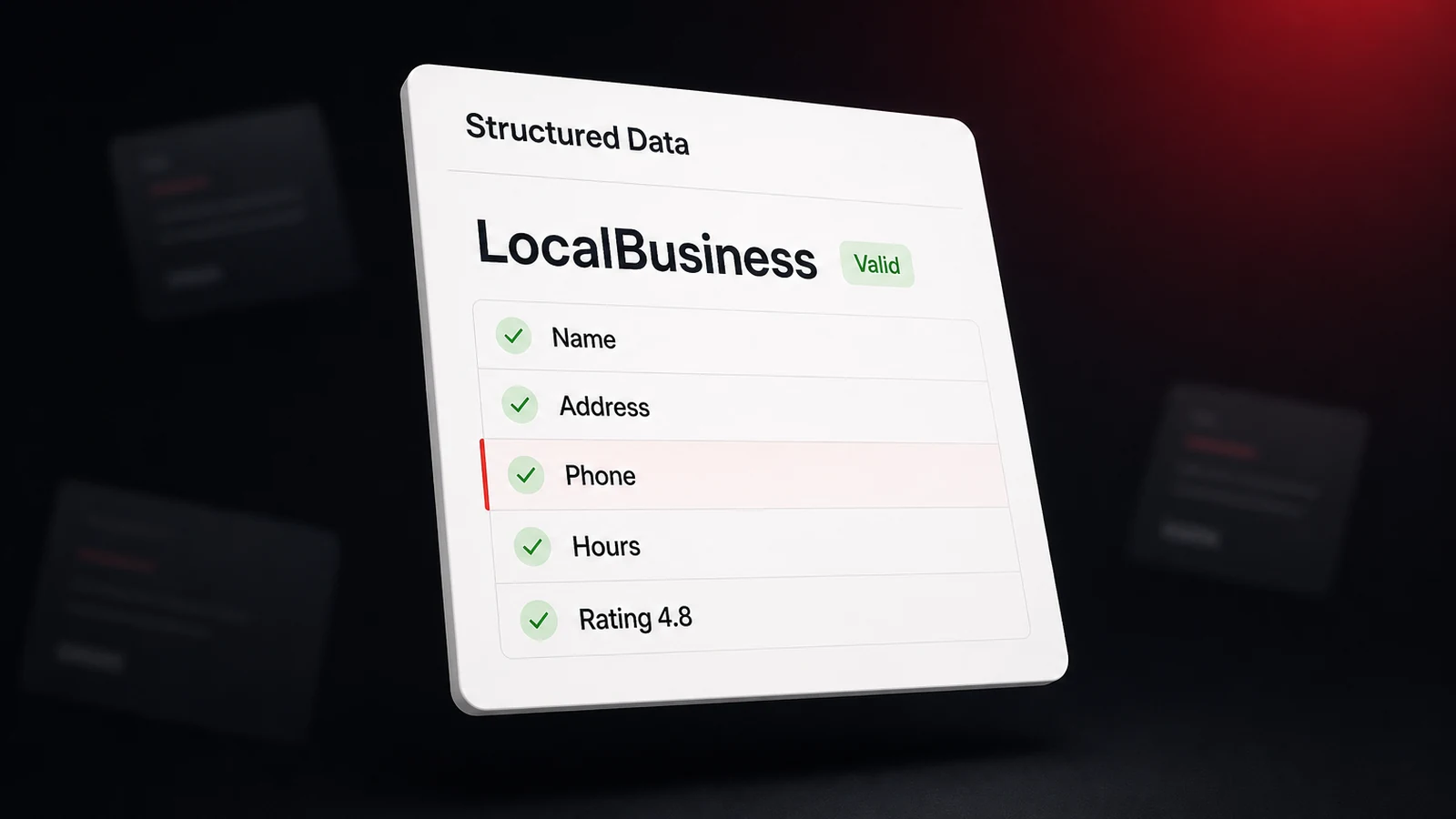
A family-run bakery lists its hours in a friendly sentence on the homepage: "We're open early, closed Mondays." A search engine has to turn "early" into a time. Add schema markup and the same hours appear as exact opening and closing times next to the name, address, and phone. Nothing changes for visitors. The machine just stops guessing, and the bakery's listing, the website, and the directories all say the same thing.