Your Clients Are Being Found, or Skipped, Inside AI
The new AI visibility service for agencies is a recurring offer built around one question, whether AI assistants name your clients, using work you already know how to sell. The place your clients get discovered is shifting under them. Google's AI Overviews reached more than 2.5 billion monthly users, the company said at its 2026 I/O event. And it isn't just Google. Your clients are now judged across ChatGPT, Gemini, Claude, Perplexity, and Google AI at once, often before a customer ever sees a traditional results page.
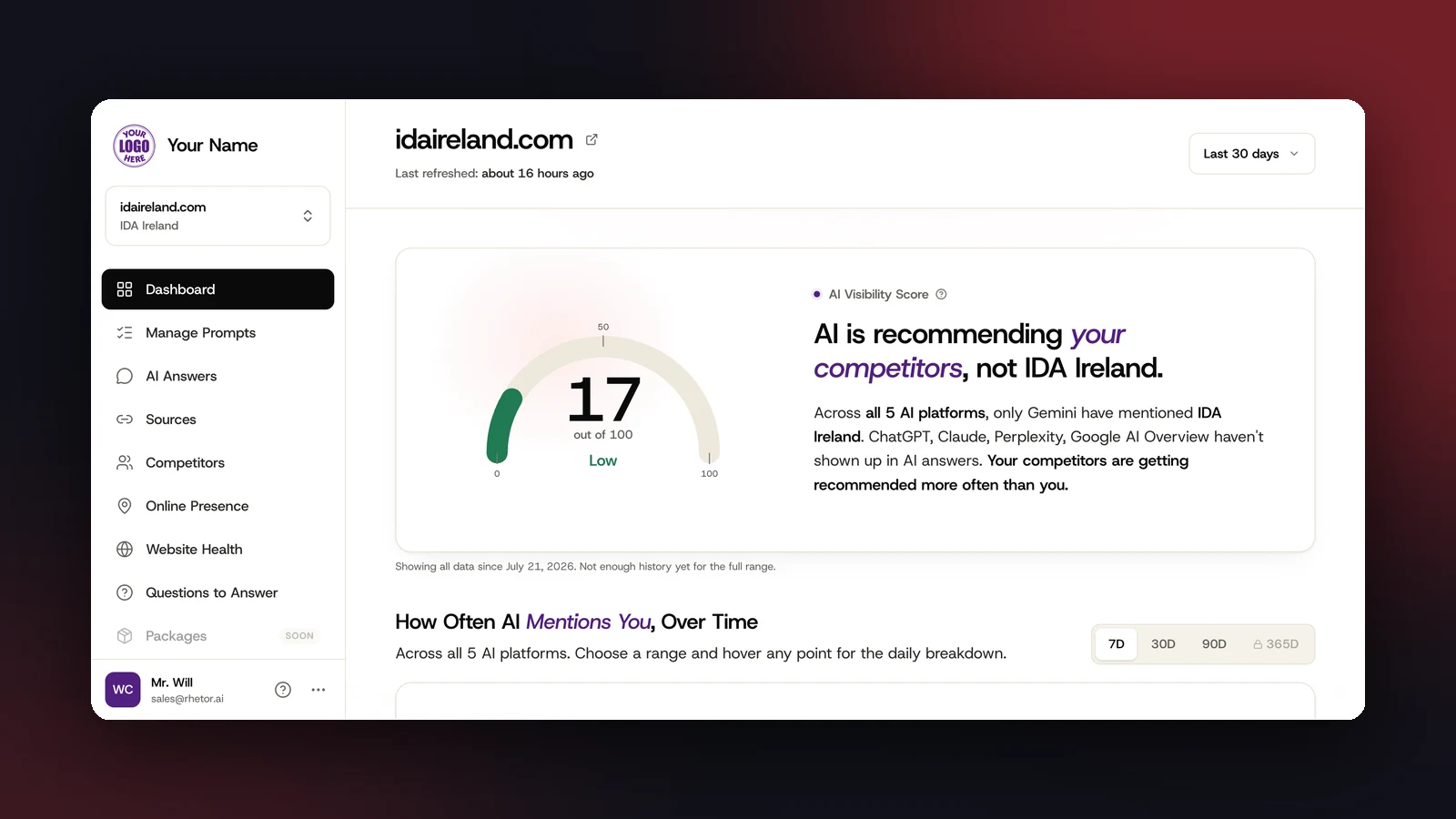
That creates a new question every local business will eventually ask you. "Does AI recommend us?" Right now, most agencies can't answer it. The one that can has a service the client didn't know they needed and can't easily check themselves.
Why This Is Your Opportunity, Not a Threat
It's easy to read "AI is changing search" as a threat to agency work. It's the opposite. AI visibility is hard for a business to monitor on its own. The answers live in private chats, they differ from one assistant to the next, and they change constantly. That's precisely the kind of ongoing, expert work clients pay an agency to handle.
A business owner will check one assistant once, see a competitor, and feel stuck. You can turn that into a tracked, explainable program, covering where they stand on each platform, who's being named instead, what's driving it, and what you're doing about it. The complexity that frustrates the client is the reason the service has value.
What "AI Visibility as a Service" Includes
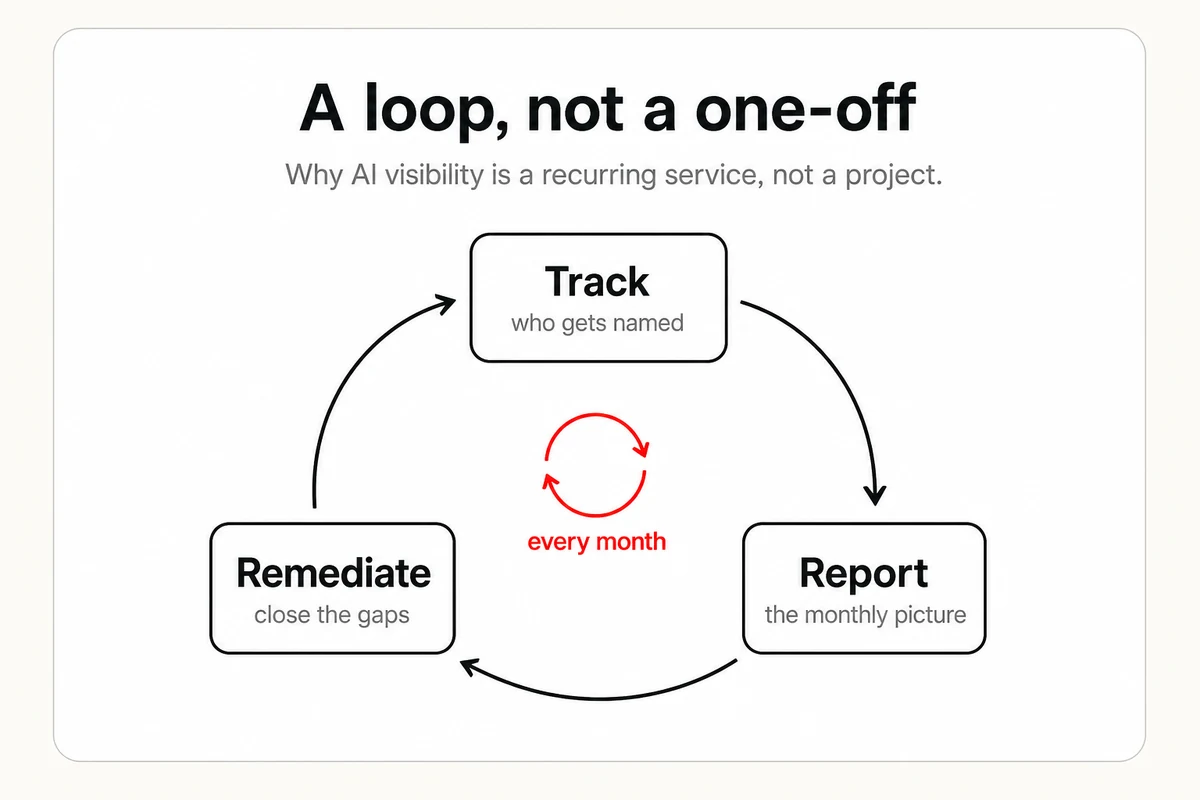
You don't have to invent the offering from scratch. In practice it's four repeatable parts.
- Tracking. Monitor whether each client is named across ChatGPT, Gemini, Claude, Perplexity, and Google AI on a schedule, for the questions their customers actually ask.
- Reporting. Turn that into a clear monthly picture of movement, wins, and competitors named instead.
- Remediation. Fix the gaps the answers reveal, like inconsistent facts, thin pages, missing services, and review flow.
- Cadence. Repeat it, because a single snapshot goes stale and the value is in catching changes early.
Notice that none of this requires a new skill set. It's monitoring, reporting, and fixing, aimed at a new surface.
It Extends the Work You Already Do
Here's the best part for your margins. The fixes that improve AI visibility are the local SEO and reputation work you already sell. Consistent business listings, clear service pages, a healthy review profile, and trustworthy citations help a business get named by AI for the same reasons they help it rank. You're not building a new practice. You're adding a new, measurable outcome to the one you have, and a new reason for the client to keep paying for it.
That reframes a familiar conversation. Instead of "we improved your rankings," you can show "you're now the business ChatGPT names when someone asks for a plumber in your area." That's a result an owner feels immediately.
How to Package and Price It
A clean way to introduce it without a hard sell is a three-step ladder.
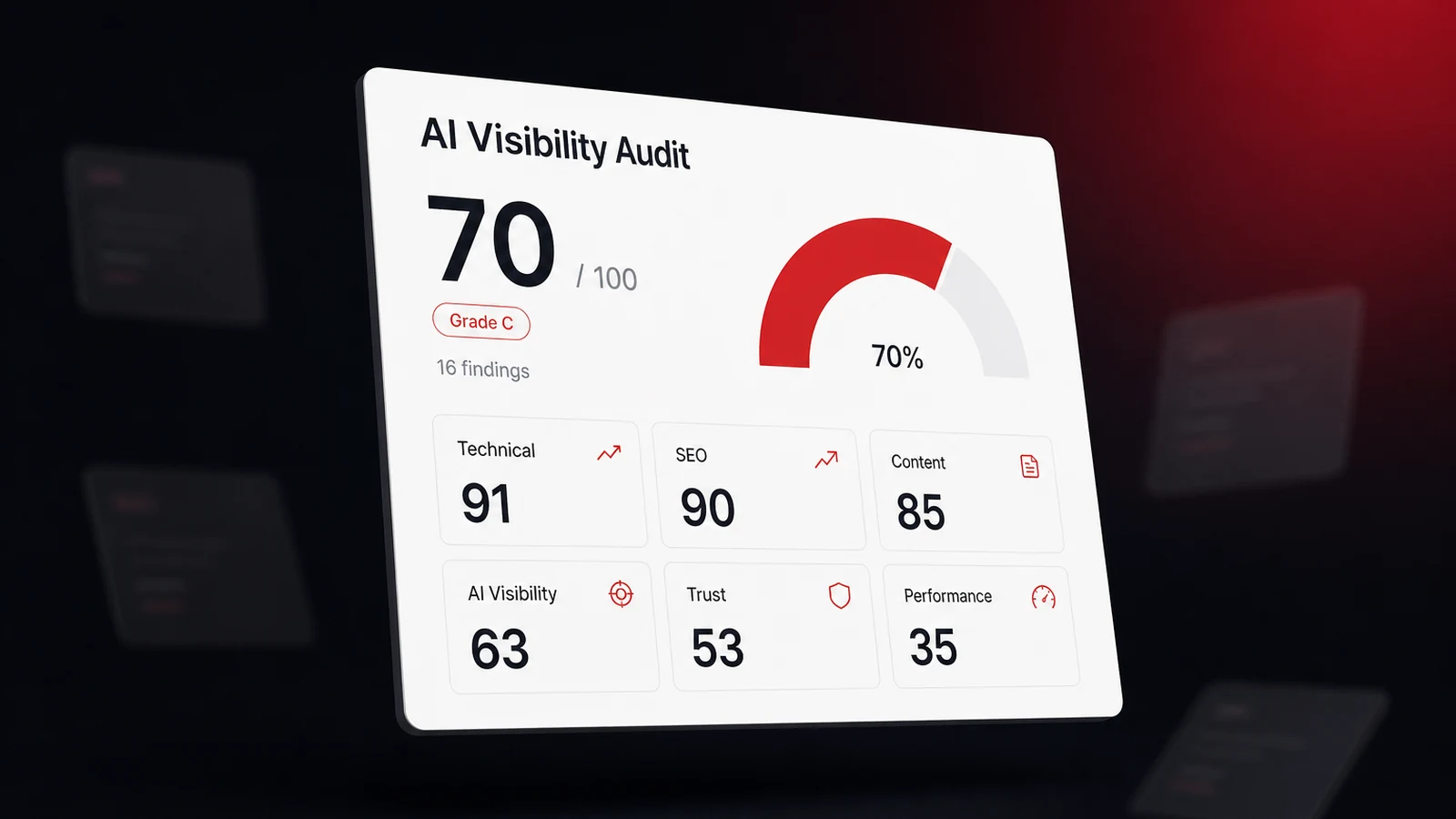
- Start with an audit. Given away to open the door or sold as a paid audit, our white-label audit hands the client a ranked list of the gaps on their own site, and pairing it with a look at whether AI recommends them today makes the problem impossible to ignore. Those gaps sell the service better than any pitch.
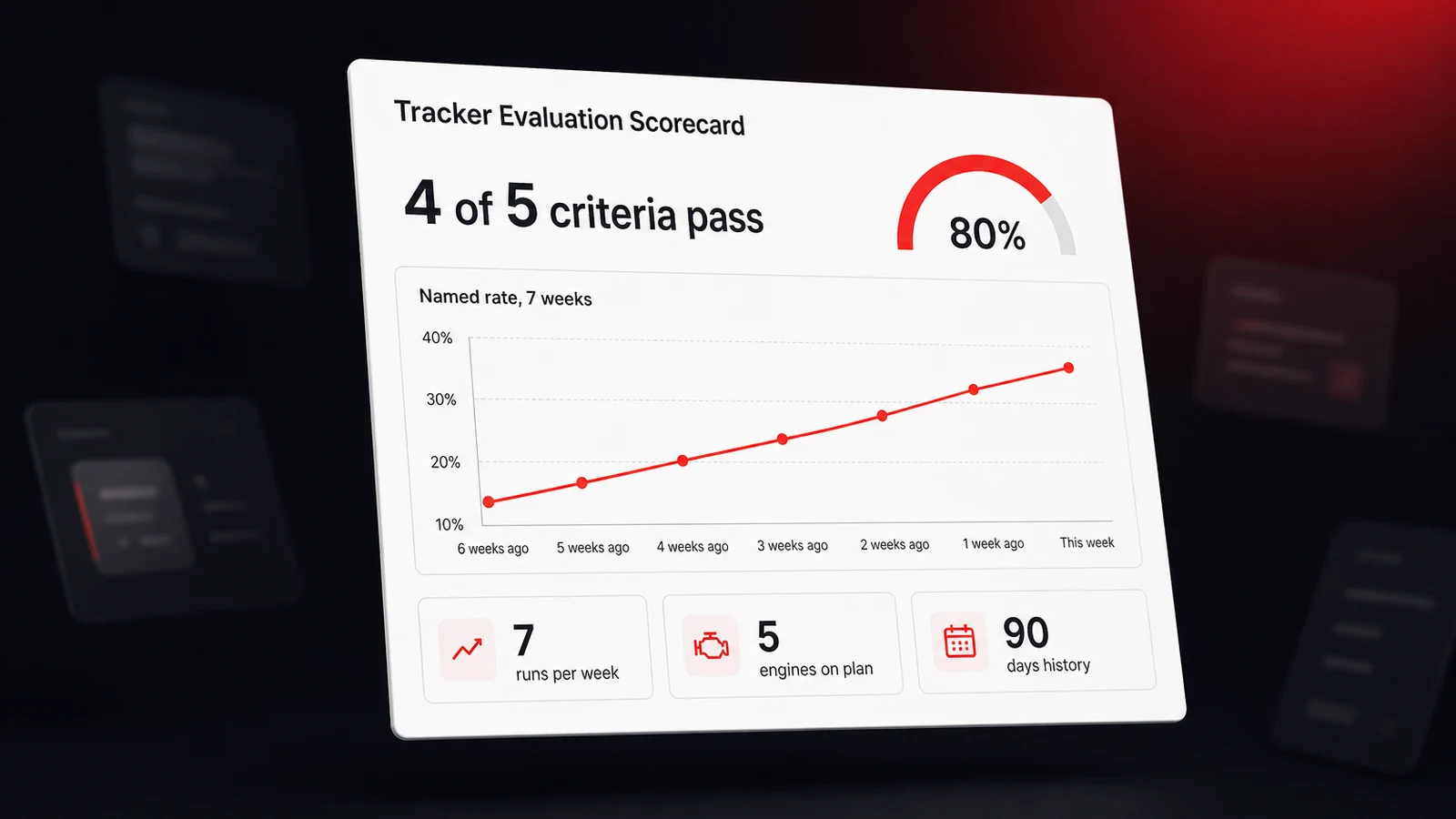
- Sell monthly tracking and reporting. A recurring fee for watching those assistants and delivering a plain-English report, framed as insurance against being quietly dropped, and picking the tracker comes down to five questions any tracker should answer. Our AI visibility tool comparisons show what each vendor publishes on plans, platforms, and white-label.
- Layer remediation on top. An ongoing service, or scoped projects, to actually close the gaps you find.
| Offer | What the client gets | How to price it |
|---|---|---|
| AI visibility audit | A one-time scan of the client's site with a ranked fix list | One-off fee, or free to open the door |
| Monthly tracking and reporting | Ongoing monitoring and a plain-English monthly report | Recurring monthly fee |
| Remediation | Closing the gaps the answers reveal | Project fee, or a larger monthly plan |
Price it as its own line item, not a freebie bundled into SEO. It's distinct work with a distinct outcome, and pricing it separately makes its value visible when the client reviews what they're paying for.
Reporting That Keeps the Revenue Recurring
AI visibility is unusually easy to report well, because the proof is concrete. You're not explaining an abstract ranking. You can show the client the actual answer an assistant gives, with their name in it. A strong monthly report leans on that.
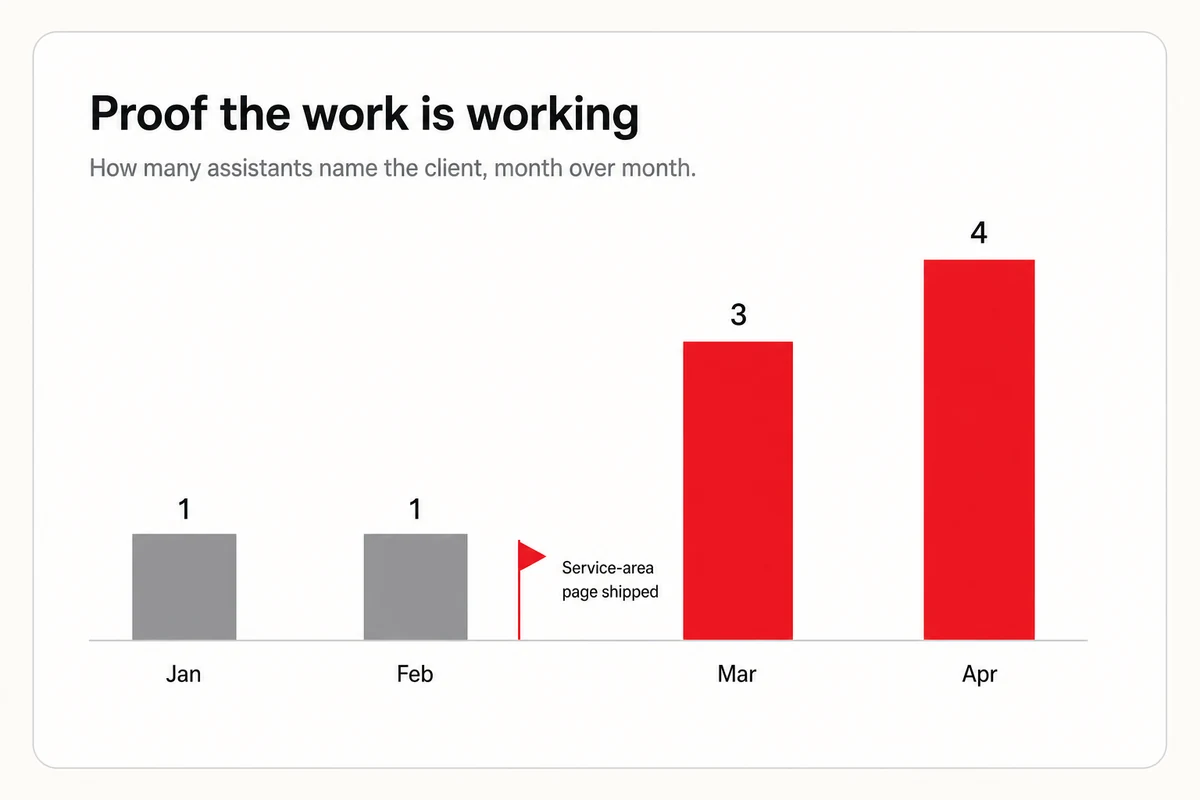
- Where they're named now versus last month, per platform.
- The competitors being recommended instead, and the gap you're closing.
- The specific fix you shipped and the movement that followed.
That story, repeated monthly, is what keeps clients paying, month after month. It shows a service actively protecting something the owner cares about.
Add It Without Building It
You don't have to build tracking infrastructure to offer this. Lighthouse Local for Agencies is built for exactly this model. White-label tracking across every assistant it covers, client-ready reporting, and the per-client visibility you need to run it at scale. You bring the client relationship, and either handle the remediation in-house or hand it to Lighthouse Local's white-label specialists to mark up. The platform handles the watching.
To win the client in the first place, Lighthouse Local's Beacon puts a white-label AI audit in front of prospects. It's a lead magnet that turns "are you visible in AI" into a booked call, then into an account you keep. Your clients' AI visibility is a service now. Add it without building a thing.
Frequently asked questions
Do we need to build AI tracking ourselves?
No. White-label platforms like Lighthouse Local handle the tracking and reporting across the major assistants, so you can offer the service without building infrastructure.
How do we explain AI visibility to clients?
Keep it plain. "When someone asks an assistant to recommend a business in your category, are you the name it gives?" Show them a live answer with a competitor in it, and the value is obvious.
What should we charge for AI visibility?
Treat it as its own line item. An upfront audit, a recurring fee for monthly tracking and reporting, and an ongoing service or projects for remediation. Price the outcome, not the tool.
Isn't this just SEO with a new name?
The groundwork overlaps, but the outcome is different. SEO ranks a page in a list. AI visibility gets the business named in the answer. Strong rankings are no guarantee of a mention, which is why it's worth tracking on its own.