Why it matters
An audit looks at your site, not at what the assistants say. It reads the pages the way a crawler does and checks things like structured data, service pages, your sitemap, and page speed. That makes it a quick way to find fixable gaps. It can't tell you how often an assistant names you today. That's what prompt tracking measures.
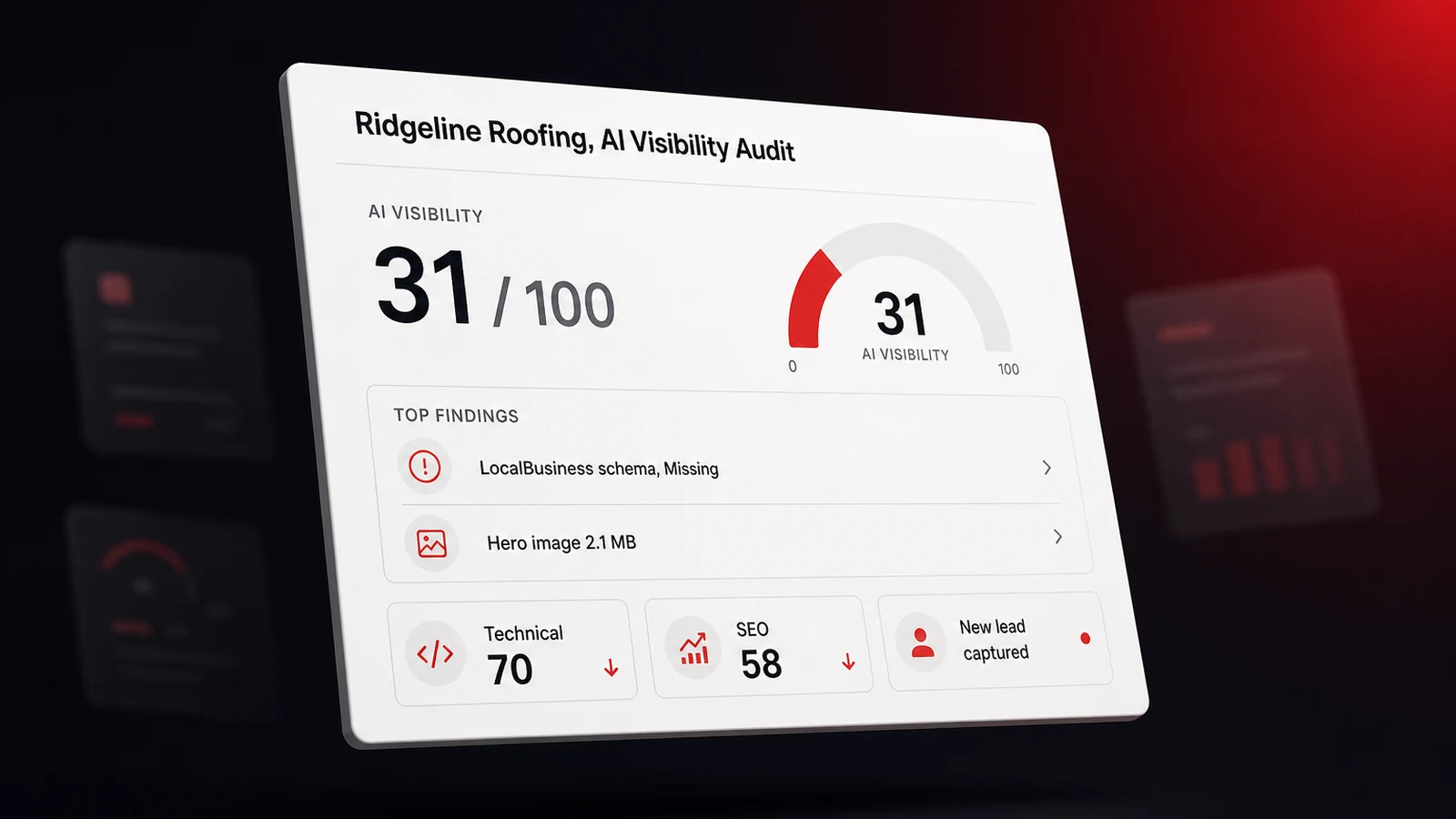
The scores work the same way. Our free checker returns an overall grade plus six category scores, each from 0 to 100, and AI Visibility, which covers structured data an assistant can parse, is one of the six. It reads your website and doesn't ask the assistants anything, so a low score means your site gives an assistant little to go on, not that assistants have decided against you. The same phrase is also used for a score built from tracked answers, which is what an AI visibility score covers. Agencies also offer a branded version to prospects, which our post on the white-label AI audit explains.
Example
A roofer pastes the company site into an audit and waits about a minute. The result is a set of scored categories and a fix list in priority order. The weak spots are no LocalBusiness schema and no page for the neighboring town the roofer also serves. The roofer works down the list, then runs the audit again to confirm the gaps are closed. Next comes tracking, to see whether the answers changed.