Why it matters
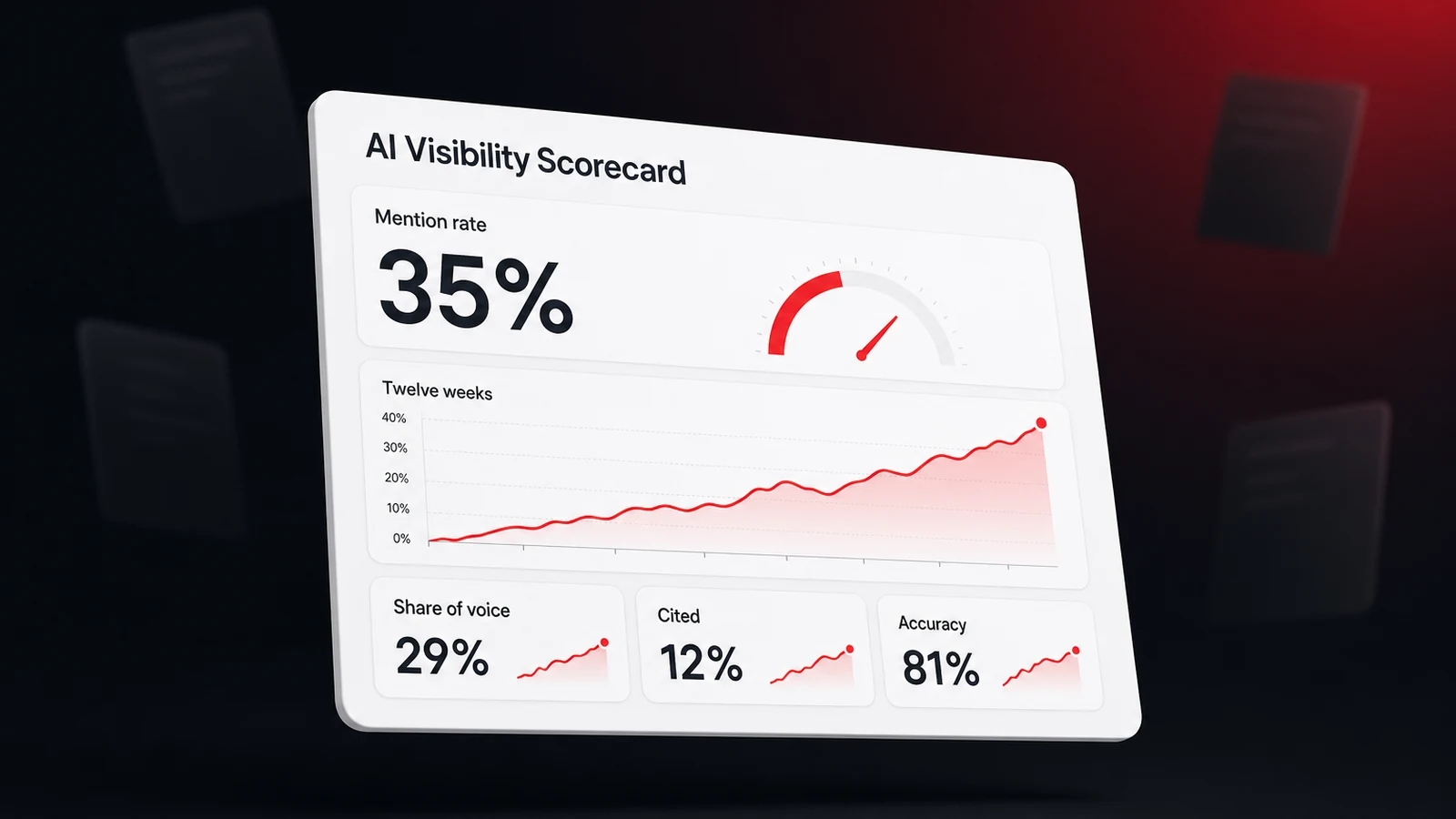
One number is easy to watch from month to month, which is why many tools lead with it. The catch is that it blends assistants that don't behave alike. A score of 50 could mean every assistant names you about half the time, or that one names you every time and another never does. Two tools can also build a score from different inputs, so a number from one tool doesn't compare with a number from another.
Treat the score as the headline and read the per-assistant rates under it, because those tell you where to work. Ask how any score you're shown is calculated, which questions went into it, and how many answers it rests on. Keep the questions fixed, so a change in the score means the answers changed and not the wording. The questions behind the number are what prompt tracking covers.
The phrase is also used for a different number. Our free checker returns an overall grade plus six category scores, each from 0 to 100, and AI Visibility is one of those six. All of them read your website, not the assistants' answers. This page is about the tracked-answer score, and the AI visibility audit page covers the site scores.
Example
A roofer's tool reports a score of 40 this month and 40 again next month, so it looks flat. Open the per-assistant rates and the picture is different. ChatGPT started naming the roofer more often, while Gemini stopped naming the roofer at all. The two moves cancelled out in the blend. Without the breakdown, the roofer would have concluded that nothing happened and missed the Gemini drop.