Why it matters
You can do this by hand in a spreadsheet, and for one location with a short question list that works well. A tool earns its cost when you add locations, when you need to know about a slip within days, or when you run it for many clients.
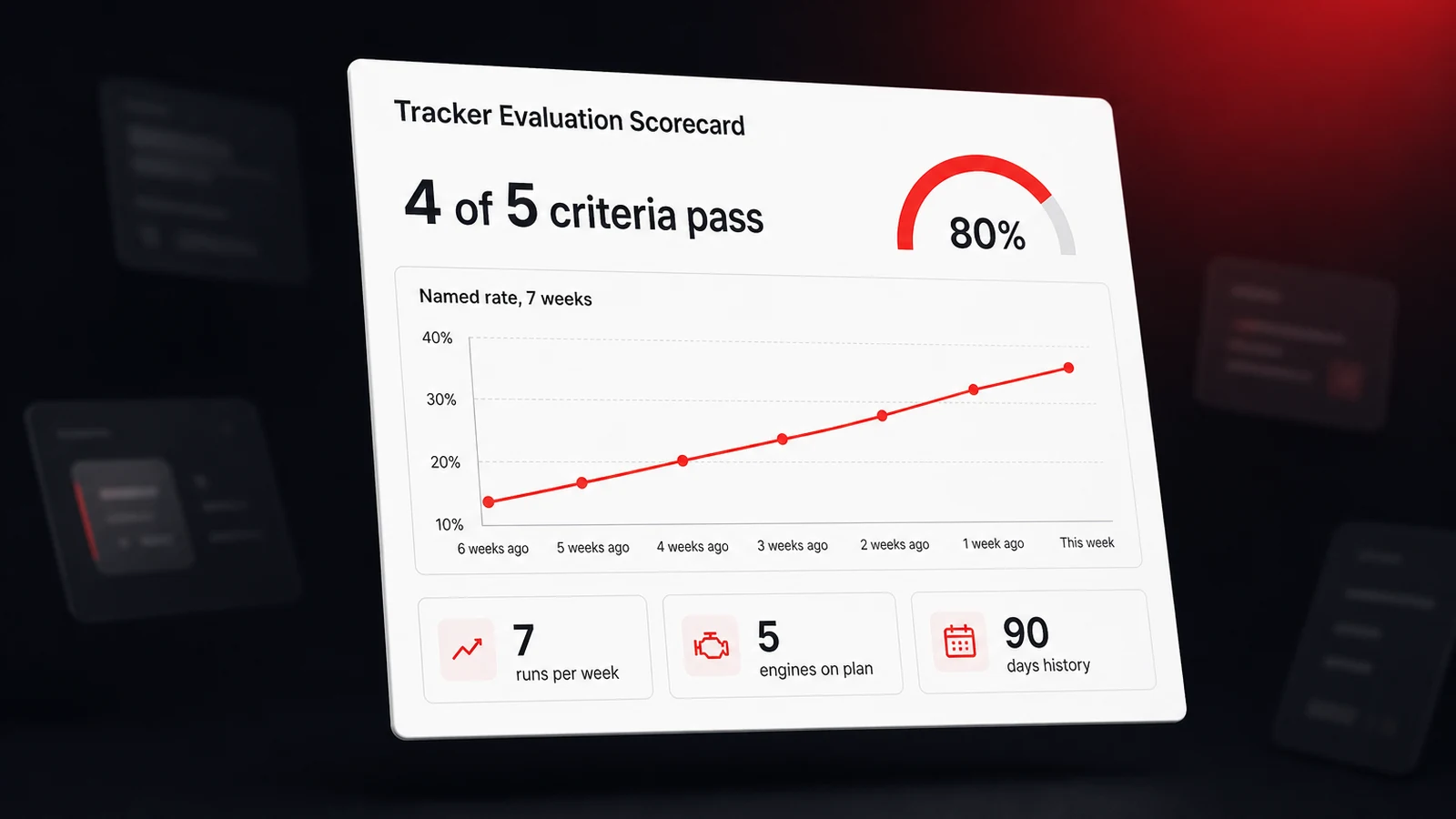
Tools differ a lot, so judge them on five things. How many times it asks each assistant before it reports a number, which assistants it checks on the plan you'd buy, how much history it keeps, whether it shows who was named instead of you, and whether it ties a named answer to a visit or a lead. A tool that tracks answers is a different category from an AI visibility audit, which scans your site once. The questions it runs are your tracked prompts.
Example
An HVAC company with three offices starts with a spreadsheet and twelve questions for one town. Adding the other two towns triples the list, and the weekly checking takes an afternoon. The owner moves to a tool and asks it the same questions on every assistant it covers. The owner confirms the plan covers the assistants customers use, and checks that it shows which competitor got named when the company didn't.