Can We White-Label AI Visibility Tracking for Our Own Clients?
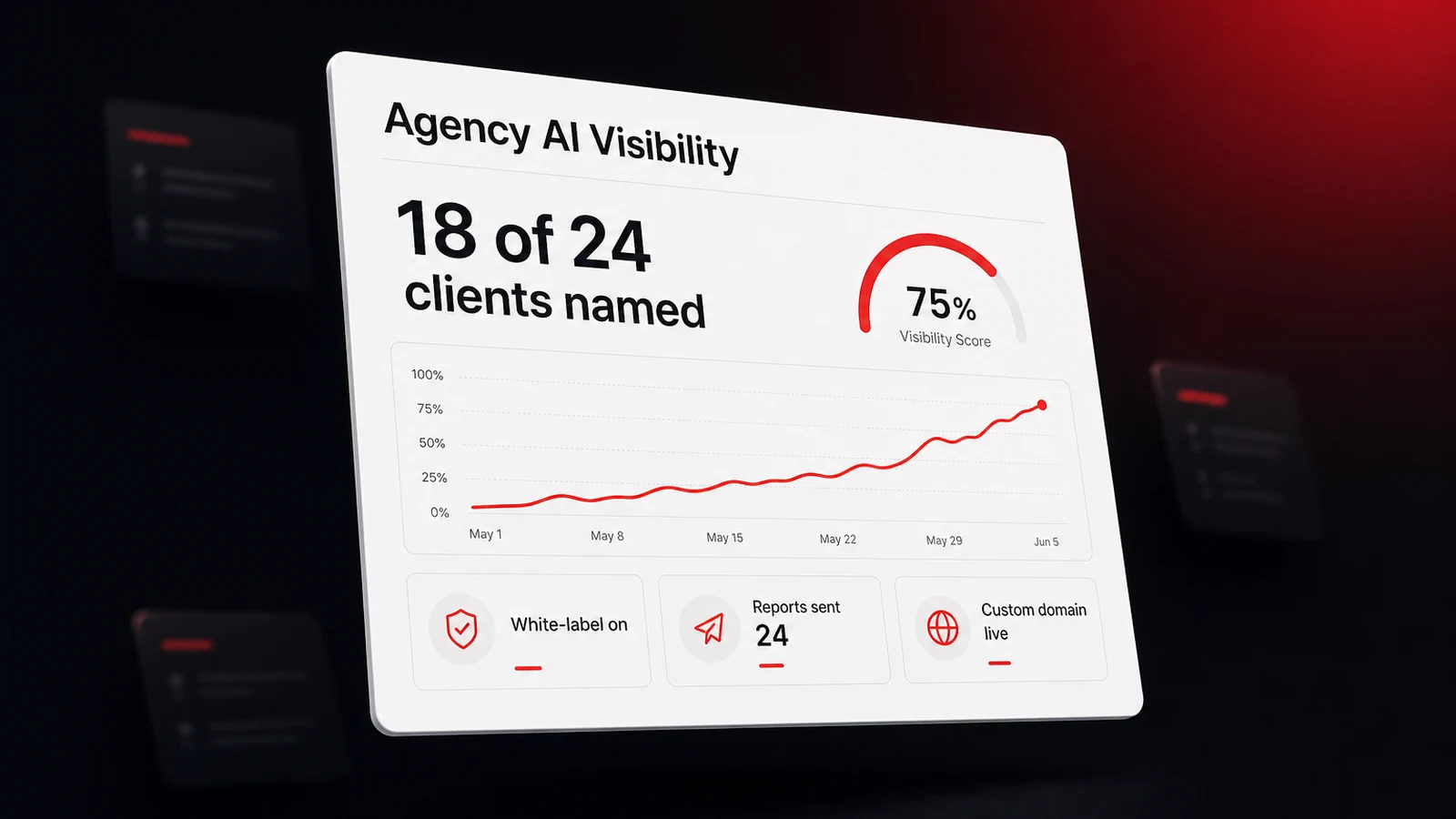
Yes. Any agency can white-label AI visibility tracking with Lighthouse Local and have its first client live in an afternoon, with no developer and nothing for the client to install. White-label AI visibility tracking means a tracker checks how ChatGPT, Gemini, Claude, Perplexity, and Google AI answer the questions a client's customers ask, and the agency shows the results on its own domain, under its own logo, as its own service. You set your brand once, add each client in a few steps, and every client gets a link that opens a live dashboard with your name on it.

The reason to start now is the clients you already have. In a July 2026 survey of 2,338 US adults, Semrush found that 47.54% of consumers at least occasionally consult an AI chatbot about a company or seller before they buy. Every client you serve is being described in those answers, whether or not anyone is reading them. Tracking it adds a recurring service to accounts you already hold, with no new client to win, and it gives each client a reason to open something with your name on it every week. Lighthouse Local's AI visibility tracker is designed to be simple enough for any agency to offer as its own service.
Four Steps, One Afternoon, No Developer
The whole setup is four steps, and the product guides you through each one.
- Set your brand once. Add your name, logo, and colors, and every client page carries them.
- Connect your subdomain. Pick something like insights.youragency.com and follow the guided setup.
- Add a client. Drop in the client's site, and Lighthouse Local suggests the questions worth tracking from what people actually search, including the searches the business already shows up for, along with likely competitors nearby. Keep the ones that fit.
- Send the link. Create a labeled link for each person at the client and paste it into your own email.
Steps one and two happen once. Every client after the first is just steps three and four, which is how one agency can run a handful of clients or dozens from the same account. Send the first link in week one. In a 2026 survey of 165 agency leaders, Promethean Research found that 62% said access delays hurt client confidence, only 42% keep a typical client past two years, and 24% lose the typical client within a year. A live dashboard in the first week is the cheapest retention move an agency has.
What Your Client Sees When the Link Opens
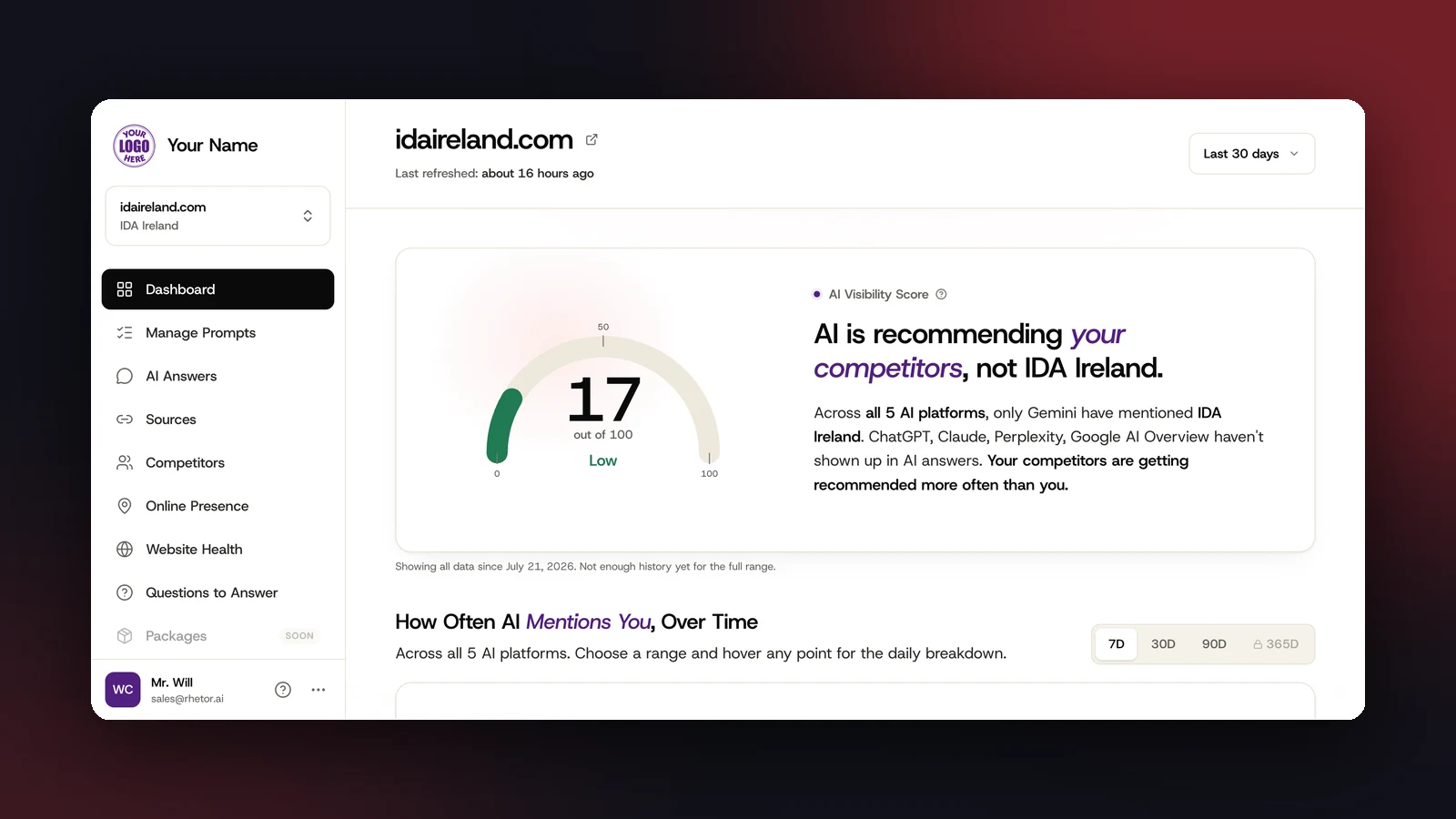
Your client clicks the link and lands on a private page at your subdomain. There's no account to create and nothing to install. The sidebar shows your logo, your product name, and your colors, and nothing on the page mentions Lighthouse Local. The client sees their AI visibility score, the actual answers each assistant gave, the sources behind those answers, and how they stack up against their competitors.
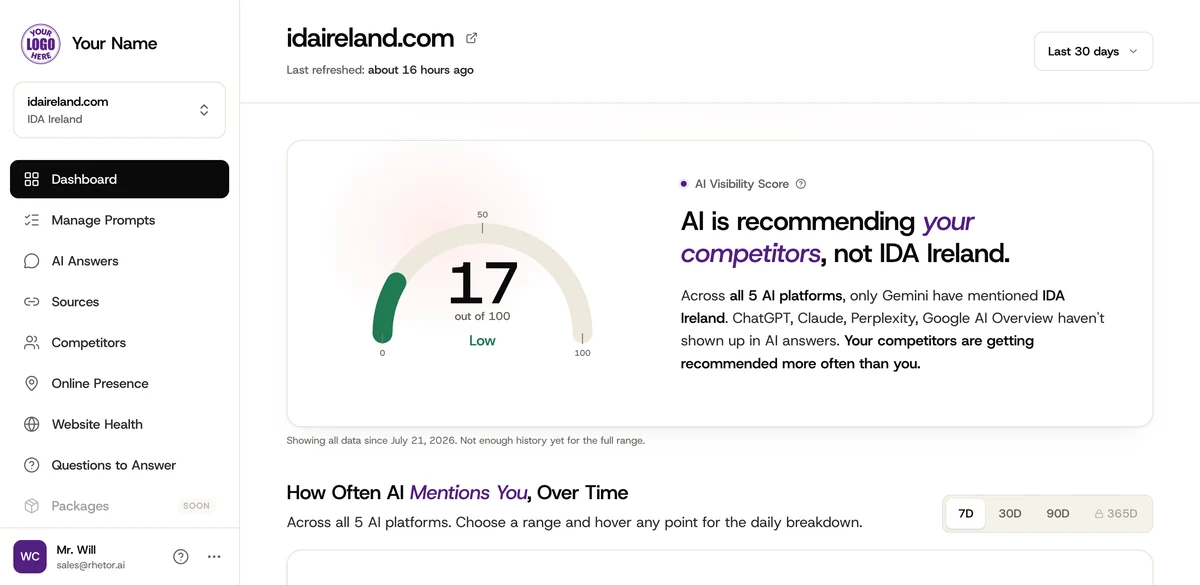
The data is live, so a client who opens the link on Friday sees Friday's answers, not a snapshot from last month. Each person at the client gets their own labeled link, and you can revoke any one of them the day that person moves on. Every share page is kept out of search engines, so a client's numbers stay between you and the client. The rest of the relationship stays in your hands too. The link goes out in your email, the branded monthly PDF goes out when you choose, and the ranked fix list stays in your dashboard, because the fixes are the service you bill for.
One Agency, Five Clients, One Dashboard
Here's what that looks like on a real agency account, with the names removed. The agency runs five client sites from one account, from an HVAC contractor in San Diego to a plumber in Ottawa, and switches between them from the same dashboard. On agency plans, tracked questions and competitors are shared across every client, and the per-client cost drops as the agency adds clients.
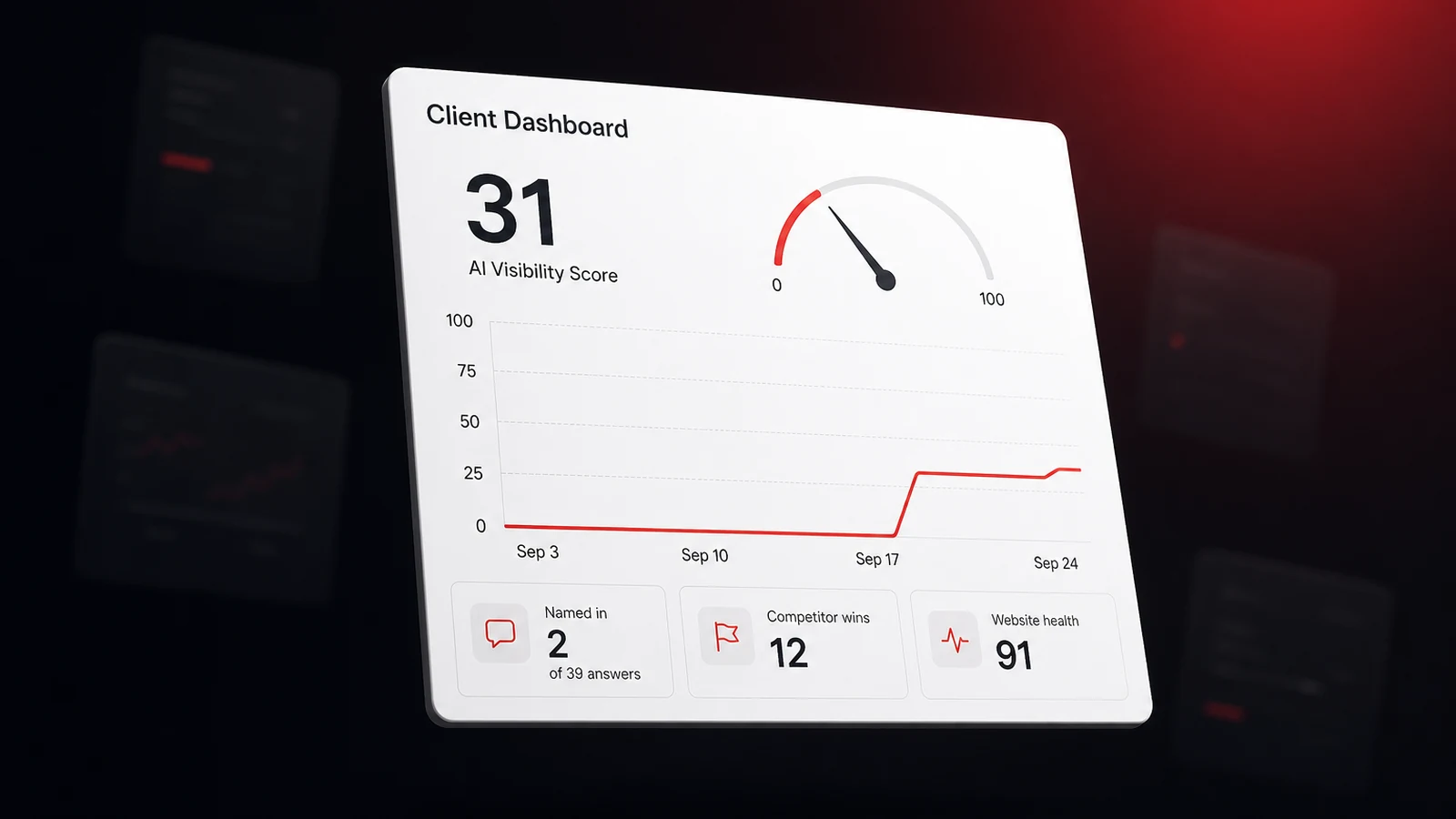
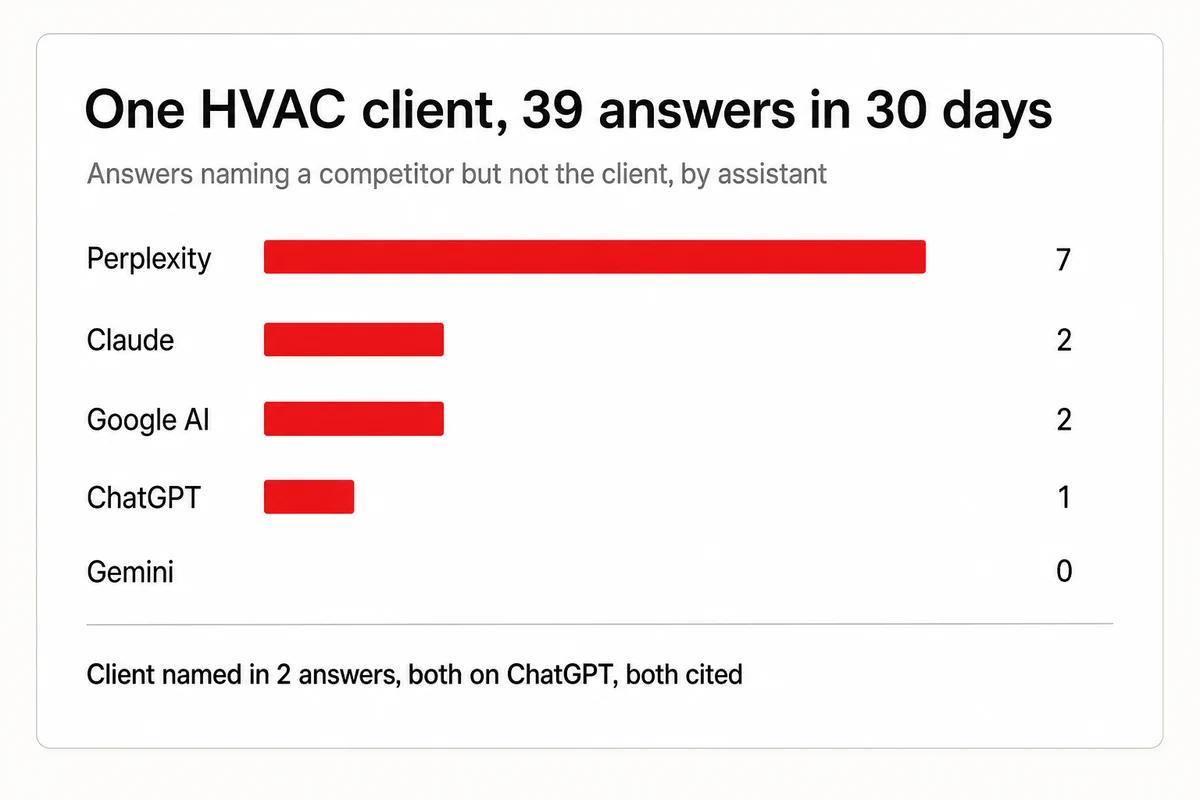
The HVAC client was added on September 3, 2026, with two tracked questions, one asking which heating and AC company is best in San Diego and one asking what an HVAC replacement typically costs there. Thirty days later, across 39 captured answers, the business was named in 2, both on ChatGPT, and both of those answers also cited its website. Competitors were named in its place in 12 answers, 7 of them on Perplexity. Its AI visibility score sat at 0 for the first two weeks, moved to 30 on September 18 when ChatGPT first named it, and reached 31 by September 25.
The plumber in Ottawa shows why clients keep opening the link. For a question asking for a cheap plumber in Ottawa, the business is named on four of the five we track and cited by every one of them. For a question asking what a plumber costs in Ottawa, it's absent everywhere, and one competitor was named in its place in 18 answers. The client can see, on your domain, which question they own and which one they're losing, and the plan to close that gap is the work you bill for every month. For the method behind numbers like these, tracking brand visibility in AI search covers sample sizes and why a trend line beats a snapshot.
Is There a ChatGPT Tracking Tool With White-Label for Agencies?
Yes. A ChatGPT tracking tool asks ChatGPT the questions a client's customers ask, on a schedule, and checks whether the business is named in each answer and whether its website is cited as a source. Lighthouse Local tracks ChatGPT, Gemini, Claude, Perplexity, and Google AI side by side and shows every result under your brand.
ChatGPT deserves top billing in the client conversation. CallRail's January 2026 analysis of nearly 20 million inbound leads found that ChatGPT produced 90.1% of AI-attributed leads, with Perplexity a distant second. The other assistants still matter. In the Ottawa example, the cost question went to a competitor on every assistant, which a ChatGPT-only view would only partly show. It helps to have seen what one captured ChatGPT answer looks like before you pitch the service.
The white-label part is where tools differ most. When we compared twelve AI visibility tools for agencies, white-labeling was a higher tier or a paid add-on at most of them, and a custom domain was rarer still. Every Lighthouse Local agency plan includes white-label and a custom domain, so choosing a bigger plan gets you room for more clients, never your own logo.
Your Name on the Answer, Every Week
Start with the clients you already have. Each one is a site, a few suggested questions, and a link, and the first live dashboard can go out the same week you sign up. From then on every client opens a page with your name on it and sees, week by week, whether the assistants are naming them, which is a harder thing to walk away from than a monthly PDF. When you want new clients as well, Lighthouse Local's Beacon puts a branded audit on your site for prospects to run, and our post on what a white-label AI audit is walks that funnel end to end. Our agency plans and the free trial are on Lighthouse Local for Agencies. Lighthouse Local is built so any agency, from a two-person shop to a large team, can offer AI visibility as a service under its own name and grow it one client at a time. That's the service your existing clients stay for.
Frequently asked questions
Can we white-label AI visibility tracking for our own clients?
Yes. With Lighthouse Local you set your name, logo, and colors once, connect a subdomain you own, and add each client with a few suggested questions and competitors. Every client then gets a link on your domain that opens a live dashboard under your brand, with no vendor name anywhere on the page.
Is there a ChatGPT tracking tool with white-label for agencies?
Yes. Lighthouse Local asks ChatGPT, Gemini, Claude, Perplexity, and Google AI a client's tracked questions on a schedule, then records whether the business is named and whether its site is cited. Agencies show those results to clients on their own domain under their own logo.
How long does it take to onboard a client onto white-label AI visibility tracking?
About an afternoon for the first client, and no developer is needed. You set your brand, connect a subdomain with the guided setup, add the client, and send the link. After that, each new client just means adding a site, keeping the suggested questions, and sending a link.
Does the client see Lighthouse Local anywhere on a white-label share link?
No. The page loads on your subdomain, carries your logo and product name, and nothing on it mentions Lighthouse Local.
How does a client open their white-label AI visibility dashboard?
They click the link you send, with no account to create and nothing to install. Each person at the client can have their own labeled link, and you can revoke any of them whenever you choose.
Can we run AI visibility reports for multiple clients in one dashboard?
Yes, and it scales as you grow. Every client lives in one account and one dashboard, tracked questions and competitors are shared across clients on agency plans, and the per-client cost drops as you add clients. When you outgrow a plan, you move up a tier or talk to us about custom volume.
What goes into a white-label AI visibility report?
A client-ready PDF with your logo and domain on it, plus that client's tracked numbers. The ranked action plan stays in your dashboard, so the fixes you recommend arrive in your own voice as the service you bill for.