Offer AI Visibility as Four Deliverables on One Calendar
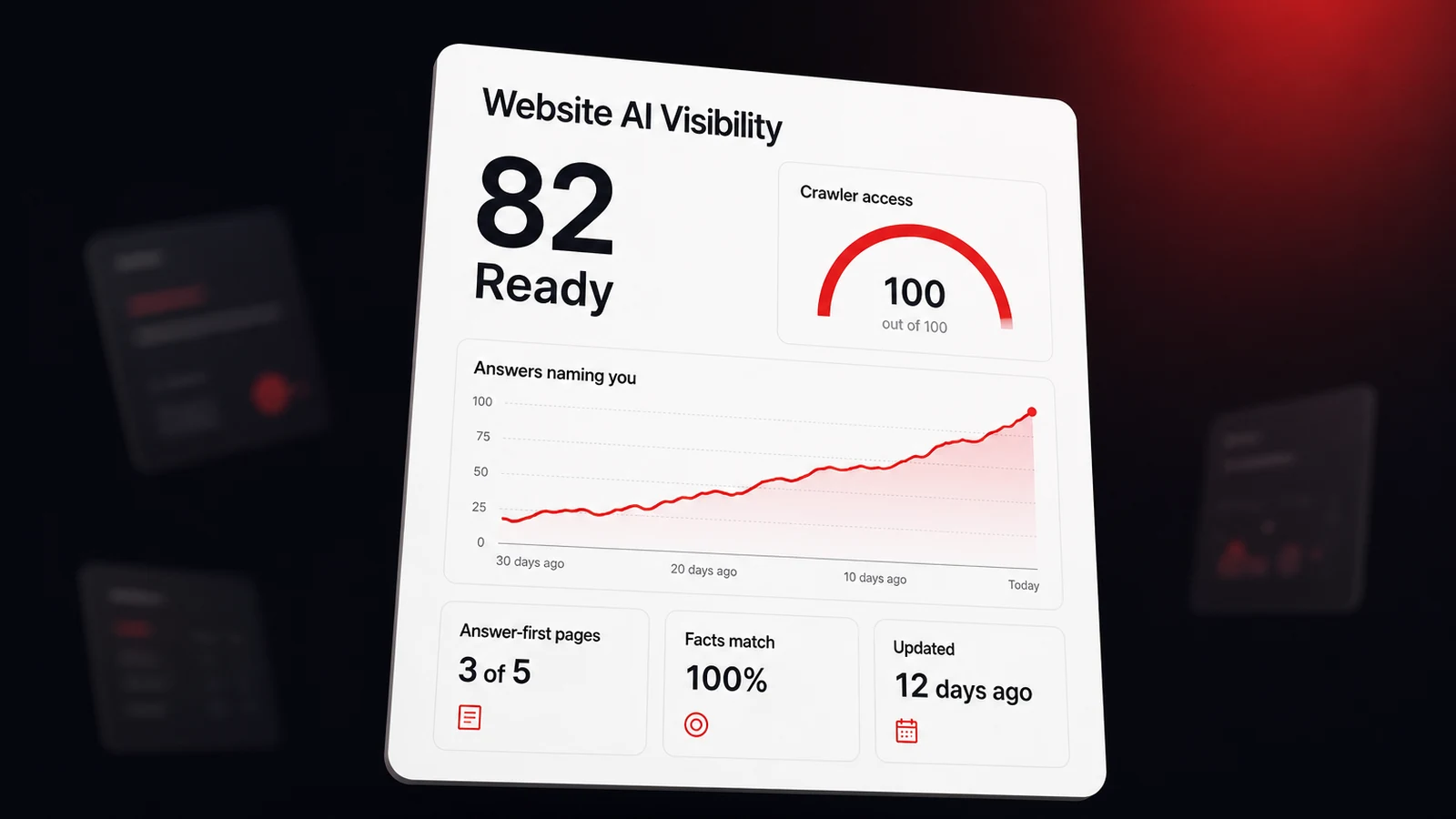
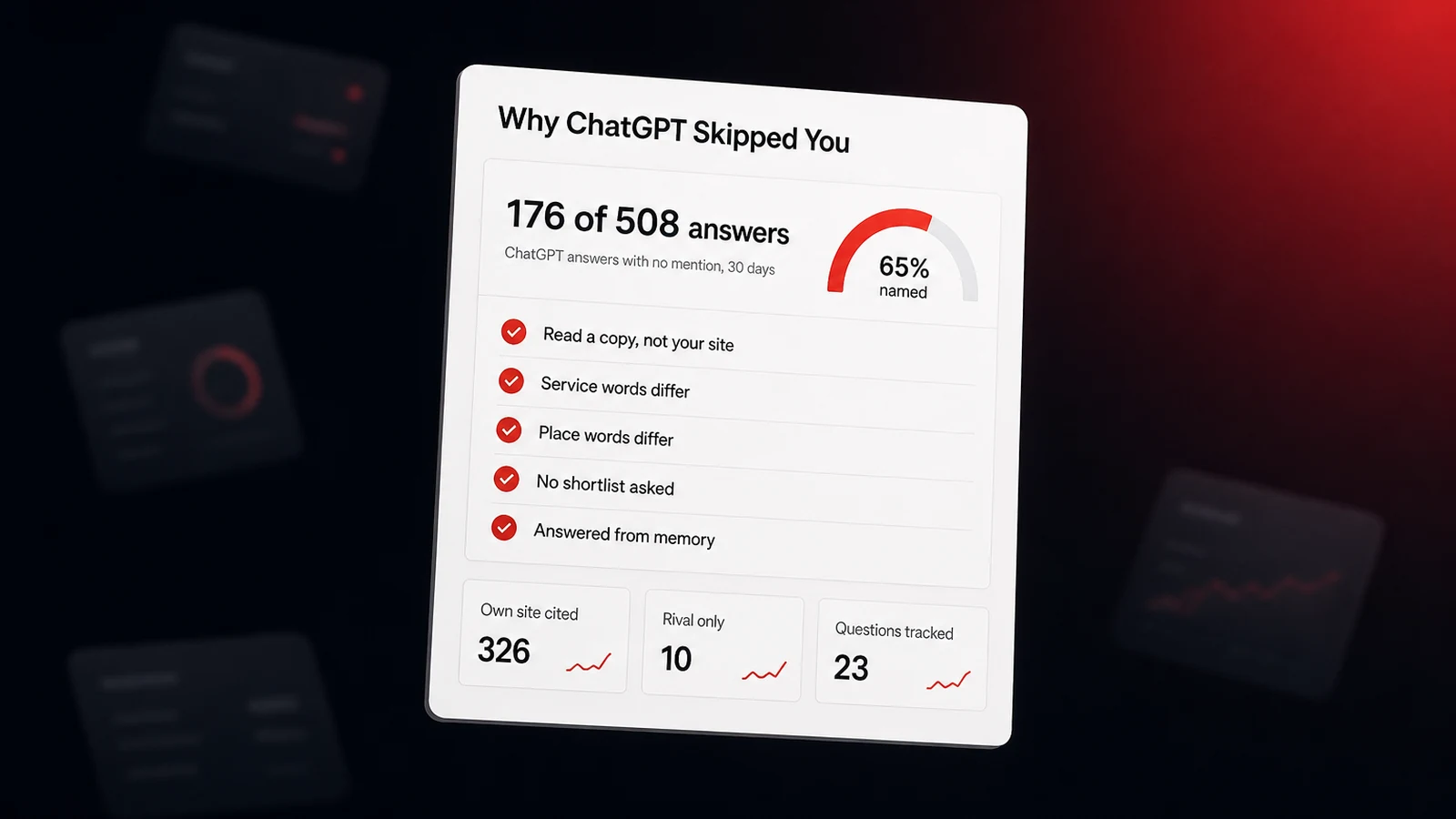
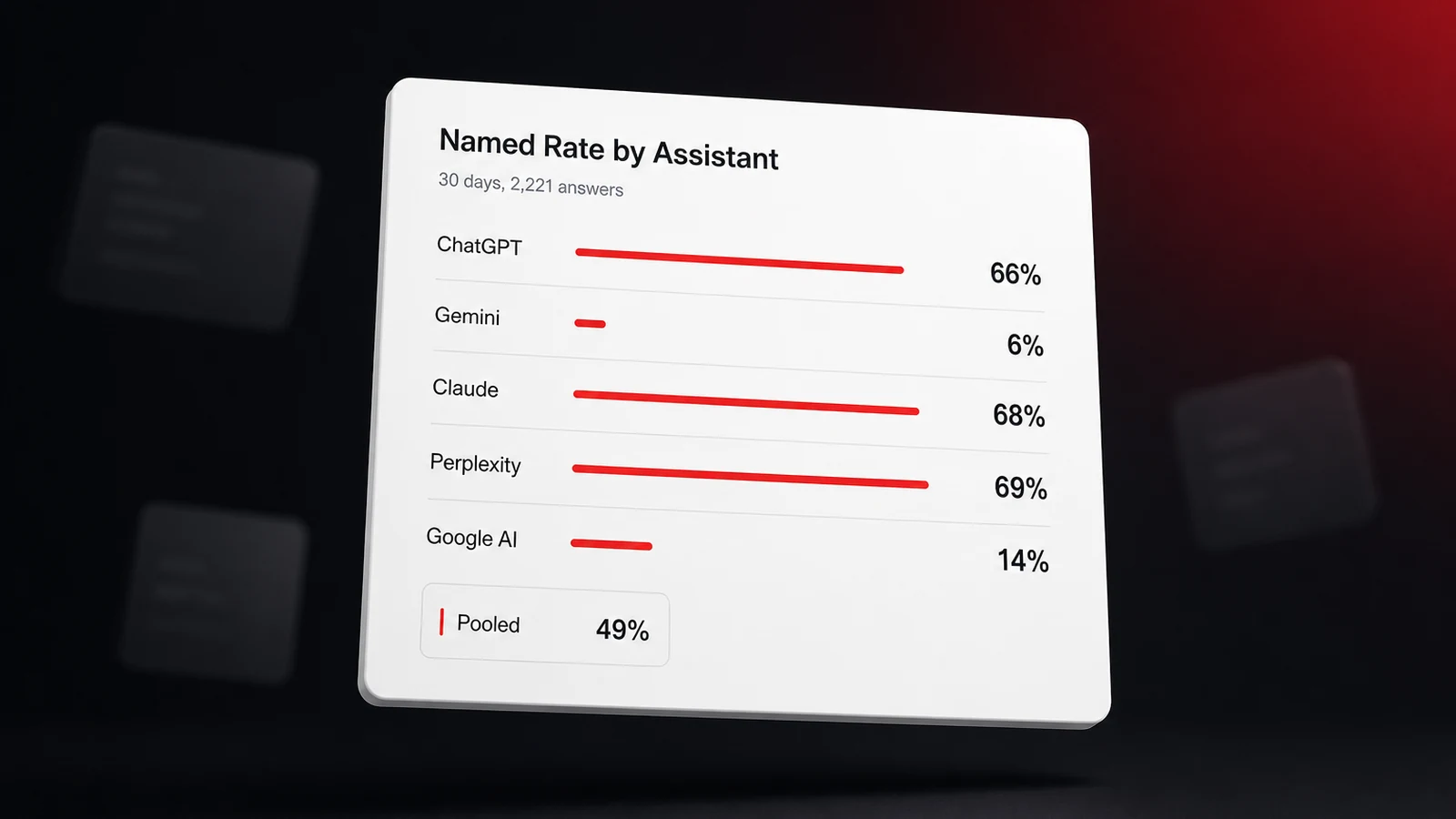
To offer AI visibility services as an agency, sell four deliverables on a fixed calendar. A one-time baseline shows where the client stands today. Weekly checks record whether ChatGPT, Gemini, Claude, Perplexity, and Google AI name the client for the questions its customers ask. A monthly report turns those checks into one page the owner can read. An agreed amount of fix work goes toward closing the gaps the answers expose. Package it in tiers by how much work you take on, and put the whole thing in writing before the first invoice.
That's the service. The rest of this playbook fills it in with a scope of work you can copy, three tiers a client can move between, a reporting calendar for one quarter, and five lines a monthly report needs. If you're still deciding whether the offer belongs in your agency at all, the case for becoming an AI visibility agency comes first. This post assumes you've decided, and you need the operating details.
Clients Already Expect It, and Some Expect It Free
Demand isn't the problem. AgencyAnalytics surveyed 494 agency professionals between February and April 2026 and found that 66% report client demand for AI search work, which made it the service clients most often ask agencies to add. Only 11% said AI search results were bringing their own agency new business yet, and 41% said measuring return was a challenge.
The same report carries a warning. One agency CEO quoted in it described rising demand for AI reporting, strategy, and implementation "at no additional charge." That's what happens when the work has no name, no scope, and no line on the invoice. It gets absorbed into the SEO fee, and you end up doing a second job for the price of one.
A second 2026 survey shows where the time goes. Scrunch and Scribewise polled 602 marketing and PR professionals in the United States, and among those selling this work, 71% spend more time explaining the work than doing it. Scrunch sells a tracking tool, so treat it as one vendor's data point. A written scope and a fixed calendar fix both problems. The client knows what they're buying, and you explain it once.
The Scope of Work, Written Out
Here's a scope you can paste into a proposal. It's written for a local service business on the middle tier, and every number in this scope is a placeholder for your own.
AI VISIBILITY SERVICE, SCOPE OF WORK

Client: [Business name]
Start date: [Date]

1. BASELINE (month one, one time)
- 12 customer questions agreed with the client, written the way a customer would ask them
- Each question checked on ChatGPT, Gemini, Claude, Perplexity, and Google AI
- A baseline report showing where the business is named, where it isn't, and which competitors appear
- A site audit with findings ranked by impact

2. WEEKLY CHECKS (every week)
- The same 12 questions run on the same five assistants
- Results logged by the agency. Weekly numbers aren't sent to the client

3. MONTHLY REPORT (by the 5th of each month)
- One page covering the share of questions where the business is named, per assistant, against last month
- Competitors named in its place
- Work completed, and work planned for next month

4. FIX WORK ([agreed amount] each month)
- On-site and listing fixes chosen from the audit and the tracked answers
- Unused fix work doesn't roll over

5. QUARTERLY REVIEW (every third month)
- A call covering the 90-day trend
- Questions added or retired, with the baseline reset if the set changes

NOT INCLUDED
- Any guarantee that an AI assistant will name or recommend the business
- Paid advertising, website rebuilds, and new content beyond the agreed fix work
Three choices in that document do most of the work. The question set is fixed, so month three can be compared with month one. Weekly results stay inside the agency, for a reason the cadence section below makes plain. And the exclusions are written down, because the fastest way to lose this client is to let them believe you sold a placement.
Three Tiers, Packaged by What the Client Gets
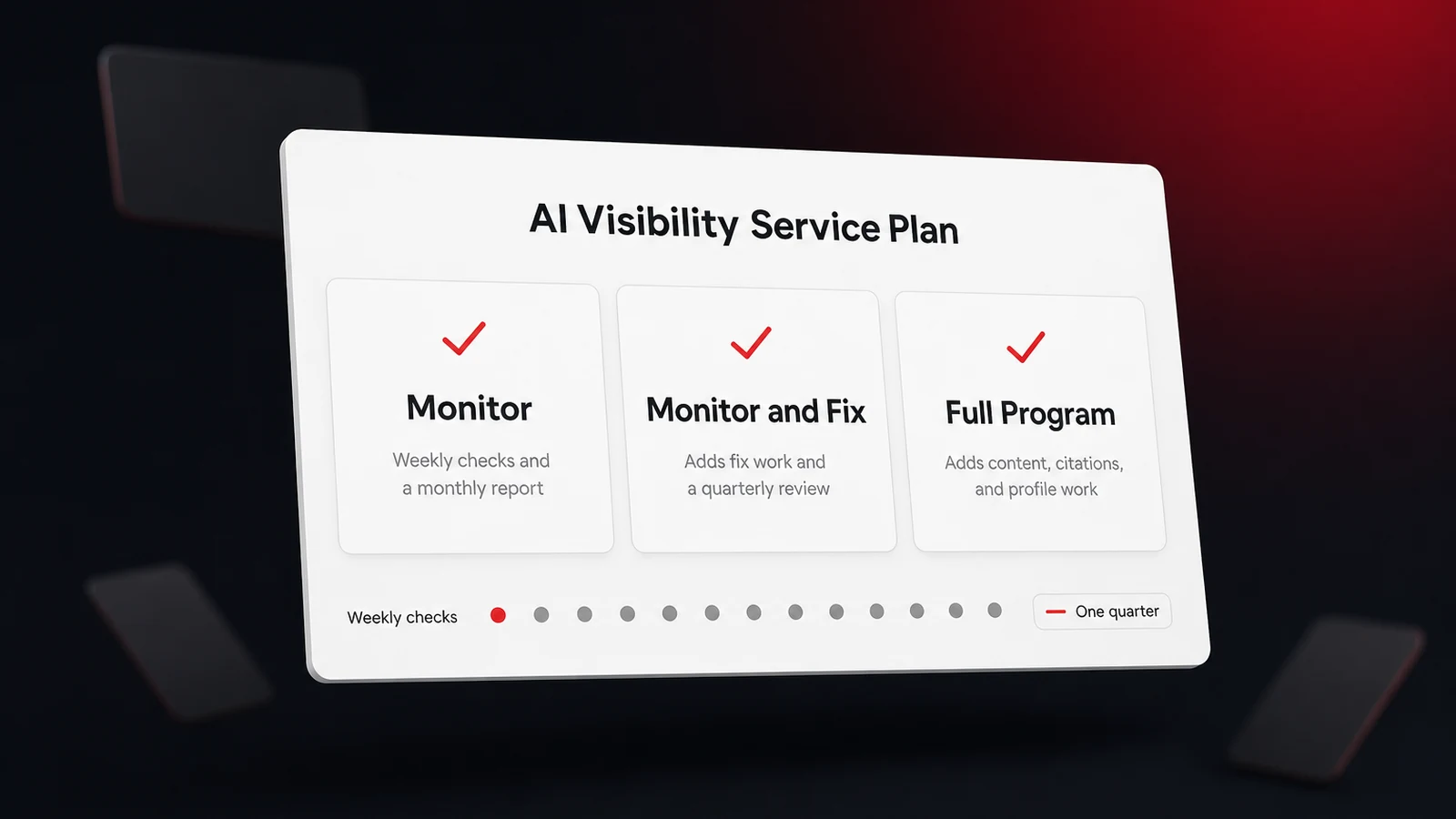
Package the service in three tiers that differ by how much work you take on, so a client can start small and move up without a new contract.
| Tier | What the client gets |
|---|---|
| Monitor | Weekly checks and a monthly report, after a one-time baseline |
| Monitor and Fix | Everything in Monitor, an agreed amount of fix work, and a quarterly review |
| Full Program | Everything above, plus content, citations, and profile work |
We haven't put hours against these tiers on purpose. How long the work takes depends on your team and your tools, and AI keeps shortening a lot of it. Time your own first quarter, including the baseline, the site audit, and the explainer that all land in month one, and plan from that.
What you charge is your call, and we won't suggest a number. Your rates, your market, and your costs are yours to weigh. Two things are worth doing whatever the price. Give the service its own line on the invoice, so it's never absorbed into SEO. And know your tool cost for each client before you quote, because how AI visibility tools charge agencies decides whether that cost falls or climbs as you add clients.
Short on staff for the fix work? Agencies on Lighthouse Local plans can add done-for-you work, including on-page SEO and local citations, under their own brand. Our specialists handle the work and you keep the margin.
A Reporting Cadence Built on How Much AI Answers Move
Report too often and you'll spend every call explaining noise. An Ahrefs study published in October 2026 asked five AI tools the same questions every day for 20 days and followed about 37,500 cited websites. Between 50% and 83% of citations were gone the next day, depending on the tool, and roughly 75% of the ones that dropped came back within the 20 days. Brand names held steadier than links. About one in five brand names showed up on a single day only, against 50% to 70% of cited websites. Ahrefs sells its own tracker, and the study is observational, but the pattern is the useful part.
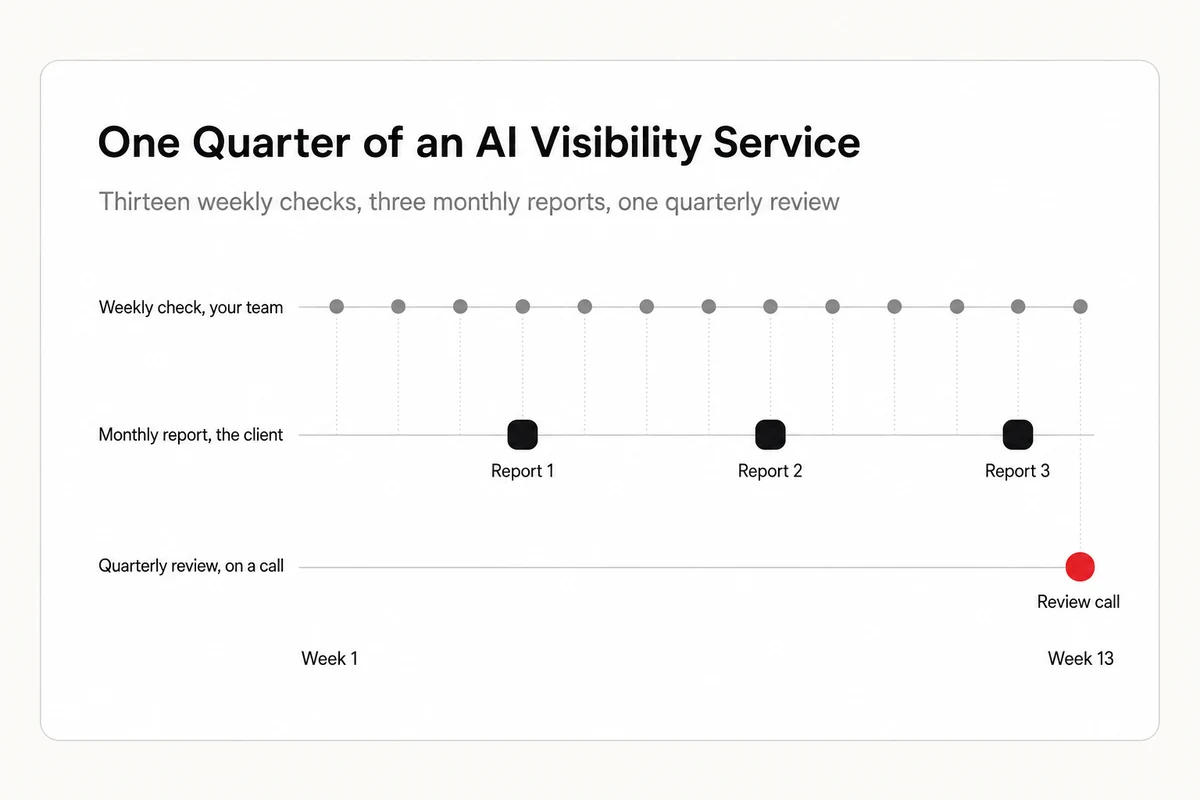
The study didn't test a reporting schedule, so what follows is our judgment. Run the service at three speeds. Check weekly, because one day shows more movement than meaning and a weekly reading is a steadier habit. Report monthly, because four weekly readings make a trend an owner can follow. Review quarterly, because that's when you have enough history to change the question set or the plan.
| Rhythm | Who sees it | What happens |
|---|---|---|
| Weekly | Your team | Run the question set, flag any client whose share moved |
| Monthly | The client | One-page report and a short note on work done |
| Quarterly | The client, on a call | 90-day trend, questions added or retired, next quarter's plan |
The weekly check is where a multi-client agency saves or loses its margin. Sorting one roll-up and opening only the accounts that moved is the habit that makes it possible to track AI visibility across many clients without the weekly check taking over your week. Lighthouse Local's AI visibility tracker runs weekly sweeps plus daily checks on your most important questions, so the weekly reading is waiting for you and nobody types prompts by hand.
Five Lines Every Monthly Report Carries
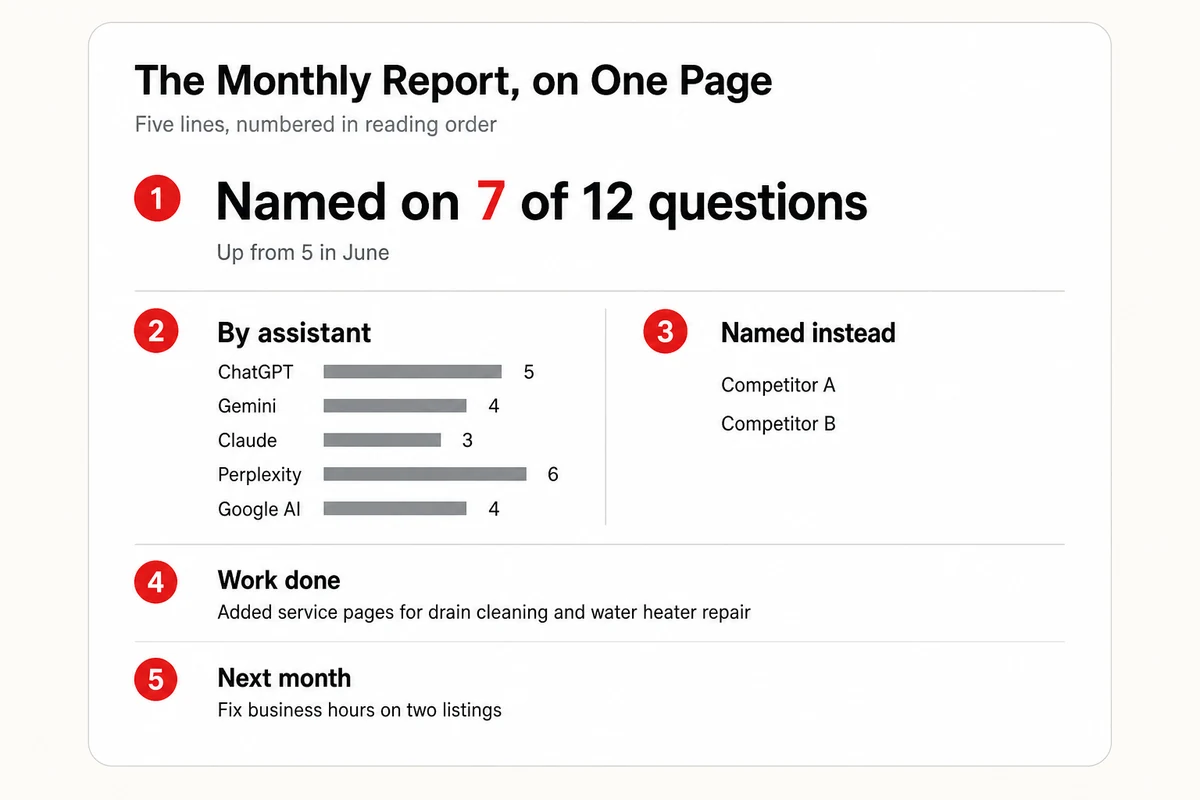
A monthly report for this service fits on one page. If it runs longer, the client stops reading and starts wondering what they pay for.
- The share of questions where the business was named. One number, against last month's. If the client was named on 5 of 12 questions in June and 7 in July, say so in the first line.
- The split by assistant. A client can be named by one assistant and absent from the next, and the owner needs to see which.
- Who was named instead. The two or three competitors that appeared most on the questions the client missed.
- What you did. The fix work, listed as finished items. "Added service pages for drain cleaning and water heater repair" beats "ongoing optimization."
- What's next. One or two items for the coming month, tied to a gap in line one, two, or three.
Leave out daily movement, raw answer transcripts, and any chart the owner would need you on the phone to read. Keep the transcripts handy for the quarterly call, where showing the actual answer an assistant gave is the most persuasive thing you can put on a screen. Clients who'd rather look for themselves can get a live view under your logo, since white-label AI visibility tracking lives on your own domain. Tell them up front that it moves between reports, and that the monthly page is the number you stand behind.
Onboard Once So You Stop Explaining It Every Month
The first 30 days set the terms for the next twelve months. Spend them on four things.
- Agree on the questions. Write the 12 with the client, in their customers' words. An owner who helped pick them won't argue later that you tracked the wrong thing.
- Run the baseline. Record where the business is named before you touch anything. Without it, month three has nothing to stand against.
- Audit the site. The findings fill your fix work for the first quarter. If you already sell that scan as a product, the steps for reselling AI visibility audits cover pricing it separately.
- Send the one-page explainer. What an AI answer is, why it changes from day to day, what you'll report, and what you won't promise. This is the page that cuts down the explaining later.
Sell the Tracking, Never the Placement
No agency controls what an assistant says, and no tool does either. Put that in the scope, say it on the sales call, and repeat it in the explainer. What you can promise is the work and the measurement. The questions get checked every week, the report arrives by the 5th, the fix work gets done, and the client always knows where they stand.
Be just as plain about what a good month looks like. A client moving from 5 named questions to 7 is progress. A client holding at 5 while a new competitor enters the answers is also information worth paying for. And some months the number drops for reasons nobody did anything to cause, which is exactly why you report a monthly trend and not a daily reading.
Which AI Visibility Tools Offer Agency Pricing?
Several do, and the unit they bill in matters more than the sticker price. It's usually a fee for each client, credits for each question, or one plan with a shared pool, which is how Lighthouse Local bills. Our AI visibility tools for agencies roundup scores twelve of them on branding, reporting, client access, setup, and how each one bills.
For this service, three features matter more than the rest. You need a client view under your own brand, so the report doesn't advertise someone else. You need a schedule the tool runs by itself, so the weekly check doesn't eat your week. And you need a pricing unit that doesn't punish you for adding the eleventh client. A tool can lack one of those and still be fine for a three-client shop. Check all three before you quote a client, because the tool cost sits under every tier.
Start With One Client and One Calendar
You don't need ten clients to launch this. Pick one client you already serve, agree on 12 questions, run the baseline, and put the weekly, monthly, and quarterly dates in your calendar. Deliver one full quarter exactly as the scope says. By the end you'll know what the work really takes, and any price you set has to start from that.
The tracking and the client-facing reports are the parts worth buying instead of building. Lighthouse Local for Agencies runs the scheduled checks on each assistant we track and puts every client's results under your brand, with a 14-day free trial that's long enough to produce a baseline and a first weekly reading on a real account. Write the scope, set the calendar, and let the first quarter show you what the work takes.
Frequently asked questions
How can agencies offer AI visibility services?
Package four deliverables on a fixed calendar. A one-time baseline, weekly checks of whether AI assistants name the client, a one-page monthly report, and an agreed amount of fix work. Put the scope and the exclusions in writing, and package it in tiers by how much work you take on.
How can agencies boost clients' AI visibility?
Track a fixed set of customer questions on ChatGPT, Gemini, Claude, Perplexity, and Google AI, then put fix work into the gaps the answers show. That usually means clearer service pages, consistent business listings, stronger reviews, and structured data. No agency can guarantee a mention, so report the trend and the work.
What deliverables does an AI visibility service include?
A baseline report, a fixed question set checked weekly, a one-page monthly report, an agreed amount of fix work, and a quarterly review call. The monthly report shows the share of questions where the client was named, the split by assistant, the competitors named in its place, work done, and work planned.
How often should an agency report on AI visibility?
Check weekly, report monthly, and review quarterly. A 2026 Ahrefs study found that 50% to 83% of AI citations were gone the next day and most returned within 20 days, so daily numbers swing a lot. A monthly trend built from weekly readings is steadier for a client report.
Which AI visibility tools offer agency pricing?
Several do, billed as a fee for each client, credits for each question, or one plan with a shared pool, which is how Lighthouse Local bills. Compare each tool's pricing unit, the white-label client view, and whether the tool runs checks on its own schedule.
Can an agency guarantee a client gets recommended by AI?
No. No agency and no tool controls what an assistant says. An agency can promise the tracking, the report, and the fix work, and it should write that limit into the scope before the client signs.