Two Prompts, Two Very Different Answers
Try this tonight. Ask ChatGPT what it knows about your business, using your exact name and city. Then open a fresh chat and ask it who to call for the thing you sell, in your town, without naming anyone. The first answer will almost certainly cite your website. The second will name two or three businesses, and the odds that yours is one of them, or that your site is cited at all, are low. That's not a quirk of your site. It's how the machine treats the two questions, and it shows up at scale.
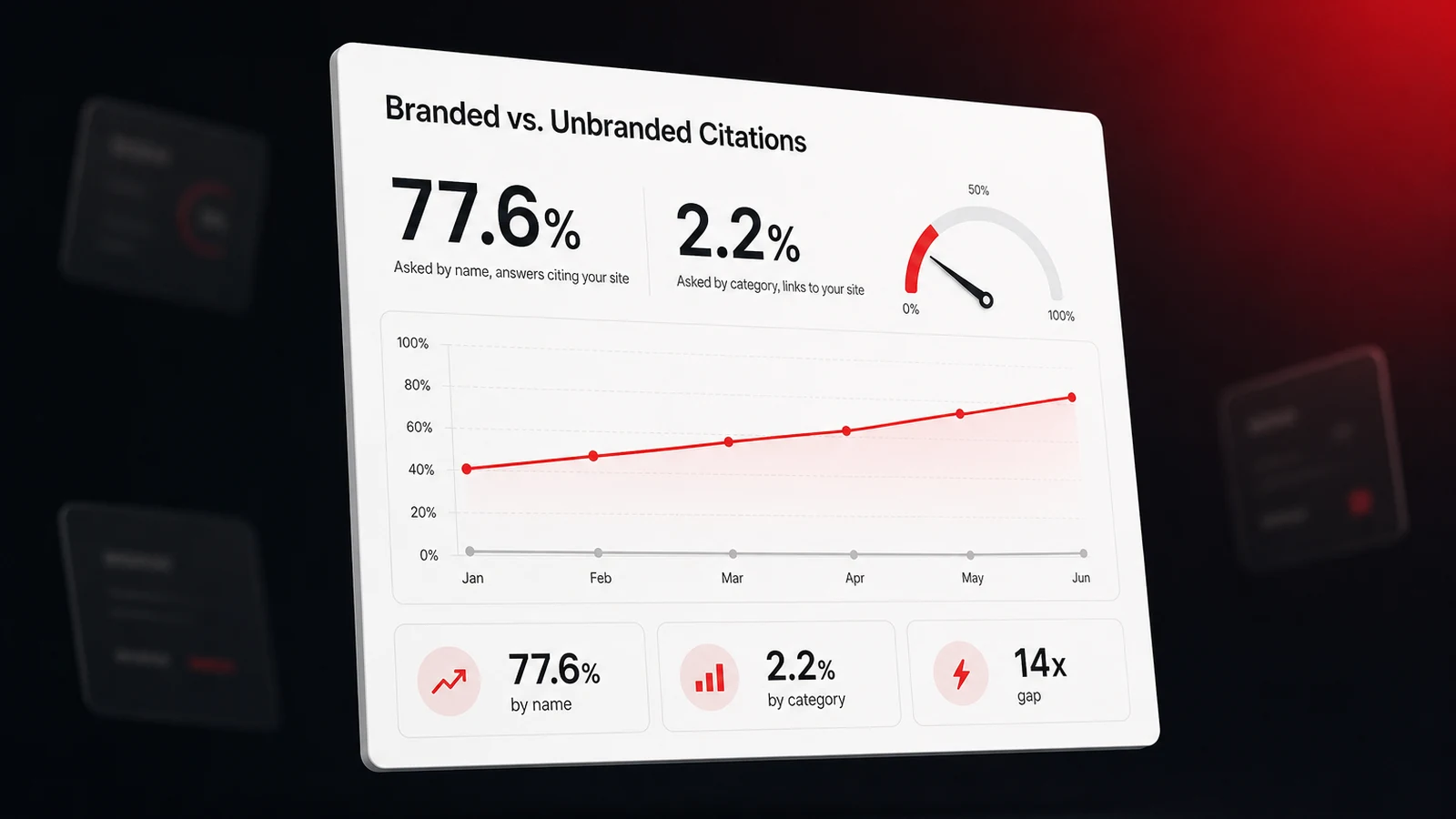
In 2026, Foundation Marketing and AirOps measured it across 5.1 million responses from AI assistants and 57.2 million citations, spanning 50 brands in seven verticals. When the prompt named a brand, 77.6 percent of responses included at least one citation from that brand's own domain. When the prompt asked about the category without naming anyone, only 2.2 percent of cited links pointed to a brand-owned domain. Across every prompt type combined, brand-owned domains earned 10.15 percent of citations. Foundation calls the branded to unbranded difference the 14x gap, and the label is fair.
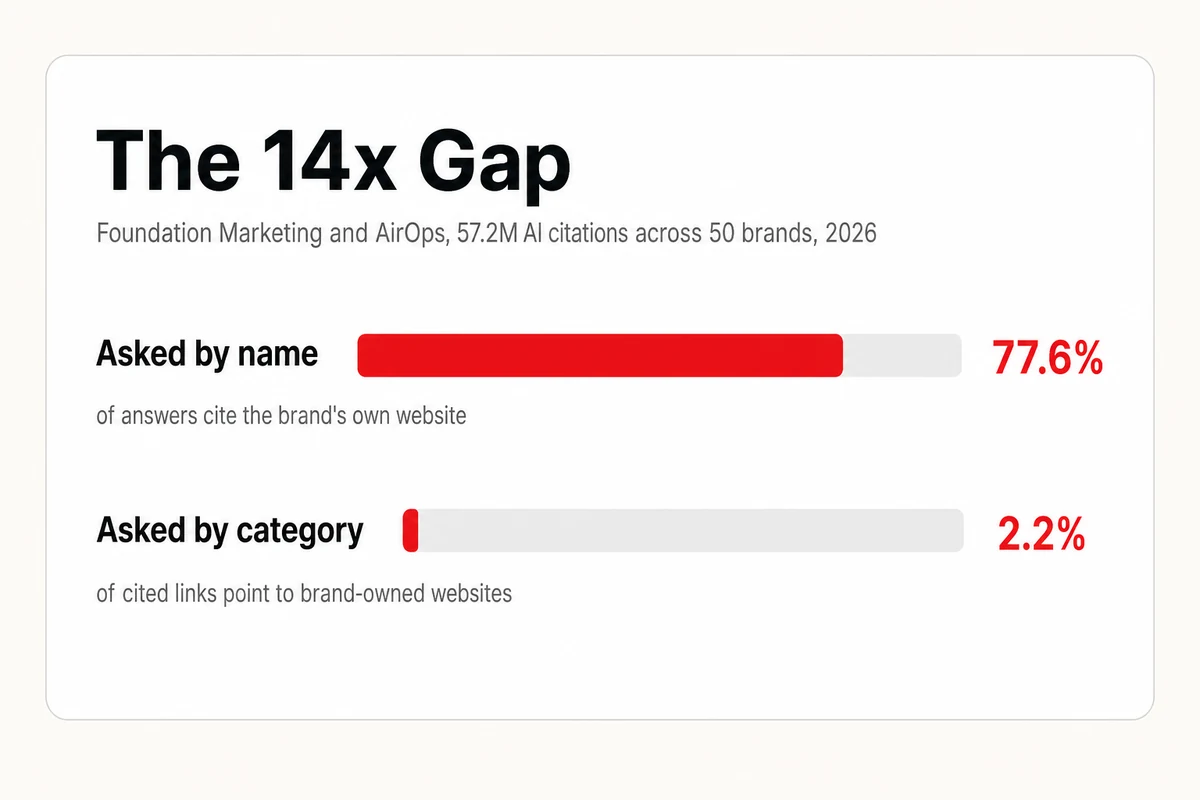
Those brands sell software to other companies, so the exact numbers won't map onto a plumber or a dental office. The shape does. A name is an instruction to look you up. A category question is an instruction to pick, and the sources it picks from are mostly not yours. The rest of this piece explains why, shows what local answers actually run on, and lays out the work that gets a business named when nobody asked for it by name.
Why the Name Changes What the Machine Looks For
An assistant answering a branded question has one job, find out about a specific business. It searches your name, lands on your site and your profiles, and quotes what it reads. Your site is the primary source on you, so it gets cited. That's the 77.6 percent, and it's why an owner who checks by name walks away reassured.
An unbranded question hands the assistant a different job. It has to assemble a shortlist it can defend, so it breaks the question into the parts a buyer cares about, who's rated well, who handles this job, who's open now, what it costs, and searches each part separately. The pages that answer those parts are review sites, directories, forum threads, and comparison articles, because those are the pages that discuss many businesses at once. Your service page discusses one. We walked through the retrieval mechanics in our post on how answer engines source content compared with traditional search, and the short version is that a passage comparing several providers beats a passage describing one.
Being named and being cited are also two different outcomes, and on unbranded prompts both are small. In August 2026, AirOps reported that on unbranded prompts the average brand is mentioned in 0.34 percent of answers and cited as a source in 5.42 percent, while on branded prompts a healthy mention rate runs 40 to 70 percent. It also found that brands earning both a mention and a citation in the same answer were about 40 percent more likely to appear again in later answers. The name in the answer is what wins the customer. The citation is what makes the name stick.
Local Answers Run on Directories and Forums
The B2B study shows the gap. Two local studies show what fills it. In May 2025, Whitespark ran 540 local queries across Houston, Phoenix, and Denver in six verticals, plumbers and dentists among them, and found an AI Overview on 68 percent of them. For its Houston plumber set, 60 percent of the citations pointed at third-party publishers, Reddit, Quora, Thumbtack, HomeGuide, Yelp, and even job boards, while 40 percent cited individual plumbing companies. Four in ten is far better than the B2B figure, and it still means most of the evidence behind a local recommendation lives on someone else's domain.
In July 2026, Acromatico asked Gemini, with search grounding on, for recommendations in ten service verticals across 25 US cities and pulled the sources from the grounding data. Directory and ranking sites were cited in 78 percent of answers. Review and community sites, led by Reddit, appeared in 21 percent. Individual business websites showed up only in the long tail. Our own breakdown of which sources feed an assistant's local business answers found the same layering, Google's records and Yelp under nearly every local answer, with a trade-specific third source that changes by industry.
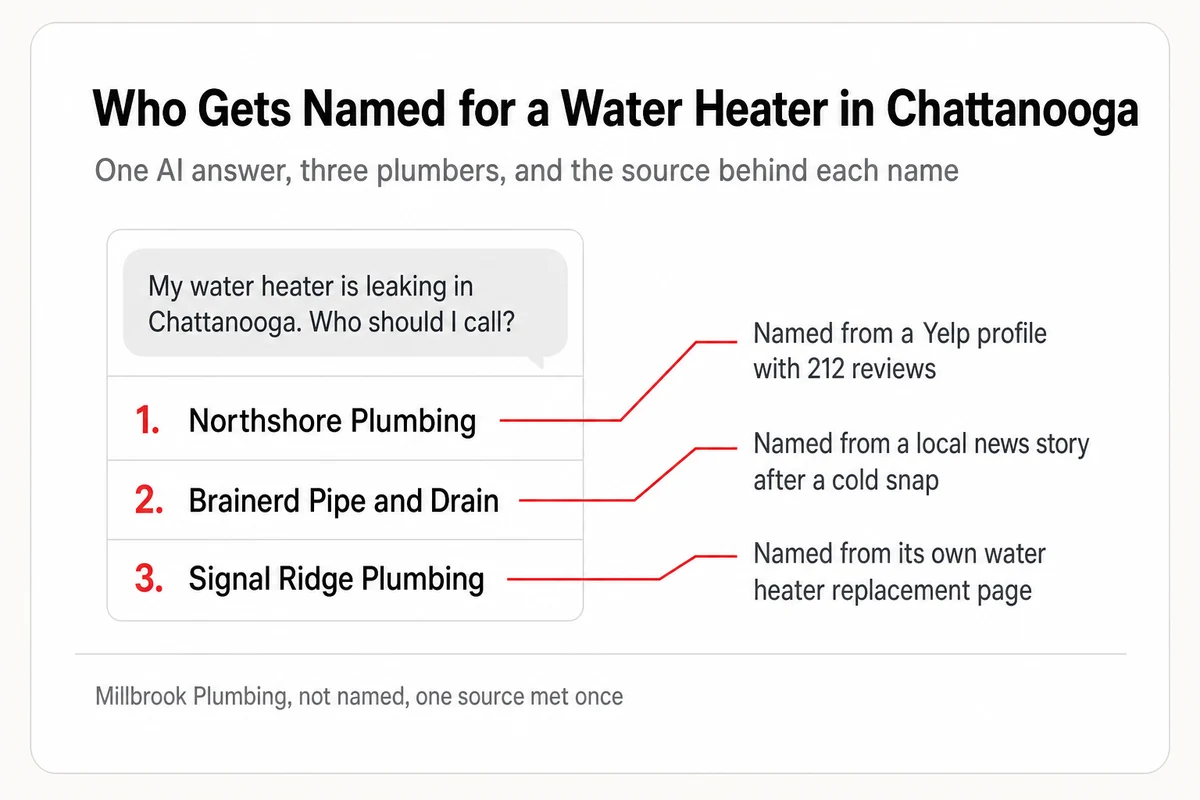
Put a face on it. Say you run Millbrook Plumbing in Chattanooga and someone asks an assistant who to call about a failing water heater. The answer names three companies. One is named because its Yelp profile carries a couple hundred reviews that mention water heaters. One is named because the local paper ran a piece on it after a cold snap. One is named because its own water heater page answers the cost and timeline questions plainly. If Millbrook has a good site and nothing else, the retriever met it once, on a page about one company, and moved on.
What the Businesses That Get Named Have in Common
Look at who does surface on category prompts, in the B2B study and in the local ones, and two traits keep showing up together. The business publishes deep, specific content on its own site that reads like the authority on its category, and it's covered by third-party pages the category already trusts, so the retriever meets the name on several pages, not one. Neither half works alone. Content without coverage is a single source the retriever rarely reaches for on a category question. Coverage without content gives the assistant a name but nothing of yours to quote once it finds you.
The off-site half is bigger than most owners expect. In October 2025, AirOps found that brands were 6.5 times more likely to be mentioned through third-party sources than through their own domains, with 85 percent of brand mentions coming from external pages and 13.2 percent from the brand's own site. For a local business, the third-party sources are already familiar. Your Google Business Profile, your Yelp and trade-directory profiles, your reviews, local news, and the neighborhood forum where people ask for a plumber. The job is to make sure your name, your specialties, and your service area read the same on all of them, so that when the retriever encounters you five times, it's meeting one consistent business.
Run the Two-Prompt Test on Your Own Business
You don't need a tool to see your own gap. You need two prompts, run on each assistant you care about, and a note of what comes back. Use your real name and city in the first and leave every name out of the second. Ask ChatGPT, Gemini, Claude, Perplexity, and Google AI the same pair, since each runs its own retrieval and they disagree more than people expect.
Prompt 1 (branded)
What can you tell me about Millbrook Plumbing in Chattanooga, Tennessee? Include what they specialize in, their service area, and how customers rate them. Cite your sources.

Prompt 2 (unbranded)
I live in Chattanooga, Tennessee and my water heater is leaking. Which plumbing companies should I call for a same-week replacement, and why those? Cite your sources.
Score each answer on three things. Whether your business is named, whether your site is cited, and which domains are cited instead. The first prompt will usually go well. The second is the one that tells you something. Write down every domain the unbranded answer cites, because that list is your map of where the assistant looks when it's choosing, and the next two sections are about getting onto it. If you want the checking done more carefully, our guide on telling whether AI recommends your business covers the full question set and how to read an answer like an auditor.
Build the Pages a Category Question Needs
Start on your own site, because it's the half you control completely. A category question breaks into sub-questions, and each one you answer in a self-contained passage is another entry point for the retriever to find you and something of yours to quote. For Millbrook, the water heater page shouldn't be a paragraph about quality service. It should answer what a replacement costs in Chattanooga, how long the job takes, whether same-day is possible, what the permit situation is, tank vs. tankless, and what the warranty covers, each under its own heading, each stated in full sentences with real numbers.
Do the same for every service you want to be recommended for, and for every city or neighborhood you serve if the answers differ. A page per service that opens with a direct answer, carries a short FAQ, and states your service area and hours in plain text gives the assistant a reason to include you once it finds you. Keep it current, since a page that reads stale gets trusted less than one that moved this year. This is also the work a free Lighthouse Local audit scores on your own site, whether the pages are crawlable, structured, and machine-readable enough for an assistant to lift from, so you get a ranked fix list rather than a guess.
Earn the Mentions on the Sources AI Already Trusts
Then go where the unbranded answer already looks. The domain list from your two-prompt test tells you exactly which sources matter in your trade and your town, and the order of work follows from it. Claim and complete your Google Business Profile with the same services, hours, and area your site states. Build and answer reviews steadily, since your reviews influence which businesses AI recommends and the text of a review is a passage the retriever can quote. Fill out the trade directories that showed up in your test, whether that's Thumbtack and HomeGuide for a plumber or Healthgrades for a dentist.
Then earn the coverage a directory can't give you. A quote in the local paper's cold-snap story, a chamber of commerce member page, a trade association listing, a genuinely helpful answer in a neighborhood forum thread. Each is a trusted page that mentions your name in connection with the category, and each is another place the retriever meets you. Customers want that trail too. In a February 2026 survey of 2,202 US adults, Yelp and Morning Consult found that 57 percent use AI tools to find local businesses at least monthly, only 15 percent trust the results a lot, and 76 percent say it's important to see where the information came from. Among people who had searched for HVAC help, 77 percent preferred authentic human content and trusted sources. A recommendation backed by your reviews and a local news mention is one the customer believes. If you'd rather not run the profiles, reviews, and citations yourself, that's the done-for-you work behind Lighthouse Local for Business, where you approve the plan and our specialists execute it.
The Gap Narrows, It Never Closes
Be honest about the ceiling. Even across 50 well-funded brands, only about one citation in ten pointed at a brand-owned domain, and a business owner who does everything in this piece will still see their own site cited far less on category questions than on branded ones. That's fine, because the citation isn't the prize. The prize is being one of the three names in the answer, with your reviews, a local story, or your own water heater page as the evidence behind it. Measured that way, the gap is one you can move, and it moves fastest in trades where today's answers are thin.
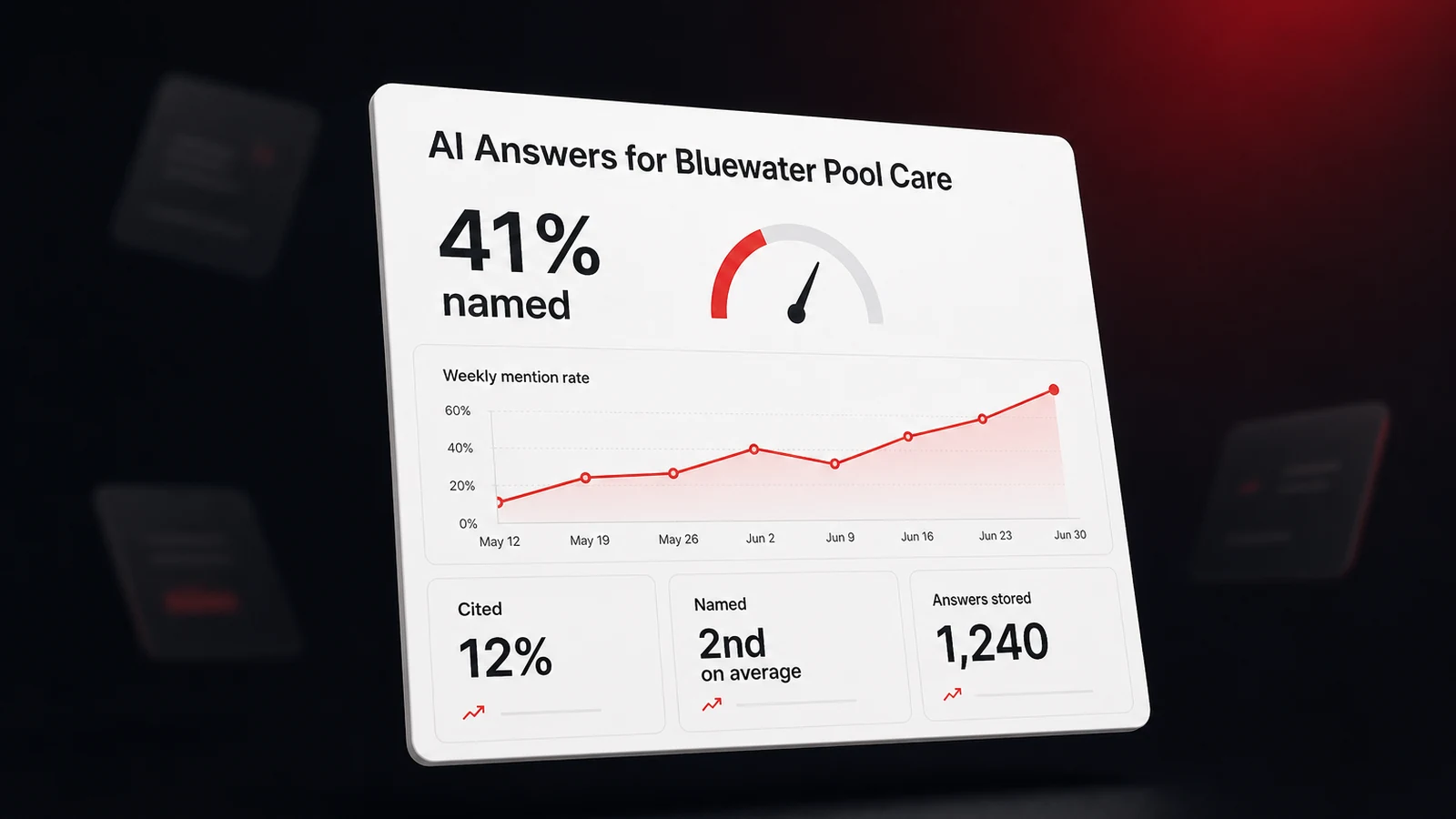
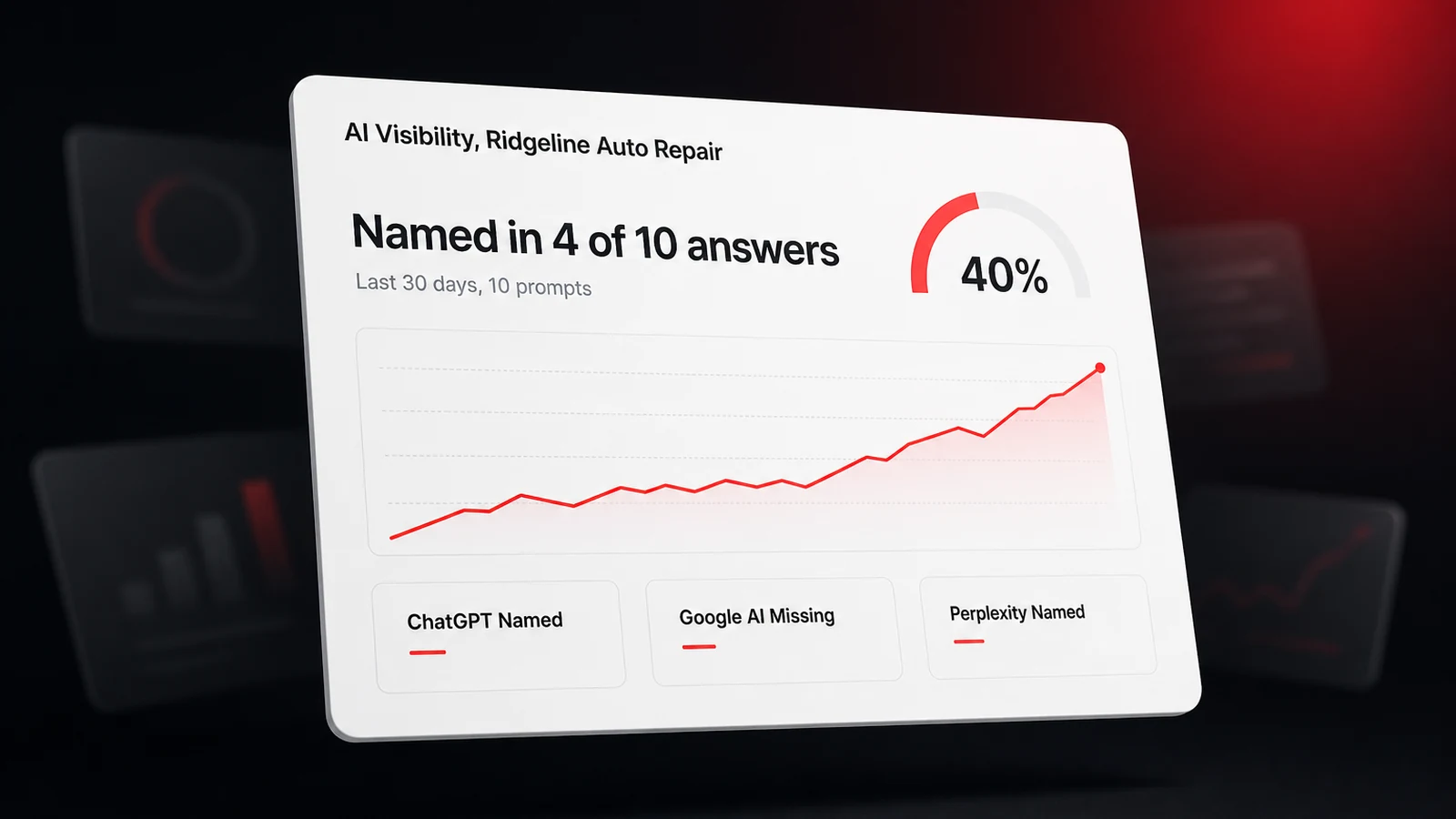
What you want to watch is your mention rate on unbranded prompts, per assistant, over time, since a single check only tells you where you stood on one night. Lighthouse Local's AI visibility tracker runs a standing set of category prompts against each assistant and tags every answer as named, missing, or won by a competitor, along with which of your pages it cited, so the two-prompt test becomes a line instead of a snapshot. Answer the category question on your own pages, get your name onto the sources the answer already trusts, and the next time someone in your town asks without knowing you, you'll be there.
Frequently asked questions
Why does ChatGPT cite my website when I ask by name but not when I ask for the best in my category?
A branded prompt is a lookup, so the assistant searches your name and your own site is the primary source. A category prompt is a selection, so it searches for pages that compare several providers, which are mostly review sites, directories, and forums. In the 2026 Foundation Marketing and AirOps study, 77.6 percent of branded responses cited the brand's own site while only 2.2 percent of cited links in unbranded responses pointed to a brand-owned domain.
What is the difference between an AI mention and an AI citation?
A mention is your business named in the answer text. A citation is a link to a page the assistant used as a source, which may be yours or a third party's. On unbranded prompts both are rare, and the mention is what wins the customer, since most people read the names and never click the sources.
Does a local business need backlinks to show up in unbranded AI answers?
For AI answers, being named on a trusted page matters at least as much as being linked from it. A review profile, a directory entry, a local news piece, or a forum thread that names you in connection with your service gives the retriever another page to meet you on, whether or not it links. Consistent name, services, and service area across those pages is what makes them add up.
How long does it take to start being named on unbranded prompts?
It depends on how thin the current answers are in your trade and town. Completing your Google Business Profile and directory listings can change answers within weeks, while building review volume and earning local coverage takes months. Track a standing set of category prompts on each assistant monthly so you see the change rather than guess at it.