ChatGPT Runs on Bing Data and Its Own Index, Not on Google Search
ChatGPT doesn't use Google as its search engine. When it searches the web, it draws on Microsoft's Bing search data, on an index OpenAI has built with its own crawler, and on licensed partners such as Yelp, and OpenAI has never published what share each source supplies. That's the whole answer. Every piece of it has a date and a document behind it, and the rest of this post walks through them, because the mix has shifted three times and will shift again.
For a local business the distinction decides where the work goes. If ChatGPT were a front end for Google, ranking on Google would be the job, and most owners already chase that. Since it isn't, a page on Google's first page can be invisible to ChatGPT, and a shop with no Google ranking at all can get named because Yelp lists it. Google's public pages still reach ChatGPT, because a Business Profile page is a web page any crawler can fetch, which is why google.com turns up among the domains ChatGPT cites for local answers. What ChatGPT lacks is Google's ranking and Google's index. In April 2025, OpenAI's head of ChatGPT, Nick Turley, testified in the Google antitrust trial that ChatGPT pulls from Bing's search information, that OpenAI had asked Google for access to its search index and been refused, and that the goal of serving 80 percent of searches from OpenAI's own index by the end of 2025 was "now years down the line." That testimony is the clearest first-party statement on record, and everything published since fills in how the mix has moved.
Three Years of Search Providers, Dated
ChatGPT's web search has gone through three eras, and each one changed what a business had to do to be found.
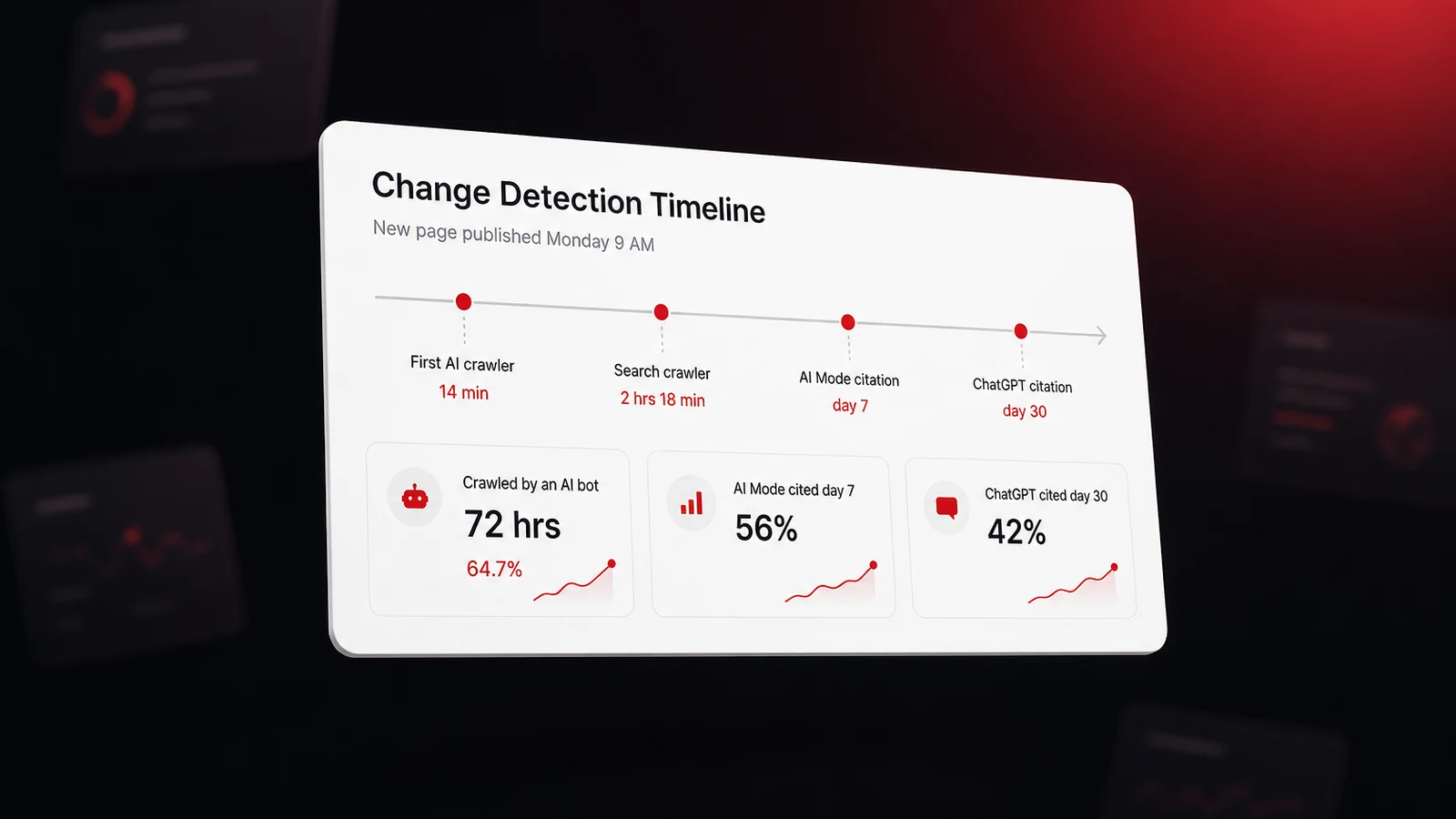
Bing only. ChatGPT first got live web browsing through Bing in October 2023, and when a standalone search feature arrived a year later it still leaned on Microsoft. Scrunch's write-up of that rollout, published in March 2025, traced ChatGPT's reliance on Bing results back to that first launch and noted that OpenAI had started running its own indexer, OAI-SearchBot, alongside it. In that era Bing's index was the room, and if Bing couldn't see your page, ChatGPT couldn't either.
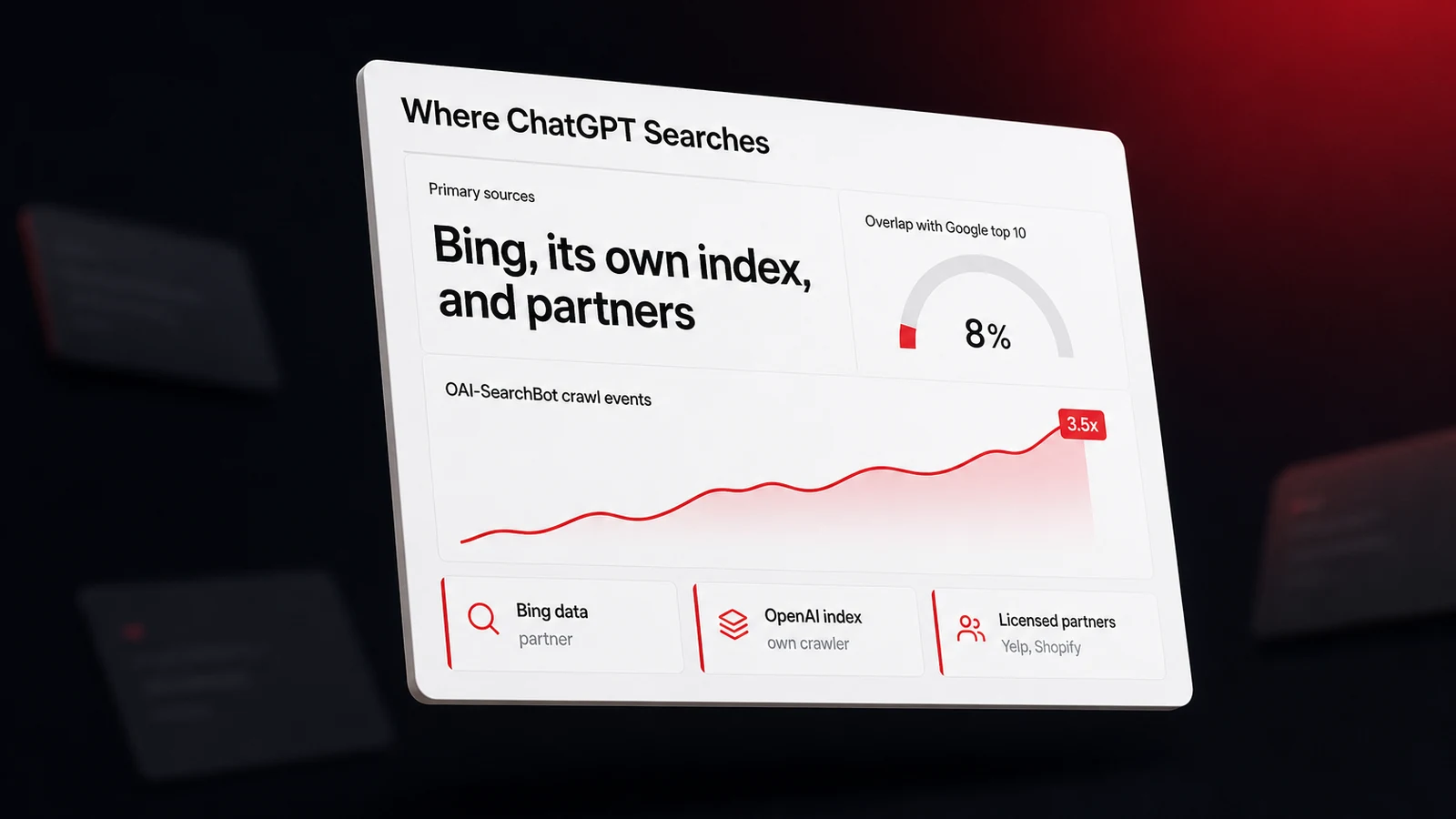
Own index, built in the open. The April 2025 testimony above was the first time OpenAI said out loud that it wanted to replace its provider, and the crawl logs show it doing so. In April 2026, Search Engine Journal reported Botify data in which OAI-SearchBot logged about 3.5 times more crawl events after August 2025, roughly 2.2 billion additional hits, while ChatGPT-User, the bot that fetches a page live during a chat, fell 28 percent, which Botify read as ChatGPT relying more on stored pages and less on live fetches. In July 2026, Cloudflare began a research pilot feeding freshness and traffic signals into OpenAI's search system so ChatGPT can find and index new content sooner. And OpenAI's own help center now describes the result. Its article on offline web search for workspaces, updated in 2026, says that in that mode ChatGPT uses OpenAI's indexed and cached web content "instead of using live web search at the time of each request," which is the first OpenAI help article to describe that index to its own users.
A hybrid of several providers. The current state is a blend, and the most detailed public look at it comes from Peec AI, which in 2026 inspected the data stream behind ChatGPT's answers over two months and found a field naming where each result came from. It carried four values, Labrador, Bright, Oxylabs, and SERP. Peec identifies Labrador as OpenAI's own index and the other three as outside scraping and results providers, counts at least eight further providers stitched in, and notes that Bing "shows up too, mainly in Deep Research." Several of those readings are inferences, and OpenAI hasn't confirmed any of them. A separate Peec study of Deep Research sessions in June 2026 found every logged search ran on Bing, with no Google and no fallback. Microsoft, for its part, says so directly. Its page for Web IQ, the grounding service it built on the Bing index, states that Web IQ powers AI assistants including Copilot and ChatGPT, and Bing's June 2026 announcement describes Web IQ as a search engine built for AI systems rather than for people.
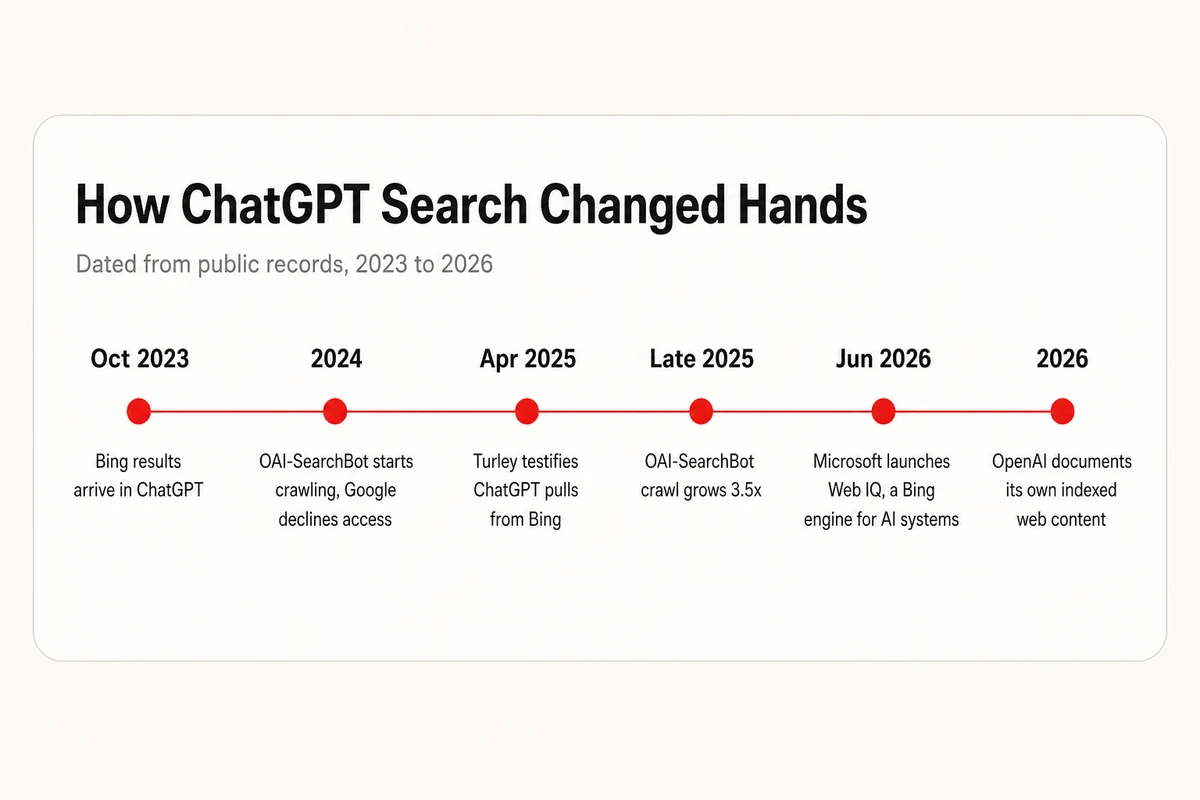
Put the three eras together and the picture is one search box with several engines behind it. Bing is still one of them. OpenAI's own index is growing into the main one. Google has never been one of them by agreement.
Google Said No, So OpenAI Crawled the Web Itself
The reason Google isn't in the mix is in the trial record. OpenAI asked Google in 2024 for access to its search API, arguing in an email shown in court that "having multiple partners, and in particular Google's API, would enable us to provide a better product to users," and Google declined. What OpenAI did instead was crawl. Its search crawler, OAI-SearchBot, is the one that decides whether a site can appear in ChatGPT search at all, separate from GPTBot, which gathers training data, and from ChatGPT-User, which fetches a page during a conversation, a split that matters when you're deciding which AI crawlers to allow and which to block.
Google results do reach ChatGPT at the edges, just not through a deal. In August 2025, Tom's Guide relayed a report from The Information that OpenAI had been pulling Google search data through SerpApi, a scraping service, and Peec's 2026 analysis saw a Search Console impression spike during one of its tests that it reads as ChatGPT still querying Google while grounding an answer. Neither is something you can act on. You can't submit, verify, or optimize your way into a scrape, and OpenAI has said nothing about it.
What you can act on is the index OpenAI owns, and the offline web search article lists what keeps a page out of it in that workspace mode. The site blocks crawling through robots.txt. The CDN or a bot-blocking rule challenges the crawler. The page needs a login. The content loads through scripts. The page is new, rarely visited, or buried deep in the site structure. Every one of those is a fix on your side, and even though the article is written for one mode, together they're the closest thing to a published OpenAI indexing checklist.
Page One on Bing Overlaps ChatGPT by About 8 Percent
Knowing that Bing feeds ChatGPT tempts owners to treat Bing rankings as the target. The overlap data says that ranking anywhere is a weak predictor. In August 2025, Ahrefs lined ChatGPT's citations up against the organic rankings for the identical queries and found that in-text citations matched Google's top ten 8.00 percent of the time and Bing's top ten 8.10 percent. The links in the sources panel ran 6.10 percent against Google's top ten and 8.10 percent against Bing's. Ahrefs noted the finding surprised many, since ChatGPT's built-in provider is Bing, and flagged that the data came from July 2025 and could shift.
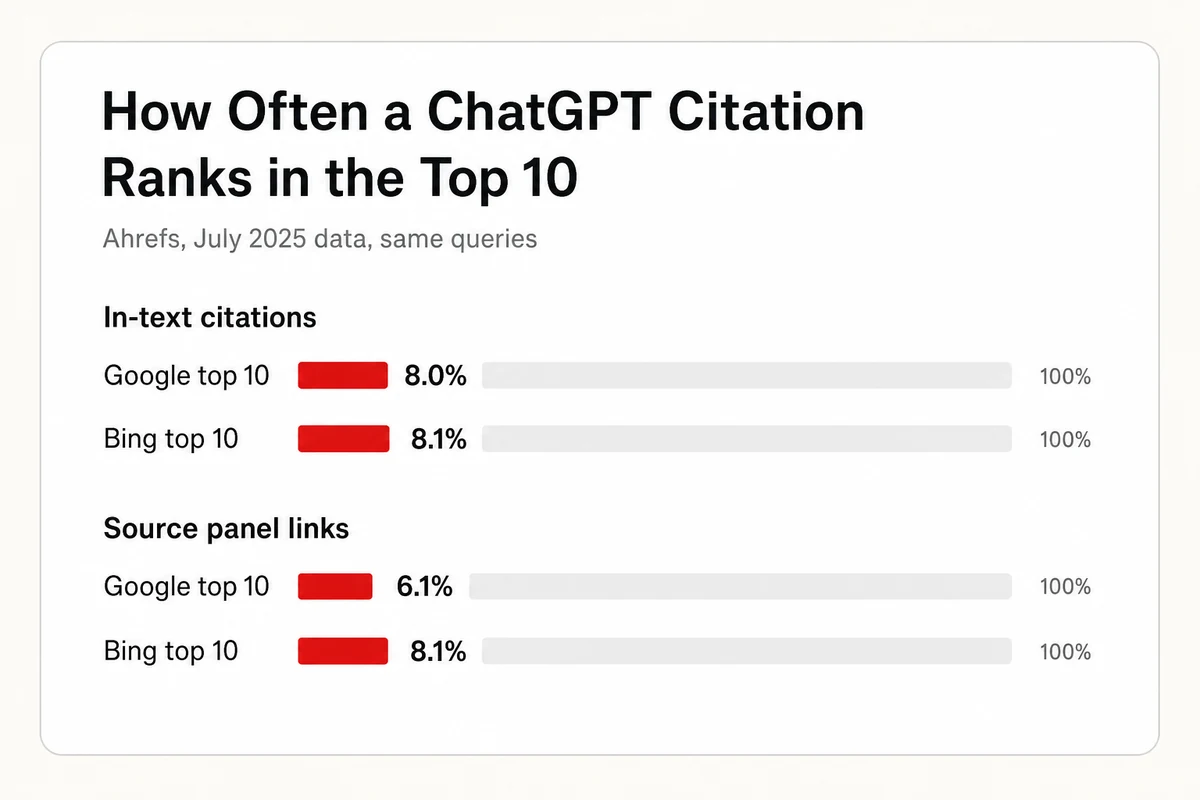
The gap exists because ChatGPT doesn't rank pages. It rewrites your question into several narrower searches, reads many results, and quotes the passages that answer best, the process our comparison of how AI answer engines source content against traditional search walks through step by step. A top ranking on Bing puts a page in the pool. The sentence on that page is what gets it cited, so the page has to carry the answer, not just the keyword.
Local Business Cards Come From Yelp and TripAdvisor, Not a Search Result
For a question like "who does drain cleaning in Tampa," the business cards ChatGPT draws lean on Yelp and TripAdvisor more than on any search result. In August 2026, Steady Demand ran 2,880 local prompts across twelve verticals and twelve US metros and logged 4,607 answers. In the business cards ChatGPT draws beside its local answers, Yelp grounded 95.83 percent of them and TripAdvisor 28.90 percent. In the citations visible in the answer text, TripAdvisor led at 13.55 percent, with OpenTable at 1.70, Yelp at 1.04, Apple Maps at 0.14, and Google at 0.07. Foursquare, often repeated as ChatGPT's main local supplier, appeared in 0.00 percent of citations on the primary surface. One agency, one 72-hour window, so treat the decimals loosely, but the order of the sources is hard to argue with. A larger 2026 count on a different surface put google.com at the top of ChatGPT's local citations, so Google's exact share depends on where you measure, and the one constant across both counts is Yelp.
That lines up with the contracts. As of October 2026, OpenAI's own help page on web search names Microsoft and Shopify as the search providers it shares queries with, which our walkthrough of the claims AI makes about your business unpacks, and Yelp licensed its reviews, ratings, and business details to OpenAI in 2026, a deal that explains why Yelp dominates ChatGPT's local answers. The cost of sitting outside those feeds is measurable. Local Falcon's February 2026 comparison of 189,905 ChatGPT results with local Google results found that 83 percent of restaurants were invisible on ChatGPT while only 14 percent were invisible on Google. A restaurant can hold a Maps ranking all year and still not exist to ChatGPT, because the feeds behind ChatGPT's local cards are Yelp's and TripAdvisor's, and a Maps-only presence never reaches them.
Every Assistant Searches a Different Index
The same question put to the other assistants goes to a different index each time, which is why the five we track so rarely agree on a local shortlist.
| Assistant | Where its web results come from | Crawler to allow |
|---|---|---|
| ChatGPT | Bing data, OpenAI's own index, and licensed partners such as Yelp and Shopify | OAI-SearchBot |
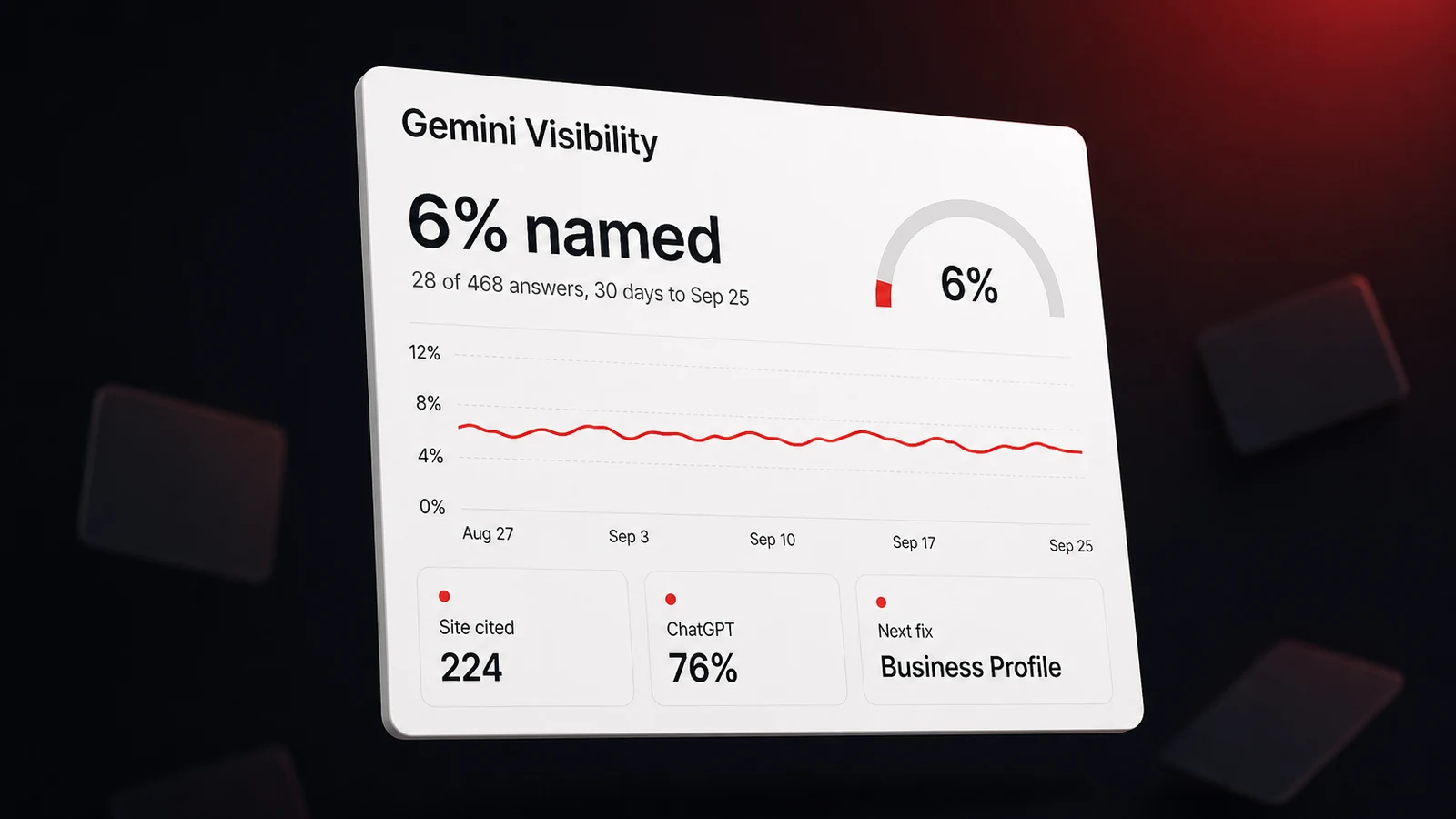
| Gemini | Google Search and Google Maps records | Googlebot |
| Claude | Claude's web search tool, backend not published | Claude-SearchBot |
| Perplexity | Perplexity's own index | PerplexityBot |
| Google AI Overviews and AI Mode | Google's search index, with fan-out queries | Googlebot |
Perplexity's row has the clearest documentation of the four. Perplexity has said its index tracks more than 200 billion unique URLs, crawled by PerplexityBot, so it's a fourth index to be in rather than a mirror of Bing or Google, and its refresh behavior is covered in our post on how long AI takes to notice website changes. Google's AI Overviews and AI Mode run on Google's own search index and ask nothing beyond an indexed, snippet-eligible page, Gemini's local answers read from Google's Maps records, and Anthropic runs a separate search crawler for Claude. Microsoft Copilot, which we don't track, runs on Bing outright. So the only assistants whose results come from Google by agreement are Google's own, and ChatGPT is the one with the most moving parts.
Six Fixes That Follow From Not Being Google
Because ChatGPT's sources are Bing, OpenAI's crawler, and a handful of directories, the work splits into six items, in the order they pay off.
- Open the door to OAI-SearchBot. Check robots.txt for a blanket block on AI bots and allow the search crawler by name. Then check your CDN or firewall settings for a bot challenge, because OpenAI lists a blocking CDN as a reason a page never enters its index.
- Register the site in Bing Webmaster Tools. Submit the sitemap, turn on IndexNow so changed pages reach Bing within minutes, and open the AI Performance report, which logs citations in Copilot and Bing's own AI answers rather than in ChatGPT, and which our guide to building an AI search visibility dashboard uses as the free Bing-side citation feed.
- Put your facts in the raw HTML. Hours, address, services, and prices that only appear after a script runs are on OpenAI's list of content that goes missing. View the page source and search for your phone number. If it isn't there, the crawler may not see it either.
- Claim and complete Yelp, and TripAdvisor where it applies. Those are the feeds behind ChatGPT's local cards, so a thin or unclaimed listing is a thin or missing card.
- Keep your Google Business Profile current anyway. Google's own assistants, Gemini and AI Overviews, run on it, ChatGPT's search still lands on Google's records through other pages, and a mismatch between Google and Yelp turns into a wrong claim in the answer.
- Make each service page answer in its first paragraph. Citations go to the passage that answers the rewritten query, so state the service, the area, and the price range in plain sentences near the top.
None of this is exotic, and most of this is listings and on-page work a business can do in an afternoon or two. If you'd rather hand it off, the specialists at Lighthouse Local for Business handle on-page SEO, listings, and Google Business Profile work as a done-for-you service that you approve and they carry out.
Feed the Indexes ChatGPT Reads, Then Watch the Answer
The honest version of "does ChatGPT use Google or Bing" is that it used Bing, is building its own index to replace it, borrows from several other providers along the way, and never got Google. The mix will move again, because OpenAI's own target of serving most searches from its own index is still ahead of it. What won't move is the shape of the work. Be crawlable by OAI-SearchBot, be indexed by Bing, be listed where ChatGPT licenses its local facts, and write pages worth quoting.
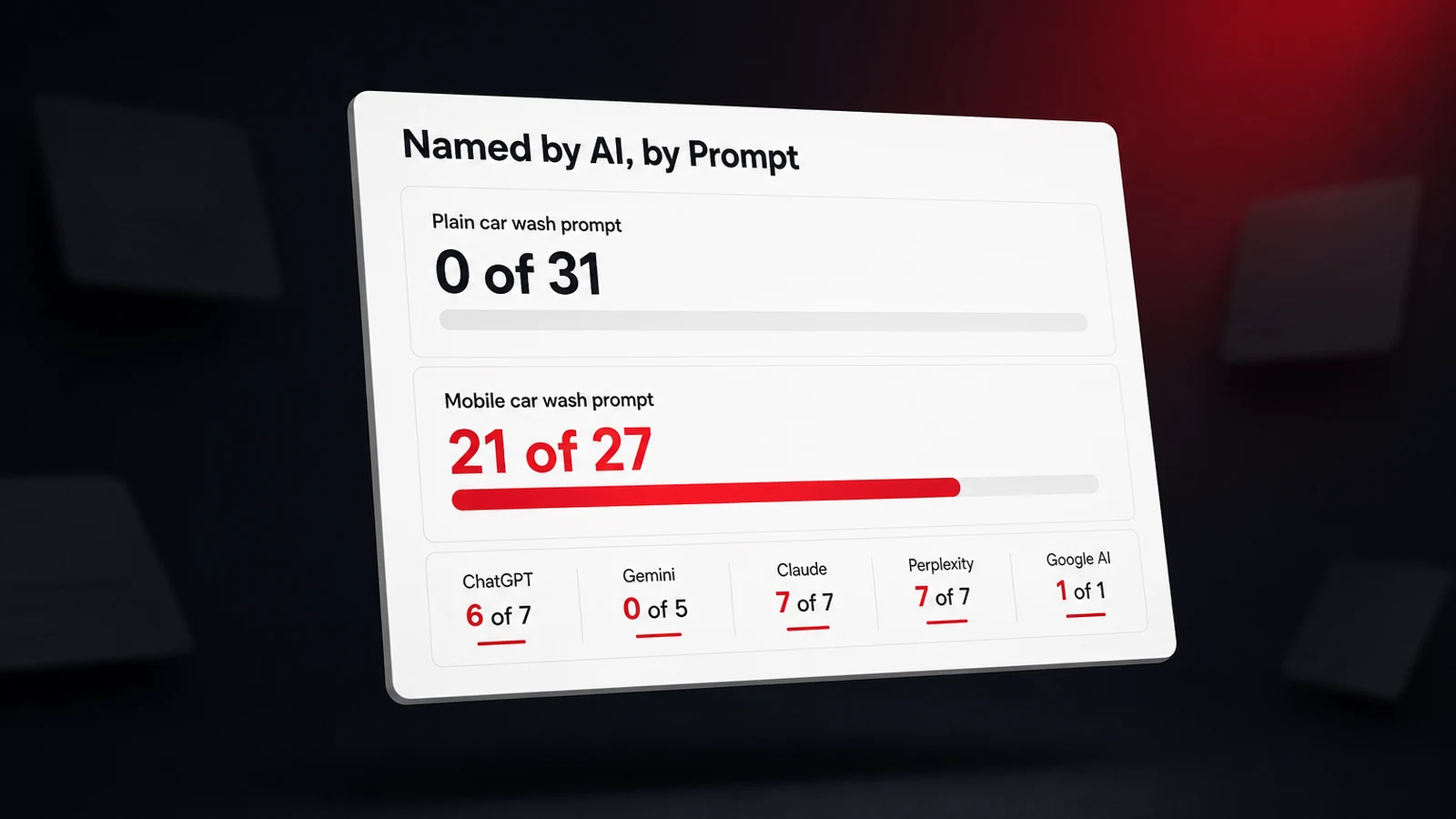
Start with the fix list. You can get a free Lighthouse Local audit that checks crawler access, robots.txt, and the on-page signals above and ranks the fixes, with no signup. Then measure whether it worked, because none of the indexes report that. Our AI visibility tracker, described on how Lighthouse Local works, asks ChatGPT, Gemini, Claude, Perplexity, and Google AI your customers' questions on a schedule and records which businesses each one names, so a change at Bing or a new Yelp listing shows up as a change in the answer within weeks. Bing gets you into the room. Your own pages and your listings decide whether ChatGPT says your name.
Frequently asked questions
Does ChatGPT use Google search?
Not as a search engine. OpenAI asked Google for access to its search index in 2024 and was refused, according to testimony in the Google antitrust trial. ChatGPT searches through Microsoft's Bing data, an index OpenAI built with its own crawler, and licensed partners such as Yelp. Reports of Google data reaching ChatGPT through a scraping service exist, but OpenAI hasn't confirmed any of it, and a business can't act on it. Google's public pages, including Business Profiles, can still be cited because any crawler can reach them.
Does ChatGPT still use Bing in 2026?
Partly. Microsoft's page for Web IQ, its grounding service built on the Bing index, says it powers ChatGPT, and a June 2026 log study found ChatGPT's Deep Research running every search on Bing. For ordinary searches OpenAI's own index now handles a growing share, and OpenAI hasn't published the split.
If I rank on Google, will ChatGPT recommend my business?
Not by itself. Ahrefs found ChatGPT's citations overlapped Google's top ten results about 8 percent of the time, and about the same for Bing. ChatGPT rewrites the question, reads many pages, and quotes the passage that answers it, so the page has to be crawlable by OAI-SearchBot and carry the answer in plain text.
How do I get my business into ChatGPT's search results?
Allow OAI-SearchBot in robots.txt and your CDN rules, register the site and submit a sitemap in Bing Webmaster Tools, claim your Yelp listing, keep your Google Business Profile accurate, and write service pages that answer the customer's question in the first paragraph. Then track whether ChatGPT names you, because no index reports that.
Which AI assistants use Google?
Google's own. Gemini, AI Overviews, and AI Mode pull from Google's search index and Maps records. Perplexity runs its own index of more than 200 billion URLs, Claude uses Anthropic's own web search, and Microsoft Copilot runs on Bing.