ChatGPT Searches Before It Recommends, So Start With What Its Search Can Find
To get your business recommended by ChatGPT, let OpenAI's search crawler read your site, feed Bing's index, claim and finish your Yelp page, keep your Google Business Profile and Bing Places listing identical to your website, open each service page with the sentence that answers the customer's question, and name the neighborhoods you serve, in that order. Getting recommended by ChatGPT means your business is one of the names ChatGPT writes into its answer when a customer asks for a business like yours in your area. It doesn't pull that answer from memory. It runs a web search, reads the pages and listings that come back, and writes a shortlist with its sources underneath, so the records it can find and quote decide everything. We tested whether ChatGPT uses Google or Bing and found OpenAI describing a search that rewrites your question into several queries and leans on outside search providers, and Microsoft's page for its Bing-built Web IQ grounding service names ChatGPT among the assistants it powers. That's the search layer. For a local question, two more layers sit on top of it, licensed listing data and map pins, and the three together decide whose name comes out.
The customers asking are no longer a rounding error. In Yext's spring 2026 survey of 3,848 adults across the US, the UK, France, Germany, and Italy, 44 percent had run a local search through an AI tool in the past month, and the US figure was 47 percent. The levers in our guide to getting your business recommended by AI hold across the five we track. The difference is the order, and ChatGPT's order starts with a crawler, not a profile.
Three Records ChatGPT Pulls Together on a Local Question
Nothing OpenAI publishes says how much weight each of these carries, so take the ordering below as our read. It comes from OpenAI's release notes, from the two outside traffic studies that exist, and from watching the accounts we track.
The search layer. Ask for a plumber in your town and ChatGPT runs a web search and reads the results before it writes a word. Which index answers that search is a blend that keeps shifting. In July 2026, the French search agency Resoneo inspected 1,249 ChatGPT answers and the roughly 88,000 search results behind them, and on a free account in thinking mode OpenAI's own index supplied 74.7 percent of the URLs, with no Bing pipeline showing in the traffic at all. That was reverse-engineered from network requests, which OpenAI hasn't confirmed, and Microsoft still says its grounding reaches ChatGPT. The split isn't yours to pick. What you control is being present in both indexes, which means letting OpenAI's crawler in and keeping Bing's index fed.
The listings layer. Beside the written answer, ChatGPT draws business cards, and our read is that much of what's in them arrives under license rather than through the search. In July 2026, Axios reported that Yelp is licensing reviews, photos, and business information to OpenAI, a deal Yelp's chief executive summed up as local answers needing Yelp. OpenAI's own release notes show the same direction. The June 2026 note for the GPT-5.5 Instant update says the model uses location context to surface nearby options and brings business information and images together in one answer, and the August 2026 note adds restaurant reservations through OpenTable, Resy, and Yelp. Your Yelp page is the record ChatGPT quotes about you, the way Gemini quotes your Business Profile.
The map pins. Since March 2026, ChatGPT can use your customer's device location, and OpenAI's note for that change names nearby restaurants and maps as what it enables. Where the pins come from is the least documented piece, and the one independent measurement is narrow. A study of 99,538 hotel map entities across about 25,600 ChatGPT hotel searches, written up by Social Places in August 2026, found Google Places behind 70.3 percent of the pins and Yelp behind 22.4 percent by late March, after a December in which every pin was Google's. That's hotels, one study, and a mix that moved inside a quarter, so read it as a direction. Our read of that direction is that your Google Business Profile reaches ChatGPT through the map pin and through its public page, not as a direct feed, so the profile still has to be right.
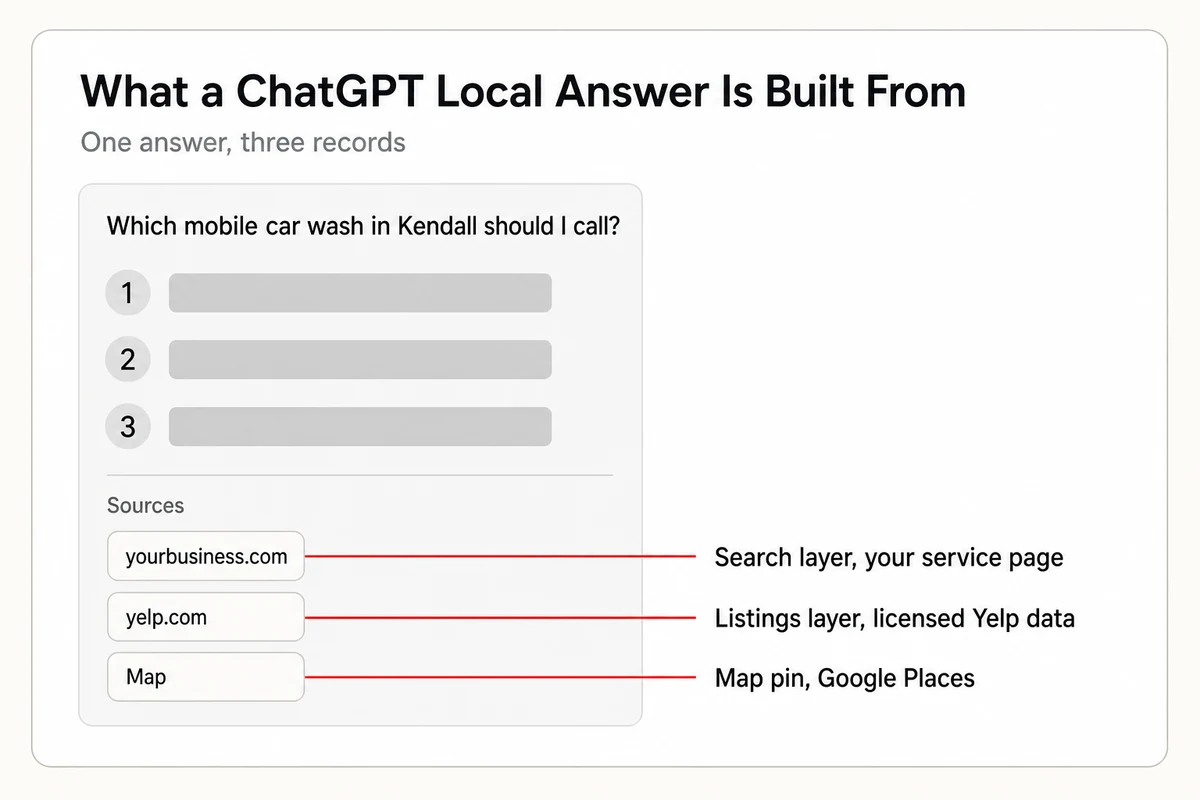
Three records, three places to be correct. The search layer rewards a site the crawler can open and a page that states the answer. The listings layer rewards a Yelp page that's claimed, current, and answered. The map pins reward a profile that agrees with both.
Can You Claim Your Business in ChatGPT?
Yes, as of November 10, 2026. OpenAI opened Business Hub in beta that day, four days after Search Engine Roundtable reported that OpenAI was building it, and an eligible business can now claim its profile and pass verification. Our walkthrough of how to claim your business in ChatGPT has the steps. An earlier version of this section, written before the launch, said there was no claim flow.
OpenAI also says claiming doesn't change how often ChatGPT recommends you, so the records it reads still decide the shortlist. Claim and finish your Google Business Profile and your Yelp page, since Yelp's data is licensed into ChatGPT. Claim your Bing Places listing, since Bing feeds ChatGPT search. Then let OAI-SearchBot crawl your site, because OpenAI's bots page says sites that block it aren't shown in ChatGPT search answers. Each of those is a record you control right now, and none of them waits on OpenAI.
Does Your Google Rating Even Reach ChatGPT?
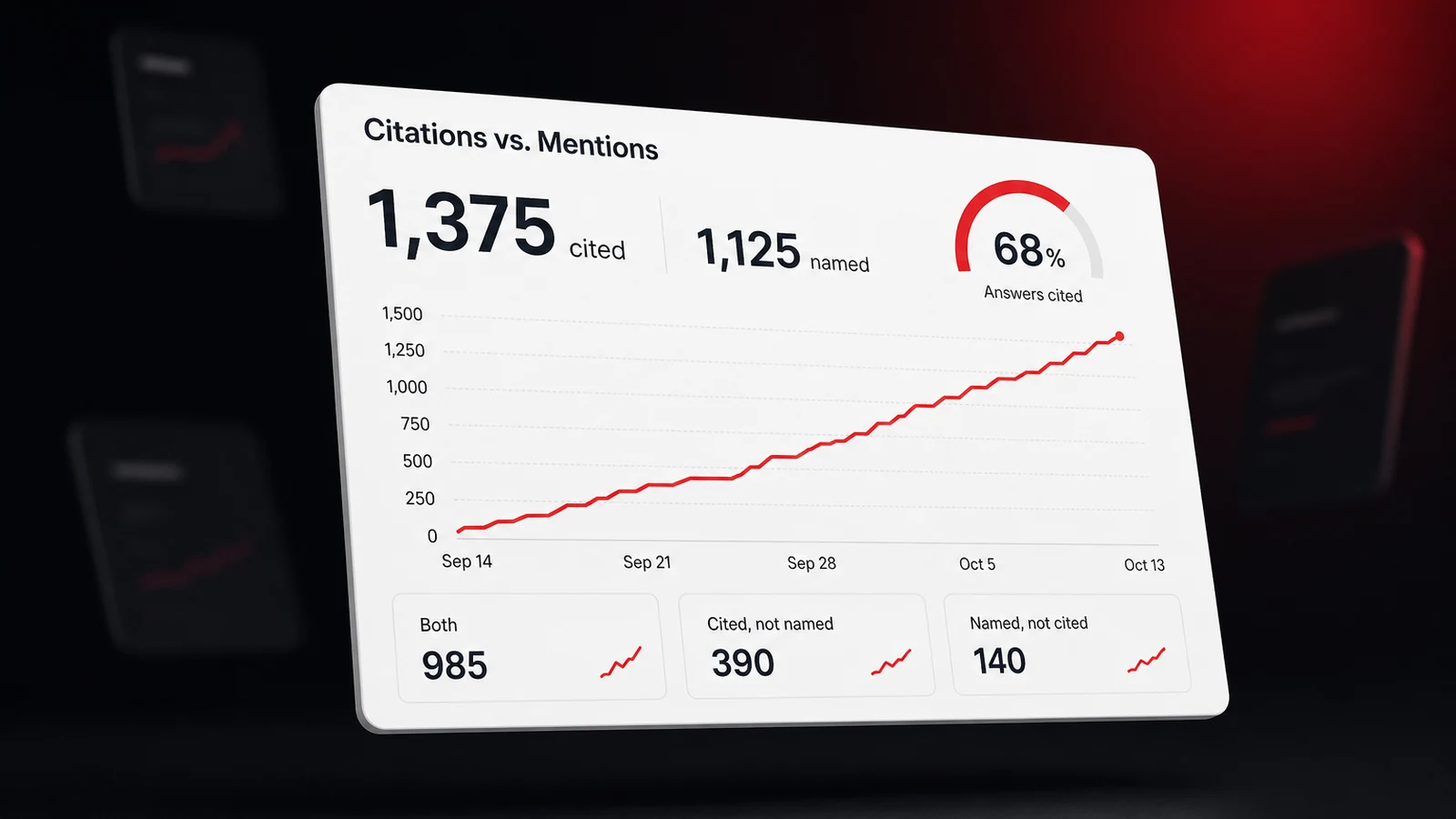
A 4.8 on Google is the usual reason an owner assumes ChatGPT will name them, and the citation data says those stars arrive through a side door. In BrightLocal's August 2026 study of 60,970 local checks across 1,355 business locations, Yelp appeared as a source in 80 percent of ChatGPT's answers, a pattern our guide to where AI gets local business data walks through source by source. Yext's look at 6.8 million citations from July and August 2025 points the same way, with listings making up 48.7 percent of what OpenAI's models cited, and Yext sells listings software, so weigh it as a vendor's number that happens to agree with BrightLocal's. ChatGPT reads your Google rating when a map pin carries it or a page mentions it. It reads your Yelp rating as a licensed record it holds.
So the review habit that matters most is the one most owners dropped years ago. A Yelp page with a dozen recent reviews and a reply under each gives ChatGPT a record it's allowed to quote. A Google profile with three hundred reviews reaches it as a public page it may or may not fetch on a given question. Keep both moving, and if Yelp has sat untouched since you opened, start there. The Miami car wash in the data further down holds a 76 percent named rate on ChatGPT while sitting at 6 percent on Gemini, and in that account Yelp has never shown up as a ChatGPT source, so no single record is the whole answer.
Six Fixes, in the Order ChatGPT Reads Them
These follow the order the three records get read, and each closes with a way to see the result inside ChatGPT itself, with web search switched on.
- Let OAI-SearchBot through. OpenAI's crawler guidance recommends allowing OAI-SearchBot in robots.txt and warns that Cloudflare, Akamai, and similar bot protection can hand it a 403. Allowlist the user agent, and allowlist the IP ranges OpenAI publishes at https://openai.com/searchbot.json. Check it by fetching your own robots.txt and confirming no Disallow line applies to OAI-SearchBot, then by looking in your server or CDN logs for requests from those published ranges. A 403 in the log is the fix list.
- Feed Bing's index. Add the site to Bing Webmaster Tools, send the sitemap, and turn on IndexNow, which Bing's December 2025 post says gets your changes reflected more quickly and lists improved accuracy in AI answers among the benefits. Check it by searching your business name on Bing and confirming the right page and the right phone number come up.
- Claim and finish your Yelp page. Category, hours, service area, photos of real jobs, and a reply on every review, including the bad ones. Check it by asking ChatGPT what customers say about your business and opening the sources list. Yelp should be on it.
- Make your Google Business Profile and Bing Places listing match the site. Name, address, phone, hours, and website, matched exactly, because the map pins lean on Google Places and the search layer leans on Bing's index. Check it by asking ChatGPT for your hours and phone number, then fix any wrong line in the listing it cited rather than arguing with the chat.
- Open each service page with the answer. One sentence that names the service, the city, and who it suits, before any welcome copy, because ChatGPT quotes the passage that answers the question. Check it by asking the service question with your city in it and looking for your page under the answer.
- Write down the neighborhoods you serve. ChatGPT can now know where the customer is standing, when they share their location, so a page and a listing that name your service area give it a reason to pick you for a near-me question. Check it by asking for your trade near a neighborhood you cover and seeing whether you're on the list.
If the list reads like a second job, Lighthouse Local for Business has specialists handling Google Business Profile management, local citations, and on-page work, and you approve each piece before it goes out.
Three Prompts to Put to ChatGPT This Week
Phrase each one like a buyer, not a marketer, and keep the city or neighborhood in it, because ChatGPT treats a placeless question as a general one. Open a fresh temporary chat for each, so your own history doesn't tilt the reply.
- Which [your trade] in [your city] should I call for [your most common job]?
- I'm in [your neighborhood] and need [your most common job] this week. Who's good, and who's open?
- What's the reputation of [your business] in [your city]?
Record every answer in a sheet with a column each for the date, the exact wording, whether you were named, the sources it listed, and who got named instead of you. The sources column matters most on ChatGPT, because it tells you which record did the talking, and that's the record to fix. If you already have a Lighthouse Local account, you can connect ChatGPT to your Lighthouse Local data and have it read its own answers about you.
Log It Weekly, Because ChatGPT Rewrites the Shortlist
Two runs of the same prompt can list different businesses, and a reworded prompt moves the list further, so one good answer proves little and one miss proves less. Run the three prompts on a fixed weekday, append the row, and judge the month, not the Tuesday.
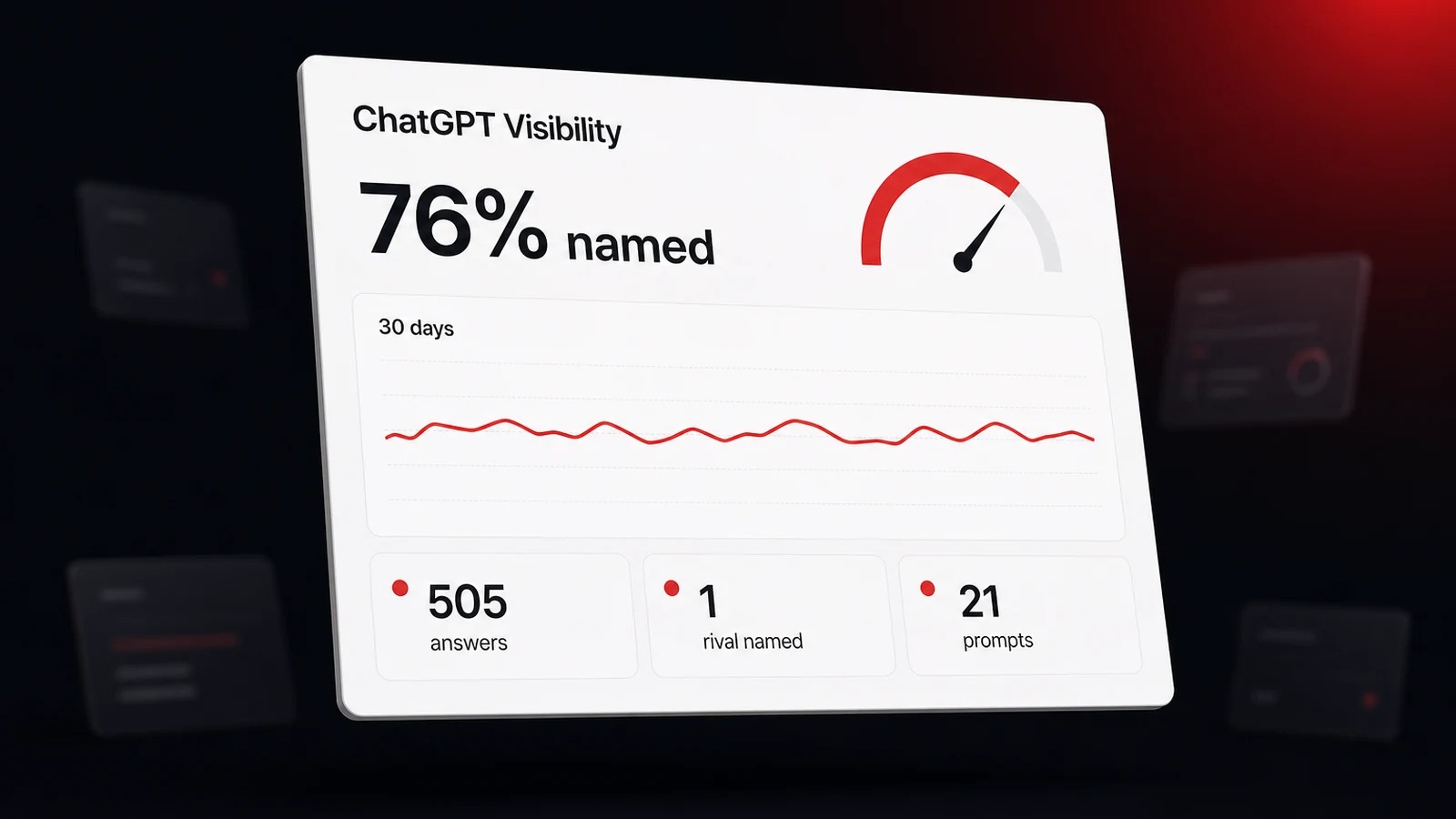
Here's what a month of that looks like at the Miami mobile car wash we follow in our local business case study. Across 21 tracked prompts over the 30 days up to September 25, 2026, our tracker captured 505 ChatGPT answers, the car wash was named in 76 percent of them, and a rival took its place exactly once. The other four assistants we track read the same business from different records.
| Assistant | Answers in 30 days | Share naming the car wash |
|---|---|---|
| ChatGPT | 505 | 76 percent |
| Gemini | 468 | 6 percent |
| Claude | 502 | 71 percent |
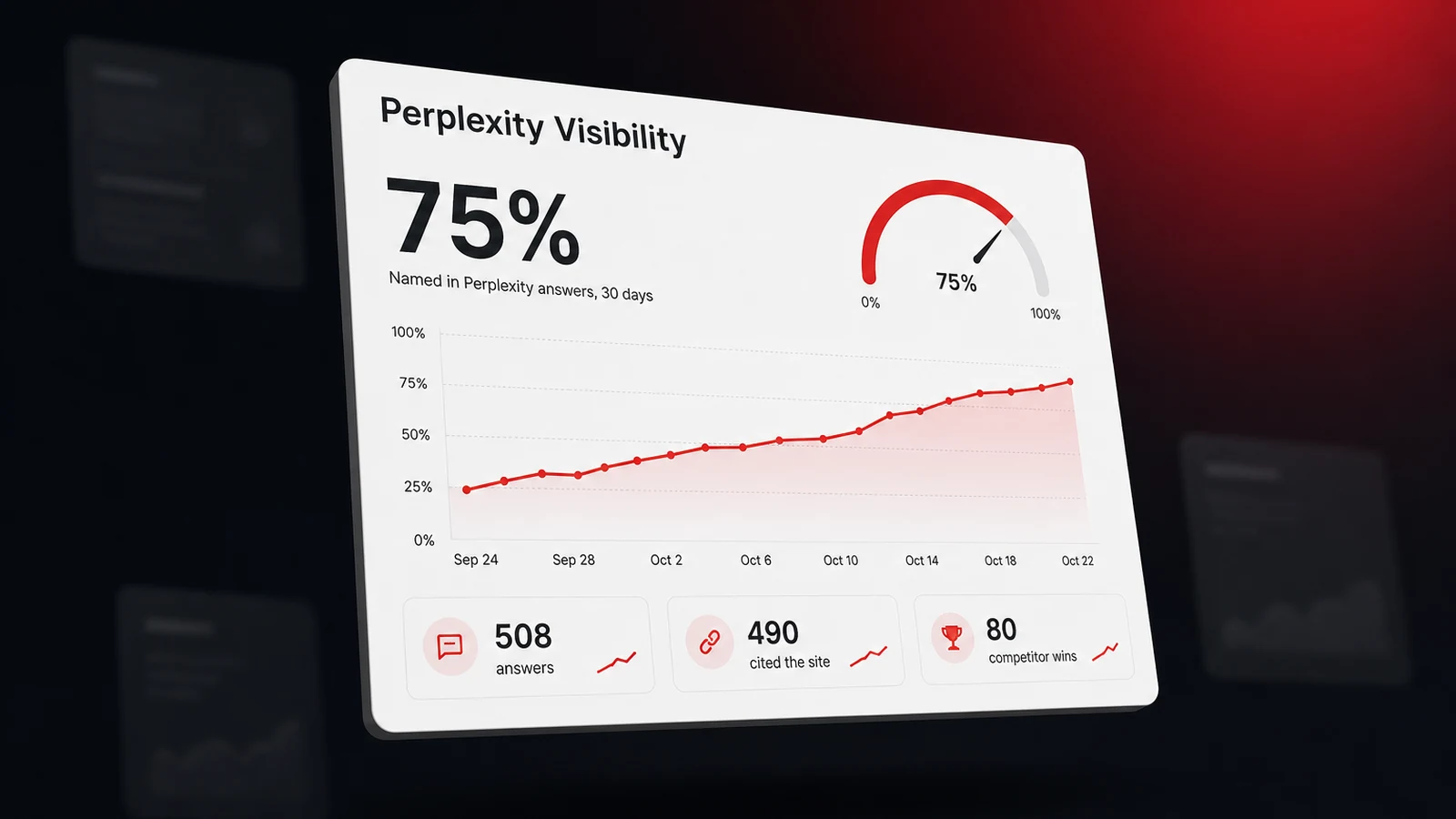
| Perplexity | 505 | 72 percent |
| Google AI | 115 | 26 percent |
ChatGPT's 76 and Gemini's 6 are the same business, the same website, and the same 21 questions. Our read is that the two assistants reach for different records first, which is why the steps that get your business recommended by Gemini start at the profile while this guide starts at the crawler. The data shows the gap. The why is a read, and the weekly log is what tests it. A high ChatGPT rate is also the easiest number to take for granted. The log is how you catch the week it slips, and our walkthrough of tracking what ChatGPT says about your business shows what a captured answer stores.
The Pages ChatGPT Searches Are the Ones You Publish
Six fixes, three prompts, one row a week. That's the whole routine, and none of it needs OpenAI to explain itself. Lighthouse Local's AI visibility tracker suits owners who want the prompts asked on a recurring schedule and every ChatGPT answer stored with the sources it used, so the week a name drops out shows up as a row and not as a quiet month. The site-side half of the list, crawler access, sitemap, service pages, gets scored by a free AI audit in about a minute with no account. ChatGPT searches before it recommends, and what it finds is whatever you've published.
Frequently asked questions
Can I claim my business in ChatGPT?
Yes. An eligible business can now claim its profile in ChatGPT and verify it, an option that began with Business Hub's launch on November 10, 2026. OpenAI says claiming doesn't guarantee more visibility, so the records ChatGPT reads still do the work of getting you named, which means your Yelp page, your Bing Places listing, and your Google Business Profile.
How do I get my business recommended by ChatGPT?
Let OpenAI's OAI-SearchBot crawl your site, add the site to Bing Webmaster Tools, claim and complete your Yelp page, keep your Google Business Profile and Bing Places listing identical to your website, and open each service page with a first line that names the service and the city. ChatGPT searches the web and reads licensed listings before it answers, so those are the records it can quote. No one can promise a mention, and a weekly check is how you find out whether the work is landing.
Does ChatGPT use Yelp or Google reviews to recommend local businesses?
Both reach it, by different doors. Yelp licenses reviews, photos, and business information to OpenAI, so ChatGPT holds that record directly, and BrightLocal's 2026 study saw Yelp as a source in 80 percent of ChatGPT's local answers. Google reviews reach ChatGPT through map pins and through your profile's public page, which is our read of the data rather than anything OpenAI has stated.
Does ChatGPT need to crawl my website to recommend me?
It needs to be able to. ChatGPT's search reads the pages its index returns, and OpenAI recommends allowing OAI-SearchBot while warning that bot protection can block it with a 403. A site the crawler can't open can still be named from listings, but it loses the page citations that put a business ahead of the rivals on the same list.
How do I check whether ChatGPT recommends my business?
Open a temporary chat with web search on, then pose three buyer-style questions, each naming your city, and note whether you were named, which sources it listed, and who was named instead. Repeat on the same day each week, because the identical prompt can return a different list on a different day, and the trend is the only reading that holds.
Why does ChatGPT recommend my business when Gemini doesn't?
Our read is that they reach for different records first. ChatGPT runs a web search and draws on licensed listings such as Yelp, while Gemini leans on Google Maps and Business Profile data. The Miami car wash in this post is named in 76 percent of ChatGPT answers and 6 percent of Gemini's from the same website and the same questions, and the fix for each side starts at the record that assistant reads first.