Why "We Already Rank on Google" Stops Working
SEO is the work of ranking your pages on Google. AEO is the separate work of getting your business named inside an AI assistant's answer, and winning one contest doesn't win the other. This question comes up on almost every call. A business ranks well on Google, the traffic looks healthy, and then someone asks the version that matters now. When a customer asks AI who to hire, do we come up? It's fair to wonder, because ranking and getting named by AI aren't the same thing, and more of your customers are asking the second way.

The results page itself is changing under everyone. In 2025, Pew Research Center studied real Google searches and found that when an AI summary shows up, people click a traditional result about half as often, 8 percent of the time versus 15 percent without one. The answer now arrives before the click, and the businesses named inside it are the ones that get called.
So ranking and getting recommended by AI are two different games. Search engines rank your pages. AI engines decide which businesses to name, based on what the wider web says and trusts about you. A business can own the number one result on Google and still never surface when a customer asks ChatGPT, Gemini, Claude, Perplexity, and Google AI. That gap is the difference between SEO and AEO, answer engine optimization, and it's why you now need both.
SEO Ranks Pages. AEO Wins the Answer.
Start with what each one is actually optimizing. SEO, search engine optimization, works to rank your pages in the list of results, so a person scanning that list is more likely to click yours. The whole contest happens on the results page, and it ends when a human chooses a link.
AEO, answer engine optimization, works to get your business named inside the answer an assistant writes. There's no list to climb. The assistant reads the web, decides which businesses to mention, and hands back a short, pre-vetted shortlist. That contest ends inside the response, before anyone clicks anything. Same customer, same question, two completely different ways of being chosen.
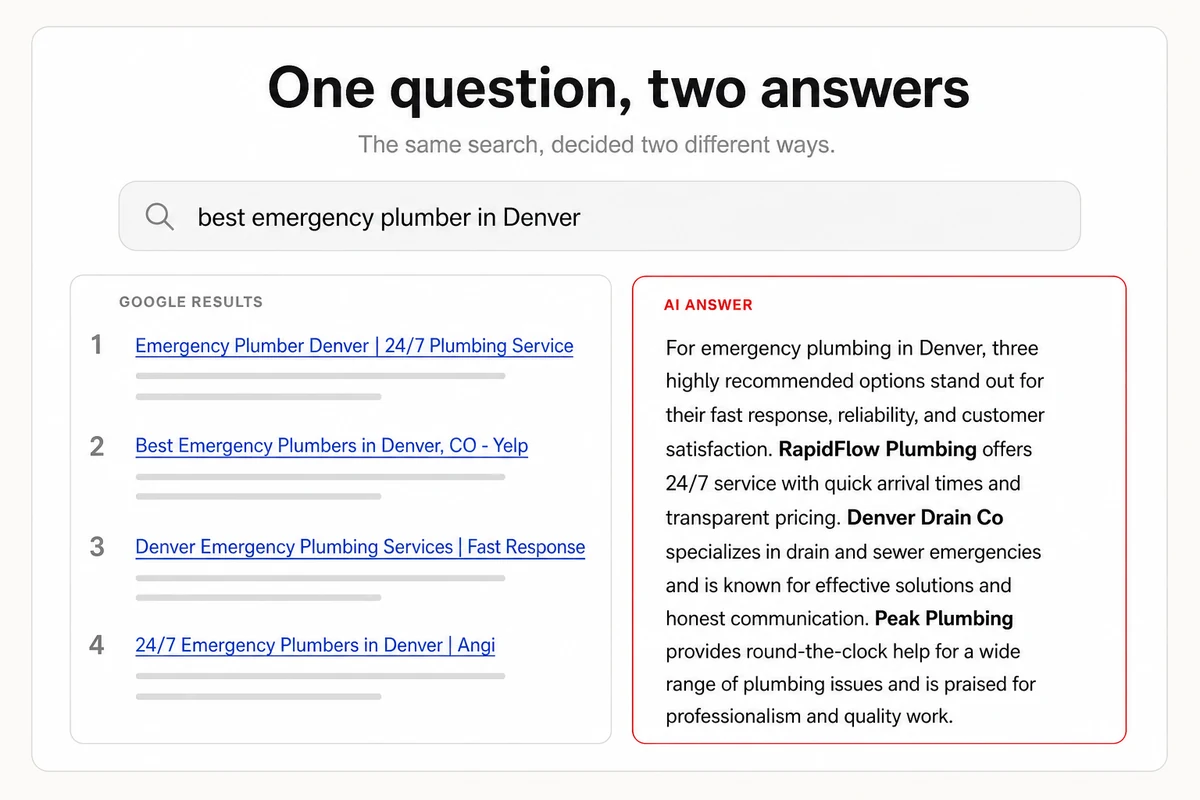
Why Page One Doesn't Guarantee the Mention
Here's the part that surprises people who've worked hard on their rankings. Being at the top of Google doesn't mean the AI will name you. An assistant runs a different selection process, and it pulls from far more than the ranked results.
The numbers bear this out. A 2025 analysis of AI Overview citations found that only about half of what AI cites overlaps with the top 100 organic results at all, so the rest comes from pages that don't rank near the top. Even the number one result gets cited only around 58 percent of the time. A strong rank helps your odds, but it's neither required nor enough on its own.
Why the gap? An answer engine hunts for a business it can locate, read clearly, and vouch for across the whole web, not just the pages that won the ranking race. If your facts are thin or clash from one site to the next, a competitor the model trusts more takes the mention, even when you outrank them.
What AEO Optimizes That SEO Ignores
If AEO is a different game, it rewards different moves. Classic SEO leans on keywords, links, and technical health. Those still matter as a base, but they aren't what tips an answer your way.
Researchers have measured this directly. In 2025, Ahrefs studied 75,000 brands and found that whether an assistant names you tracks most closely with how often the rest of the web mentions your brand, ahead of backlinks or domain authority, the very metrics classic SEO chases hardest. Being talked about across the web, on sources a model already trusts, is what tips an answer your way.
For a local business, that turns into a short list. Say plainly what you offer, where you operate, and who you serve, in sentences a model can quote. Keep your name, address, hours, and services identical everywhere the web mentions you. Earn reviews and mentions on sources the model already trusts. And label your facts with local schema markup so a machine reads them without guessing. That isn't a growth hack. It's the groundwork that makes your business easy for a model to quote, and it's what getting recommended by AI is built on.
You Don't Replace SEO, You Extend It
None of this means SEO is over. The opposite, really. A fast, crawlable, well-structured site is the foundation an answer engine reads from, so good SEO is the price of entry. AEO is the layer you add on top, aimed at the assistant that now sits between your customer and your website. For a business that serves one town or a few, that layer is local AI SEO, and most of that work is local SEO you've already done.
That's the trap in an SEO-only view. An SEO tool stops at traditional search. It shows you organic rankings and site metrics, and it goes quiet on the question that increasingly decides the sale, whether AI recommends you at all. You can spend months climbing to page one and never learn that ChatGPT sends every caller to a competitor. The fix starts by seeing what the assistants say about you, then closing the gaps that surface.
See Both Sides in One Place
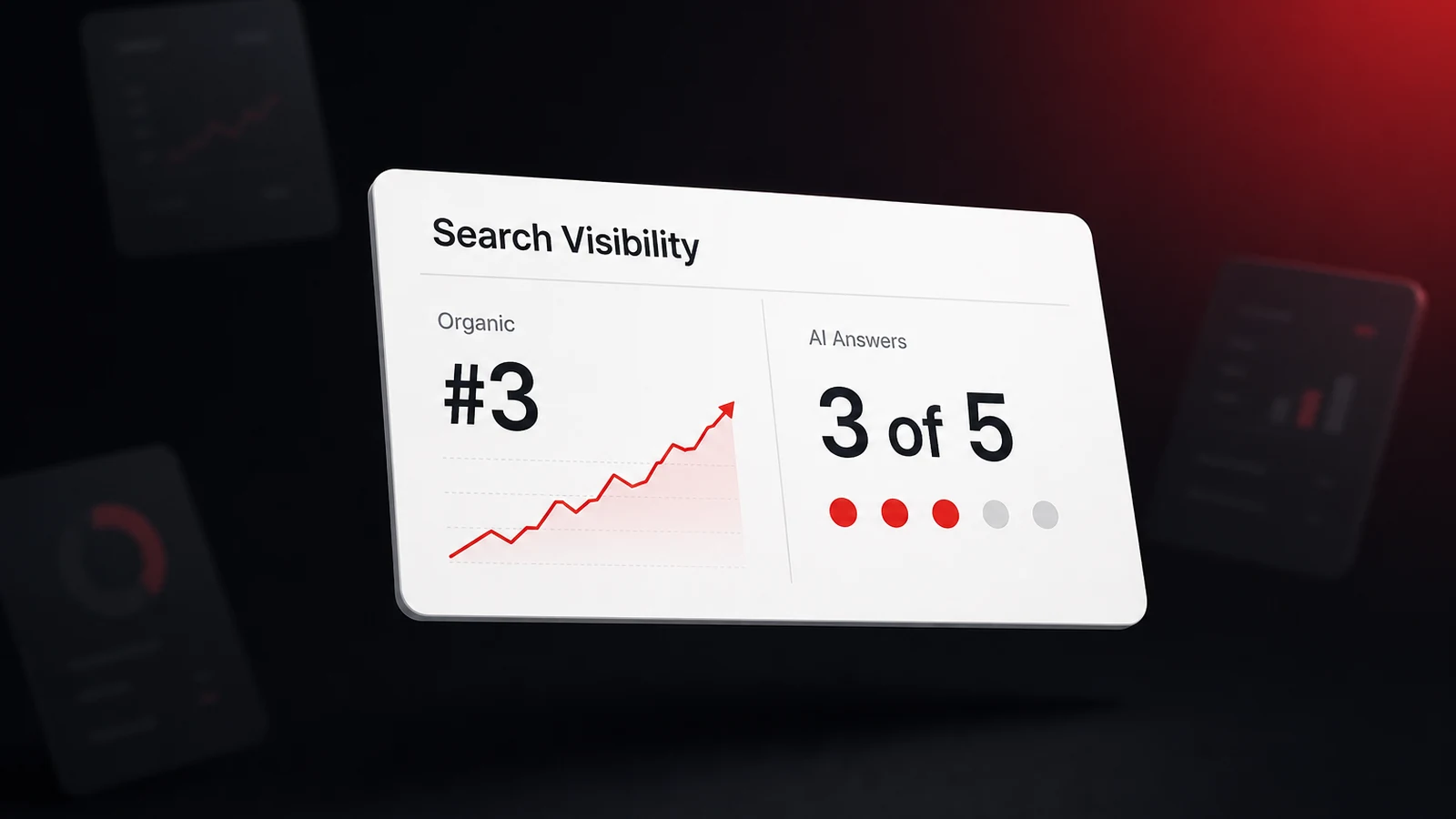
The fix is to watch both, the way you'd watch anything that drives revenue. Keep your organic rankings and site metrics, and put the AI answer right next to them, so your whole search picture sits in one place, old and new.
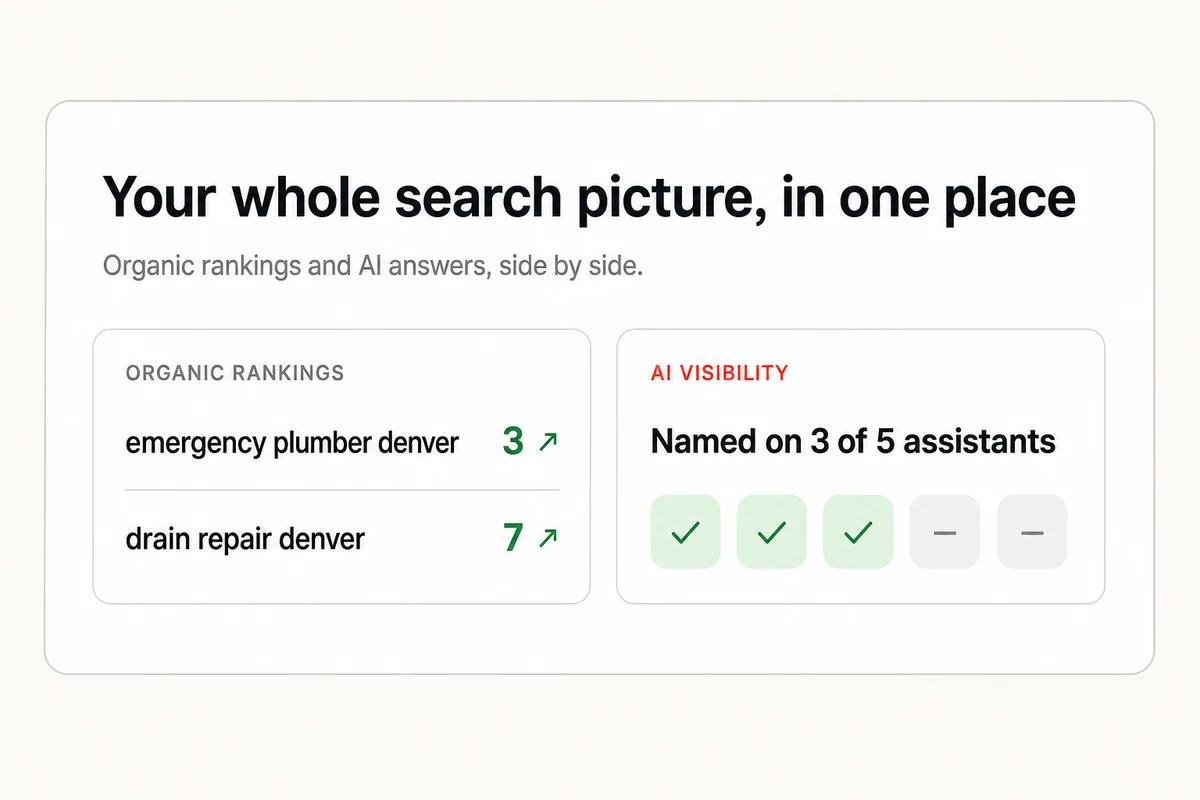
That's what Lighthouse Local's AI visibility tracker is built to do. It keeps your familiar search metrics and adds the part SEO tools miss, whether ChatGPT, Gemini, Claude, Perplexity, and Google AI name you when customers ask, tracked over time so you see movement instead of guessing. To find the quickest wins on your own site first, run our free AI audit, which scores your on-site signals and hands back a ranked fix list in about a minute. When you're ready to watch both sides for good, Lighthouse Local for Business is where it lives, whether you run one location or fifty, and our plans scale with you. Ranking on Google got you found. Being named by AI is what gets you chosen, and now you can watch both from one place.
Frequently asked questions
Isn't AEO just SEO with a new name?
No. They overlap, and good SEO is the foundation, but they optimize for different outcomes. SEO ranks your pages in a list. AEO gets your business named inside an AI answer, where roughly half the sources cited don't even rank in the top 100. It's a new layer on top of SEO, not a rebrand of it.
Can I rank number one on Google and still be invisible in AI?
Yes. Studies of AI answers show the top organic result gets cited only around 58 percent of the time, and about half of cited sources sit outside the top 100 rankings entirely. Ranking well helps your odds, but it doesn't guarantee the mention.
Does traditional SEO still matter for AI visibility?
Very much. An answer engine reads from a fast, crawlable, well-built site, so strong technical SEO is the foundation AEO sits on. You keep doing the SEO work, then add the answer-engine layer on top of it.
How do I check whether AI recommends my business?
Ask ChatGPT, Gemini, Claude, Perplexity, and Google AI the questions your customers would, and read what each one says. To track it over time instead of checking by hand, our AI visibility tracker runs those questions on a schedule and records the answers.