AI Named Them Because It Read Their Site, Not Yours
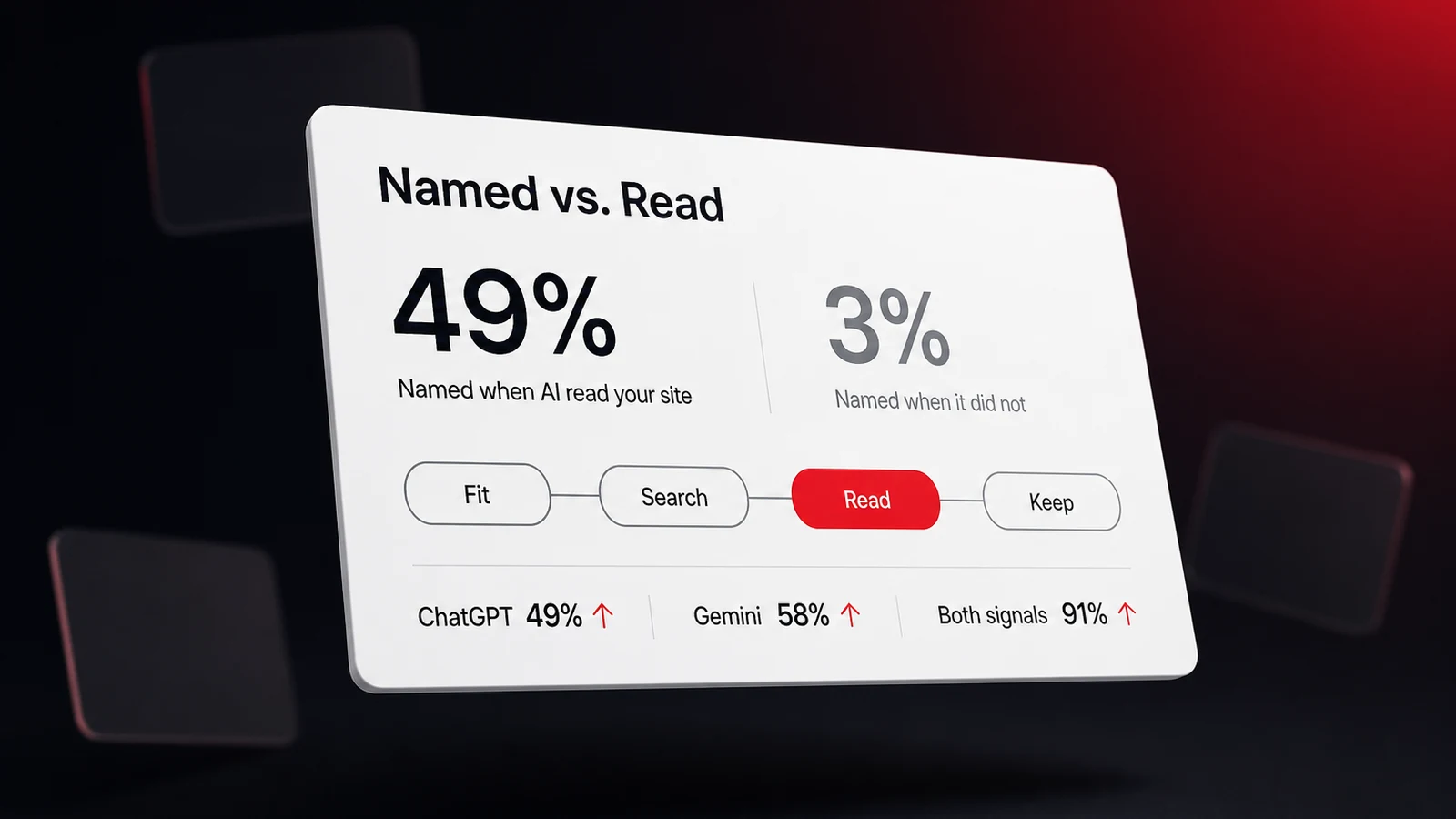
AI names your competitor and not you because, in most of the answers where you're missing, the assistant never read a page of yours before it wrote. That's the plainest reading of a study published in September 2026 by Benjamin Tannenbaum of the AI-search tracking company Aiso, which looked at 34,960 answers to 2,854 customer-style questions, tracked for 75 businesses across GPT models and Gemini between June and September 2026. None of the questions named the business. When the sources behind an answer included none of the business's own pages, the business was named in about three answers out of a hundred. When the sources included at least one of its own pages, it was named about half the time. When the engine had also gone looking for the business by name during its search, it was named in nine answers out of ten or more.
Two cautions before you act on that, both from the paper itself. The author runs a tracking company, so he declared the conflict and reported the null results alongside the strong ones. And the numbers are observed, not proven to be cause and effect. Nobody inserted a page into an answer's sources and watched the mention appear. What the study does show is a measurement fact, that whether the engine read your site is the single thing that most cleanly sorts the answers that name you from the answers that don't. Everything below is about making that happen more often, and about the one exception that lets an established competitor skip the reading step entirely.
Four Gates Between the Question and Your Name
The study's useful idea is that getting your business recommended by AI isn't one decision but a chain of them, and a business can drop out at any link. Strip the math away and there are four gates.
- Fit. Does a page of yours answer what the customer asked, in the words they asked it? Not a page about you, a page about their question.
- Search. Does the engine go and look? For questions that sound like someone about to spend money, it usually does, in about eight of every ten real customer prompts in the study's sample. For questions that sound like curiosity, it searched about one time in thirty and answered from memory instead.
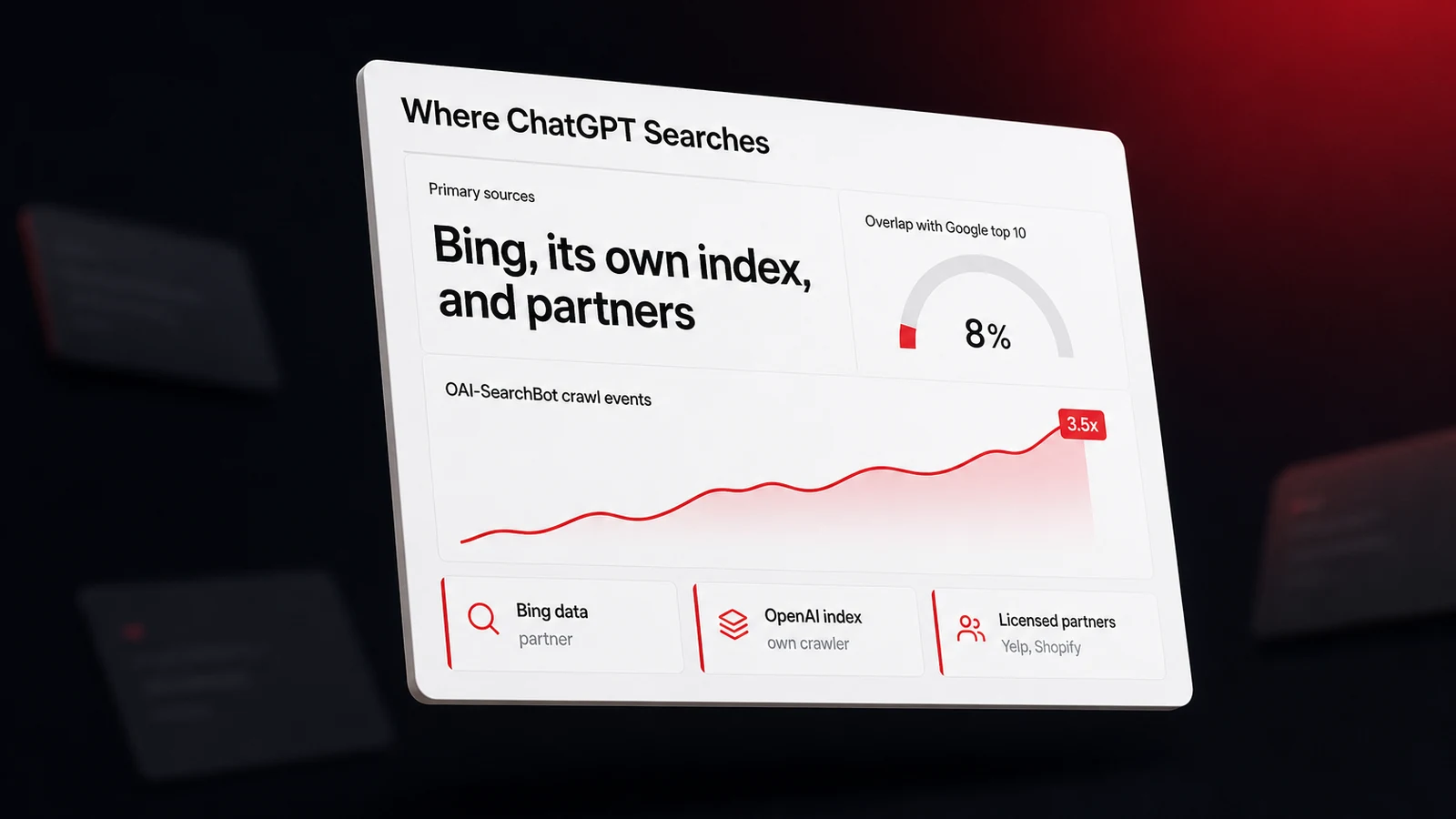
- Read. When it searches, does your page come back and get read? This is the gate that moved the mention rate from three in a hundred to about half.
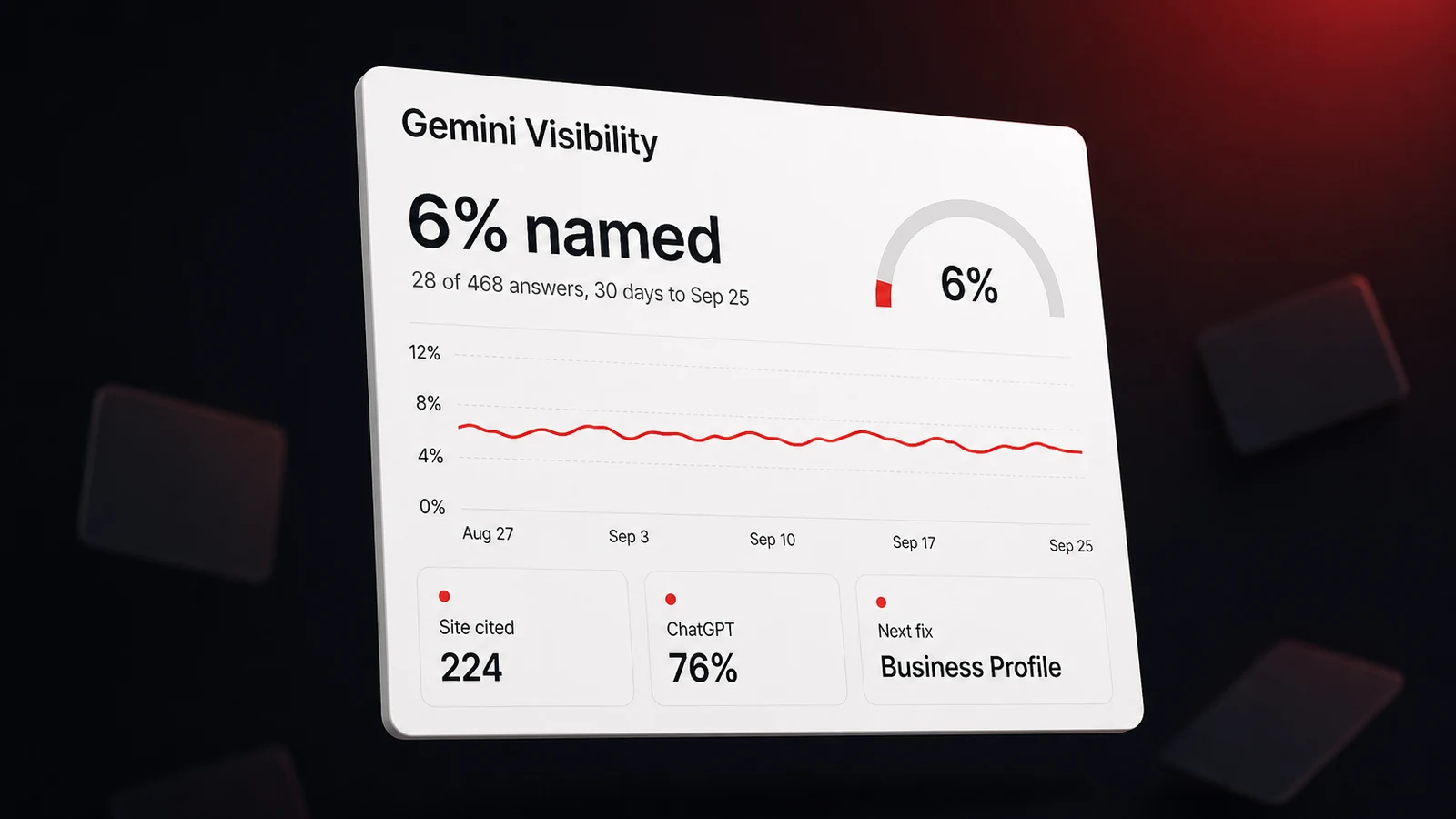
- Keep. Having read you, does the answer keep your name in? On GPT models it nearly always did. On Gemini, roughly one business in four that got read still got left out of the final answer.
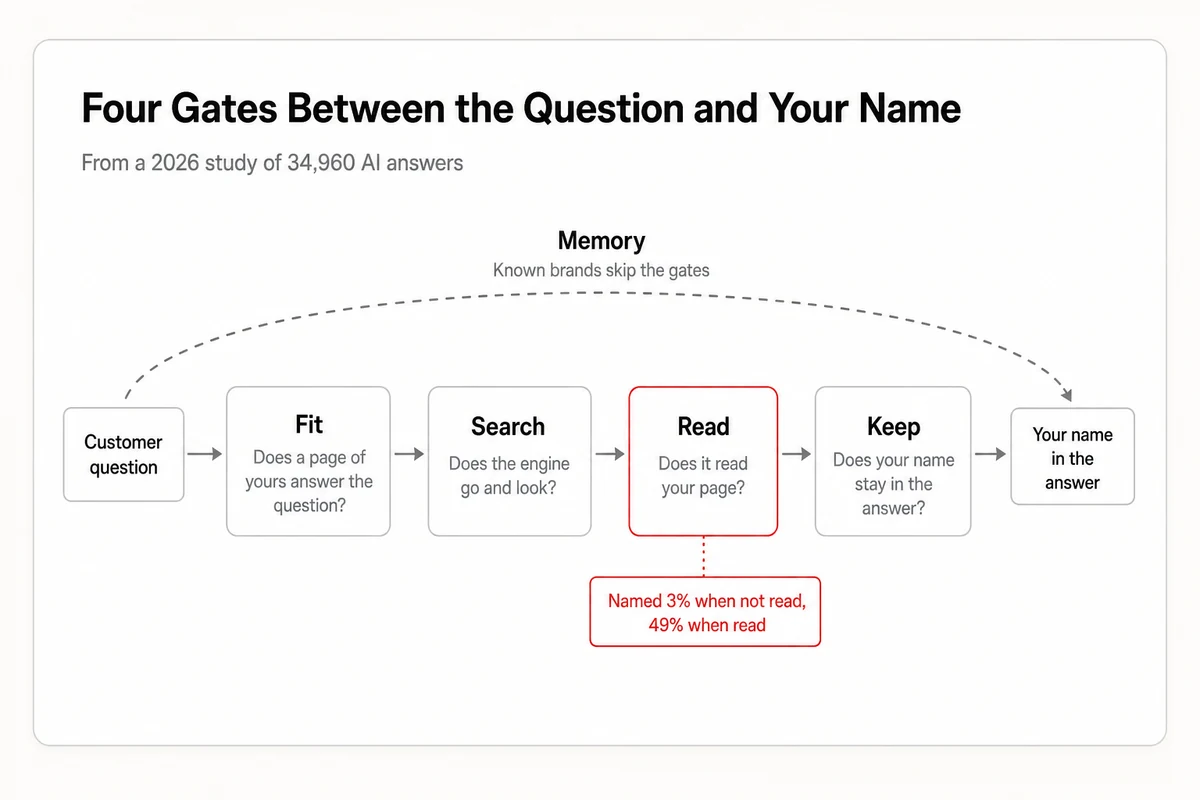
The gates multiply. A strong page that never gets read is worth nothing, and a page that gets read but doesn't answer the question gets dropped at the last step. That's why an AI-readiness score for your website, on its own, can't tell you whether you'll be named. It grades gate one and says nothing about gates two through four, which the engine controls. A separate September 2026 paper by Elisha Bajemon and André-Louis Rochet tested a deterministic content score end to end and reached the same conclusion, that a score like that works as a quality filter, not a predictor of who gets cited. We made a related point about pages in our post on why the AI SEO checklist stops working. This study explains the mechanism behind it.
The searching gate deserves one more sentence, because it changes what your page has to answer. When the engine searched, it usually ran two queries, not one, and one of them was often an evaluation question the customer never typed. Someone asking for a new mascara triggered a search for what to look for in a mascara. Someone asking for one accounting tool triggered a search for the features that matter in one. Google's head of Search described the same behavior in May 2025, writing that AI Mode uses a query fan-out technique that breaks a question into subtopics and issues many queries at once on the user's behalf. The practical consequence is that a page listing what you offer competes with pages explaining how to choose.
Gemini Rewards the Right Page, ChatGPT Barely Notices
Here's the finding that surprised us most. For one of the businesses in the study, the researchers scored how closely its best page matched each of 199 customer questions, then checked whether each engine had read that page. On Gemini, the questions with the best-matching pages saw the business's site read about half the time, against roughly one in five for the worst-matching. On GPT models the same match score barely moved the needle. Whether the page fit the question had almost no bearing on whether ChatGPT read it.
The owner's version is simple. Writing the page a question deserves is still the right first move, because it's the only gate you control outright and because Gemini, which sits under Google's AI features and a growing share of local answers, plainly rewards it. Just don't expect that page alone to change what ChatGPT says. Getting read there depends more on where else your business appears, which is the distribution work the next sections cover. And measure the two separately. The author's companion paper, Scoring With the Engine, ran the same fifteen buying questions through four engines and found that more than four in five engine pairs shared not one cited page. A tracker that folds every assistant into one visibility score hides the fact that the same page is working on one engine and doing nothing on another.
The study also settles an argument owners have with themselves. Take the fifty customer questions where that business had its best-fitting page. Where Gemini read the page, the business was named more than four times in five. Where it didn't, with the page fitting just as well, the business was named less than one time in ten. A good page that isn't read loses to a mediocre page that is.
The Side Door Only Incumbents Can Use
There's an exception to the reading rule, and it explains why some competitors seem untouchable. A brand the model already knows can be named without any of its pages being read. The study calls this the prior, and one of its smaller datasets shows it in the open. One business had sixteen customer questions run through ChatGPT ten times each from a UK searcher's location, 160 answers in all, with a note of every brand named and every page cited.
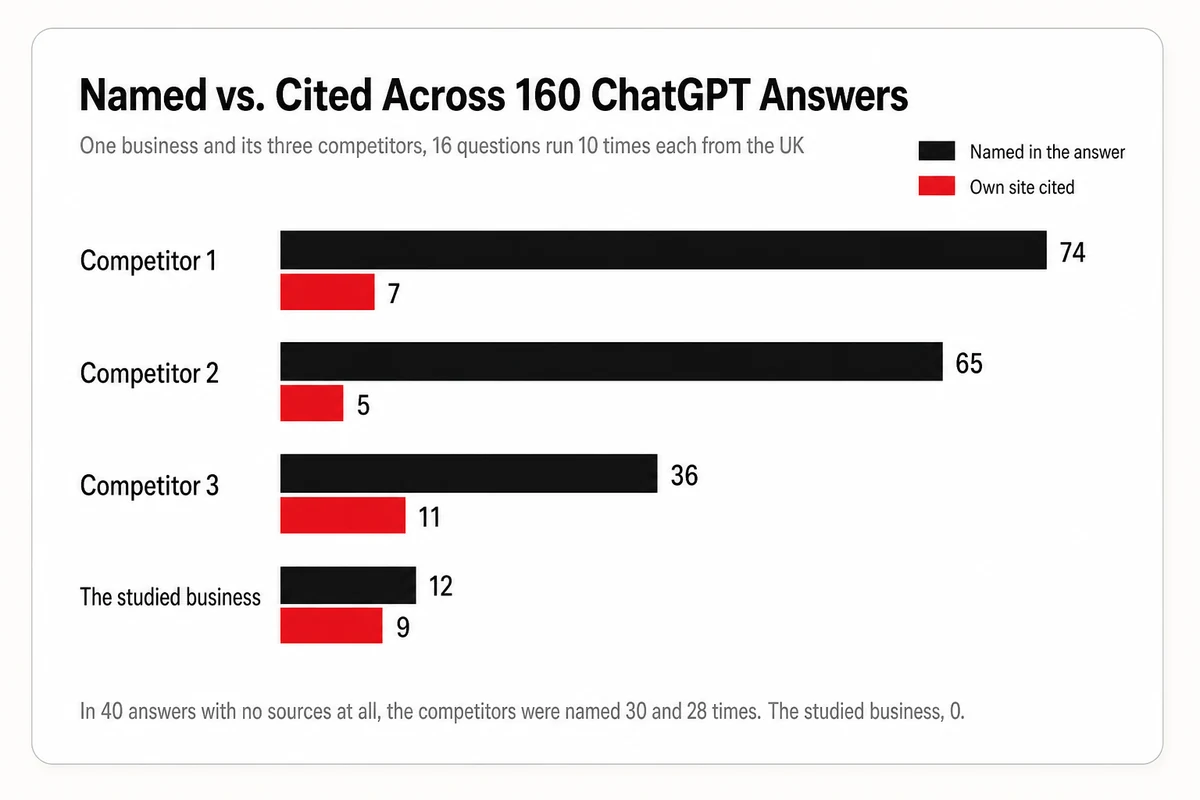
The leading competitor was named in 74 of those answers and had its own site cited in 7. The business being studied was named 12 times and cited 9 times. Four of the sixteen questions produced answers with no sources at all in every one of their ten runs. In those 40 source-free answers, the two biggest competitors were named 30 and 28 times. The studied business was named zero times. The same thing showed up on a question where the business's own page ranked in Bing's top thirty results. ChatGPT named it in none of ten runs and named three competitors in nine, eight, and six of them. Ranking got the page into the room. It didn't get the business into the answer.
The large panel confirms that memory compounds. A business that wasn't named last time and didn't get read this time was named in fewer than two answers out of a hundred on the next run. A business that was named last time and did get read this time was named in about four out of five. This is the honest bad news of the paper. The businesses AI already knows keep getting named whether or not it reads them, and the only door open to everyone else is the reading one. It's also the argument for starting now rather than next quarter, because every answer that names you makes the next one more likely, and the reverse is just as true.
Find the Gate You're Failing
The practical value of four gates is that each one fails in a visible way. Run the questions your customers ask, with your town in them, on each assistant, the same routine as checking whether AI recommends your business, and for every answer write down two things. Whether you were named, and which pages the answer cited. Those two columns tell you which gate to work on.
| What you see | Which gate | What to do |
|---|---|---|
| Not named, none of your pages cited, and no page of yours answers the question | Fit | Write the page, in the customer's words, including the how-to-choose version of the question |
| Not named, none of your pages cited, but the page exists | Read | Distribution work. Make the page crawlable and indexed, fill out your Google Business Profile listing and the local directories you're missing from, and earn third-party pages that name you for this service |
| Your page cited, but you're not named | Keep | Put your name, service, and area in plain text on the page, state the answer outright, and check that review and directory sites say the same thing |
| Named, none of your pages cited | Side door | Good news with a fragile base. Keep the third-party record that carries you current and start earning citations before a competitor takes the slot |
The second row is where most local businesses sit, and it's the one the study says more content won't fix. If the page exists and the engine still isn't reading it, the bottleneck is reach, not writing. The paper lists the levers as indexing, crawlability, third-party coverage, comparison pages, directories, and source authority. The on-site half of that list is what a free Lighthouse Local audit scores, from whether a crawler can reach the page to whether it's in your sitemap and structured so a machine can pick out your business name and services, returned as a ranked fix list. The off-site half is the profiles and coverage work covered by the branded vs. unbranded AI visibility gap.
Doing that by hand across every question and assistant is the part that doesn't scale. Lighthouse Local's AI visibility tracker runs on exactly the two columns above. It queries each assistant with your customers' questions on a schedule, sorts each answer into named, missed, or lost to a rival, and flags which of your pages got cited versus skipped, per platform. That's the gate diagnosis, run weekly instead of once. And when you'd rather not do the fixing yourself, our specialists take the recommendations in your plan, do the on-page and listings work, with each change waiting on your sign-off.
Watch the Source List, Not Just the Name
The last lesson in the paper is one most owners get backwards. Being cited and being named are different measurements, and you need both. The incumbents above were named ten times more often than they were cited, so a report that counts only citations would have called them invisible. A report that counts only names would have missed that the studied business was getting read and still dropped, which is a different problem with a different fix, and different again from the case where AI knows you but doesn't recommend you. The paper's own advice is that a cited-source view and a brand-mention view answer different questions, and it adds a third that matters for local businesses especially. The source list should include pages about you, not only pages you own, because a review site or a directory carrying your name is often what gets you into the answer.
So track three things per assistant, over time. Whether you're named, whether a page of yours was read, and which third-party pages were read instead. Our guide to measuring your brand across AI search covers how many answers you need before a change means anything. Lighthouse Local for Business keeps all three columns for you, across the five we track, with weekly sweeps and daily checks on the questions that matter most. Read the sources behind every answer that skips you, and you'll stop guessing which gate closed.
Frequently asked questions
Why does ChatGPT recommend my competitor instead of my business?
Most often because it read a page about your competitor before answering and didn't read one of yours. In a 2026 study of 34,960 AI answers, a business was named in about 3 percent of answers when none of its pages was among the sources, and about half when one was. Established brands can also be named from the model's memory without being read at all, which is why an incumbent keeps appearing.
Does having a well-written page get my business into AI answers?
It helps more on Gemini than on ChatGPT. In the study, the best-matching pages roughly doubled how often Gemini read the business's site, while the same fit score barely changed what GPT models did. A page that fits the question is the first gate, but it only counts once the engine reads it, which depends on your profiles, directory listings, and third-party coverage.
What is the difference between AI citing my site and AI mentioning my business?
A citation means one of your pages was among the sources the assistant used. A mention means your business name appears in the answer. In the study, a competitor was named 74 times across 160 ChatGPT answers but cited only 7 times, so counting either one alone gives a false picture. Track both, per assistant.
How do I find out which pages AI is reading when it answers about my industry?
Put your city in a customer-style prompt, send it to every assistant you can, and open the sources behind each answer. Note whether any page is yours and which review sites, directories, or competitors appear instead. Lighthouse Local's AI visibility tracker records that source list for every captured answer, alongside whether you were named.
Can a new business ever catch an established competitor in AI answers?
Yes, through the reading door rather than the memory one. The study found that once an assistant reads a business's own page, it names the business about half the time regardless of history, and that each answer naming you raises the odds of the next. Getting read is the lever a newcomer controls, so the sooner it starts, the sooner memory begins working for it instead of against it.